Showing posts with label synchronicity. Show all posts

Thursday, May 16, 2013

Retracing Recent Ramifications of Thought, Part 2 (Room 237 and beyond)


"What do we know about what we put into anything? Though people may read more into Ulysses than I ever intended, who is to say that they are wrong? Do any of us know what we are creating?" - James Joyce
I've been remiss not to have mentioned Room 237 on this blog yet. I first learned of this film last October when Chuck Klosterman wrote a review for it at Grantland and began: "I just saw a documentary that obliterated my cranium. It's the best nonfiction film I've seen all year." From there I was compelled to read every Room 237 review I could find, then searched desperately for a way to see it (unsuccessfully until just a few weeks ago), and have frequently been bringing up the film as a conversation piece with friends.

Room 237 quickly turned into a mini obsession for me because the premise of the film---creative interpretation of art---aligned exactly with what I've been pursuing for a couple years now. It is a documentary by Rodney Ascher exploring alternate interpretations of Stanley Kubrick's 1980 film The Shining through the voices of five people outlining their own unique theories. Their analysis, through which they verify a specific subjective interpretation by pointing out numerous correspondences throughout The Shining, is exactly what Salvador Dali referred to as "paranoiac critical analysis," a critical approach I've written about here and in my monograph on Dali and James Joyce.

As the ultimate auteur who carefully pieced together every single element that appears on screen, Kubrick's artistic style lends itself perfectly to this type of deep analysis. Microscopic scrutiny of minute elements reveals a wealth of possible meanings. Hence, the cans of Calumet baking powder displayed in some kitchen scenes hints at an underlying theme of Native American genocide, or so argues Bill Blakemore. Frequent occurrences of the number 42 allude to the Jewish Holocaust since Auschwitz opened in 1942 says Geoffrey Cocks, a noted scholar on Nazi Germany who sees the film through those goggles.

Juli Kearns, with a New England accent sounding a lot like Doris Kearns Goodwin (of Ken Burns Baseball documentary fame) graphically outlines inconsistencies in the architectural arrangement of The Shining's Overlook Hotel, indicating a spooky morphology in the building itself. Colorful Kubrick obsessor John Fell Ryan chuckles through his discussion of minor continuity errors which are, he argues, edited that way intentionally to add a further element of eeriness and subtly shock the viewer's unconscious. The most compelling (and initially ridiculous) argument in the film is made by Jay Weidner who posits that The Shining is Kubrick's confession that he helped the American government fake the Apollo 11 moon landing.*

*Though he makes it clear he is not stating the moon landing didn't occur, only that the footage was faked. Here's my take, for what it's worth: I had heard this Kubrick moon landing conspiracy theory prior to seeing the film and brought it up in a late night outdoor discussion under a full moon with some folks. They knew all about it already. A Houston native told me the story of growing up attending high school with the children of NASA employees, they told him the moon landing footage was indeed faked but we absolutely did go to the moon. The real footage was burned up in the Earth's atmosphere upon return, they said. That Kubrick was working closely with NASA on 2001: A Space Odyssey (a film featuring plenty of moon surface scenes) all throughout the 1960s adds to the intrigue of this whacky idea. True or not, it has to be the coolest conspiracy theory I've ever heard.

The entire documentary is presented through a cut-up of scenes from The Shining and various other film clips with voiceovers of the analysts detailing their stories and ideas. We don't see any of the usual documentary-style scenes of sedentary people talking and there's no narration aside from the interviewees telling their stories and theories. This immersion into the worlds of the obsessed observers actually brings the film some humor as the speakers occasionally go off the edge in their theories (most memorably when it is asserted that the face of Kubrick appears airbrushed into the clouds during the opening sequence).

Wednesday, April 17, 2013

Retracing Recent Ramifications of Thought, Part 1 (VALIS, Duality and Finnegans Wake)


"Each of us has within us a secretly potent pantheon. The unconscious sends all sorts of vapors, odd beings, deluding images up into the mind–whether in dream, broad daylight, or insanity; for the human kingdom, beneath the floor of the comparatively neat little dwelling that we call our consciousness, goes down into unexpected Aladdin caves. There not only jewels but also dangerous jinn abide: the inconvenient or resisted psychological powers that we have not thought or dared to integrate into our lives. And they may remain unsuspected, or, on the other hand, some chance word, the smell of a landscape, the taste of a cup of tea, or the glance of an eye may touch a magic spring, and then dangerous messengers begin to appear in the brain. These are dangerous because they threaten the fabric of the security into which we have built ourselves and our family. But they are fiendishly fascinating too, for they carry keys that open the whole realm of the desired and feared adventure of the discovery of the self. Destruction of the world that we have built and in which we live, and of ourselves within it; but then a wonderful reconstruction, of the bolder, cleaner, more spacious, and fully human life–that is the lure, the promise and the terror, of these disturbing night visitations from the mythological realm that we carry within.”
- Joseph Campbell, The Hero with a Thousand Faces

Saturday, March 2, 2013

An Eclectic Array of Bullet Points

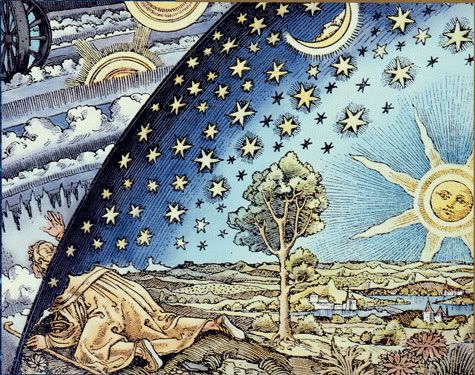
Limiting myself to just one picture to sum up this weird post.
My writing has begun to fall off the rails a bit the last few weeks as I've been drawn in many different directions by a combination of life events (all good ones!) and overindulgent devouring of my favorite types of brain food. The latter is always the source material for my writing but instead of taking the time and focused energy to express my thoughts about these things I've been just been consuming it all. In an attempt to start bringing balance to this gluttony, here are some words on the extremely varied things I've been spending so much time gobbling up the last few months.
  • The Coolest Game on Earth: The return of hockey sucked me in immediately and I've been closely following the new NHL season ever since. While the lockout that wiped away half the league's regular season was an ugly and embarrassing disaster for the sport, the actual gameplay on the ice hasn't suffer from it one bit. Hockey is still amazing to watch. Perhaps more than ever. (I can't help but watch anytime it's on---a game currently plays in the background as I type this.) Similar to the NBA's lockout-shortened season last year, the abbreviated schedule feels easier to digest. I'm of the opinion that every sport, with the possible exception of the NFL, has an overly long and drawn-out schedule that badly needs to be pared down. A 48-game NHL regular season (in which each team only plays opponents from their own conference) seems perfect. It bears mentioning that the sportswriting conglomerate site Grantland.com now features two great hockey writers in Katie Baker and Sean McIndoe whose work has been contributing to my intense interest in the sport this year. To be posted here soon will be a large post of all my thoughts on the NHL season thus far.
  • Spring Has Sprung: The arrival at my doorstep of Baseball Prospectus 2013, the annual season preview book, has officially signaled the beginning of spring and the return of the beautiful outdoor game. I love watching and keeping up with the NHL and NBA but inevitably each year when the new BP annual shows up and Spring Training begins, my baseball obsession quickly stirs awake from its winter slumber, making it hard to maintain any balance in my sports fanhood. For the fourth time since this blog's inception, I'll be putting together my own season preview/predictions for each team in the weeks to come. Also, expect a critique of the BP annual soon as the phonebook-sized text which I look forward to reading every year made some major changes, mostly for the worse.
  • "Yeah I'm Underground/ Straight Outta the Bat Cave": Two new hip hop albums have brought me lots of audio ecstasy already this year. The latest offering from Bronze Nazareth and his Detroit-based Wisemen crew is a solo album for the group's dynamically grimy and gravelly-voiced flow master Phillie entitled Welcome to the Detroit Zoo (produced and directed by Bronze). A pure album in every sense of the word, it is front-to-back filled with quality tracks, not a single bad beat (as per usual with Bronze & crew), and maintains a thought-provoking theme variously inflected throughout: that of captured animals in zoos being a metaphorical equivalent to "what it's like to be a n**** in America" as the oft-quoted Katt Williams has it. After two full months of constantly listening to and never getting bored with that album, another long-awaited record has just recently reached its release. The mesmerizing psycho-cosmic-occult-spiritual-street-poetic mysticism of Wu-Tang tribe shaman Killah Priest bursts forth through a massive 41-track collection in his most ambitious project to date, his tenth studio album, a double-cd entitled The Psychic World of Walter Reed (aka PWOWR). I'm still absorbing it, but will soon have lots to more to say about it as well as a full review of Phillie's album.
  • Engaged in Guerilla Ontology: Inspired by the ongoing reading group over at the Robert Anton Wilson fan blog RAWillumination.net, I've been reading RAW's historical fiction novel Masks of the Illuminati. Through his always refreshingly smooth and creative prose, Wilson weaves a strange tale of secret societies, occult magic, astral projection, and global conspiracy with a thoroughly spooked main character who happens to cross paths with two of the greatest minds of the 20th century, James Joyce and Albert Einstein (at the earliest cusp of their fame), who are compelled to help him solve his harrowing dilemma. As always happens when I indulge in reading RAW's books closely, weird yet innocuous synchronicities keep popping up around my life lately.
  • Finnegans Everything! I've got a new favorite blog and, as you can probably ascertain from reading this space, it's a weird one. Entitled Groupname for Grapejuice (a phrase from Finnegans Wake), this blog uses a mix of comparative mythology, occult knowledge, numerology, and some subjective free association to engage in what I can only call synchronicity detective work. The process might rankle the corduroys of the average skeptical rational materialists, but for me, having often indulged in this kind creative associative detective work myself, it's a delight to read. If you any interest in Finnegans Wake, synchronicity, numerology, Kabbalah, or conspiracy theories, then I can't recommend this blog highly enough. While the synchro-knots revealed can be a little scary sometimes, it's a good kind of scary, the kind that shakes up your world view, forcing you to reorganize your reality tunnel. Healthy mental exercise. Robert Anton Wilson would've loved it. In addition to that, I spent a month obsessively reading arguably the best critical work on Finnegans Wake called Joyce's Book of the Dark by John Bishop. It's an incredibly dense, information-filled book and so my attempt to summarize and review it has been a difficult one, but I'm about halfway done with that review piece so expect to see a big post on that soon at my other blog. My friend Gerry Fialka, who runs the long-standing Marshall McLuhan/Finnegans Wake Reading Group in Venice, California recently published a superb article weaving together a variety of threads, the associative style of which will appeal to anyone who derived intellectual pleasure from this specific bullet point.

Sunday, February 24, 2013

Archaeologists Dig Through Joyce's Garbage Dump

This hardly seems real. In fact, it seems like a funny joke. From the Irish Times:

Archaeologists hope to uncover secrets at James Joyce's house in Fairview

"Archaeologists from the National Museum are excavating an ash pit at the rear of a house in which James Joyce and his family lived between 1900 and 1901."
Currently I'm taking part in an online reading group led by Tom Jackson at RAWillumination.net in which we're reading Robert Anton Wilson's novel Masks of the Illuminati. In this novel Wilson uses his gifted prose to bring together two of the 20th century's greatest minds, James Joyce and Albert Einstein "as the ultimate space/time detectives" compelled to solve a cosmic conspiracy. I'm only about 100 pages into it but it's a great read thus far, very hard to put down.

One of the striking things about the book (for me, at least) is that Wilson constantly employs writing styles and techniques taken from Ulysses to tell his story. He also frequently embeds parodies, puns and jokes referring to Joyce's life and work. An example of this is his occasional use of newspaper headlines throughout the story, a technique featured throughout the "Aelous" episode of Ulysses which takes place in a busy newspaper office. A headline like this one could easily have featured as an inside joke in RAW's book.

A noted synchronicity evangelist, RAW has been known to create swirling synchronicities in the lives of folks who indulge in reading his work (the same can also be said for Joyce's synchro-heavy work). The hilarious synchronicity evident here in this newspaper article is that Finnegans Wake (Joyce's masterpiece) is largely concerned with an old document, a letter, that has been dug up out of an ancient garbage heap by a pecking hen. There's a whole chapter in the book (Chapter 5 of Book I) devoted to the study and analysis of this letter by archaeologists and other experts. Interestingly enough, the real life archaeologists are finding glass slides displaying images like the one above---in the Wake, when we brush off the "accretions of terricious matter" (p. 114) that had gathered upon our excavated object "whilst loitering in the past", we begin to see a blurry photographic image:
Well, almost any photoist worth his chemicots will tip anyone asking him the teaser that if a negative of a horse happens to melt enough while drying, well, what you do get is, well, a positively grotesquely distorted macromass of all sorts of horsehappy values and masses of meltwhile horse. Tip. Well, this freely is what must have occurred to our missive (there's a sod of a turb for you! please wisp off the grass!) unfilthed from the boucher by the sagacity of a lookmelittle likemelong hen. Heated residence in the heart of the orangeflavoured mudmound had partly obliterated the negative to start with, causing some features palpably nearer your pecker to be swollen up most grossly while the farther back we manage to wiggle the more we need the loan of a lens to see as much as the hen saw. Tip. (FW p. 111-112)
Page 111 also happens to be the page where another funny coincidence concerning RAW occurs. He died on 1/11 (and frequently examined the depth and importance of 111 in the Wake) and when you look at the first words of page 111 you read "peraw raw raw teeraw". I'm sure Joyce and RAW are having a beer somewhere sharing a good laugh about all this today.

Monday, February 11, 2013

The Secret Life of Plants

"floweers have ears, heahear!"
 - Finnegans Wake, p. 337

Anyone who's ever read Robert Anton Wilson's classic book Cosmic Trigger would probably recognize the title "The Secret Life of Plants". That's where I'd first heard of it, at least.* Wilson mentions some of the discoveries from the 1973 book by Peter Tompkins and Christopher Bird in the process of presenting the reader with some fascinating perspectives about modern scientific discoveries and measurements of "spirit" or life energy in vegetation (see pg. 25).

*Actually, the very first time I heard of it (like so many occult things) was in a rap song by Killah Priest, though I had no idea what he was referring to: "The secret private life of plants/ the diligent and militant/ commodity and colonies of ants/ the spiritual and telekinetic mind of children/ all rolled up in rhymes that are chillin."

Recently I was at a friend's house and he had a copy of the book The Secret Life of Plants resting next to a few of his plants. When I brought it up, he strongly suggested I pick up a copy of the book as the ideas contained therein were very powerful. I haven't gotten to pick up the original book yet, but I did come across an entertaining documentary film based on the book which I'd like to share here.

This movie is from 1979 and features lots of motion capture scenes which beautifully display the growth of plants and flowers. The documentary is more than a bit unorthodox compared to contemporary standards, featuring a few fast-forward-worthy drawn out musical montages (with original tunes from Stevie Wonder). But, that's the beauty of our technology---you can skip right through the boring parts. There is plenty of eye-opening stuff here concerning plant sentience that will really leave make an impact on the way one sees the world.

The other important thing I want to point out is a funny synchronicity---as I mentioned, I'd originally heard about The Secret Life of Plants through a passing mention in Robert Anton Wilson's synchronicity-filled book Cosmic Trigger. Another memorable part of that book is RAW's discussion of the Dogon tribe in Africa that possesses an uncanny knowledge of the solar system, the universe, and especially the star Sirius. Long before scientific instruments could even prove it, this isolated primitive tribe knew that Sirius had another star orbiting around it. Not only that, they knew this second star takes exactly 50 years to make a full cycle.

A must-see for Cosmic Trigger fans, this documentary features a segment all about the Dogon tribe. If anything, you should definitely check out that one segment as it's one of the best parts of the film (though they never really adequately explain their connection to plant sentience...). To see the Dogon segment, fast forward to the 1hr 6m mark.

Video after the jump.

Sunday, September 2, 2012

Awakened Only to See the Wake Everywhere

It's been nearly a month since I've posted anything here, an unprecedented length of absence that is due to a number of factors. For one, I wanted to let the announcement about the Finnegans Wake group sit atop the page for a while. A weeklong trip back home to New York also pulled me away from writing for a bit. And the key reason for my absence is that I've been immersed in thoroughly reading/studying Finnegans Wake for almost two full months now.

The Wake reading experience (my first full go-round with the circular, neverending text) has been occasionally sublime, rarely tedious, and mostly fun. It gets to be kind of addictive, which is why I haven't really written anything besides daily jottings in notebooks, mostly quotes and reflections on what I'm reading.

I had hoped to maintain a regular weekly blogpost here to update where I'm at in the book and what's struck me about it but I'm finding the balance of reading/writing to be a tough one to maintain, especially when the "reading" side of the ledger is so heavily weighted with not one book but half a dozen (a devoted reading of the Wake inevitably requires a few guidebooks, plus I'm occasionally reading the Football Outsiders Almanac 2012 in an attempt to keep myself based in reality through this process).

Now that I've completed 8 chapters of the Wake and gotten into a good routine with it, it's time to slowly bring my writing back to life as I've got a number of pieces to complete that have been collecting dust the past 8 weeks or so. This little post is my attempt at loosening up the writing muscles.

Tuesday, July 31, 2012

Three Joycean Synchronicities

As Robert Anton Wilson liked to point out, reading about or discussing synchronicity usually tends to vastly increase the amount of strange coincidences in one's life. In my experience, whenever I've been engaged in reading Carl Jung, or the I Ching, or Wilson himself, synchronicities do tend to swirl around me.

This same thing especially applies to reading James Joyce. His major works are filled with synchroncities and coincidences. In his book Joyce the Creator, Sheldon Brivic attempts to document all the synchronicities embedded within the single day of Ulysses and he lists over a hundred of them. Robert Anton Wilson's book Coincidance has a few excellent essays about synchronicity in Finnegans Wake. It's safe to say that it's a big part of Joyce's major works (though the word "synchronicity" was coined by Jung more than ten years after Joyce's death).

These past few weeks I've been undertaking the task of thoroughly reading Finnegans Wake, this deep involvement tending to leave me in an unusual mindstate. I find myself thinking about certain words or phrases all throughout the day and often I can't wait to get home and dive back into the strange book. I've read four chapters thus far and I'm really enjoying it. With lots of notes already written about it, I'll have plenty to say about the book in an upcoming post.

For now, I'd like to share three funny coincidences that occurred over three consecutive days right around the time I'd begun reading the Wake.

Monday, June 4, 2012

To Clear the Tension in My Atmosphere, Part 1

An abundantly hirsute, wizard-like, quirky-looking gentleman named Jorn Barger is the person responsible for originally coining the term "weblog" in the 1990s. I know this only because Barger, one of the web's original bloggers if not the original blogger, also has a reputation for having written heaps of enlightening material on James Joyce at his early weblog "Robot Wisdom."

Navigating through the many dead links one might expect to encounter on a site that hasn't been updated since 1999, you'll find a vast amount of material including original (sometimes groundbreaking) analysis and exegesis of virtually all of Joyce's work.

But that's not all Barger ever wrote about and this post is not about James Joyce. This is about life's propensity to ricochet experience into unforeseen directions. See, my girlfriend and I have decided to call it quits after three mostly wonderful years (living together for much of that time) and these last few days have been painful ones for me but the experience of prolonged sadness has led to a number of interesting experiences.

So I'd like to take a Jorn Barger-inspired trek through all of that right now.

Monday, April 23, 2012

On the Recurrence of 423 and 432

Today is April 23rd and I've had many 4/23 thoughts rolling through my head all day so I'd like to unravel them here for all to see.

I awoke this morning around 4 AM in Daytona Beach, Florida. Had to catch an early flight to come back home to Austin after spending a weekend visiting with my family, especially my newborn niece and 2-year-old nephew.

My girlfriend (whose birthday is June 23rd) picked me up at the airport but her phone had fallen and broke yesterday so that added some complications to things. Later in the afternoon she acquired a new phone and called me at exactly 4:23 PM.

Today is Shakespeare's birthday, he was born on April 23, 1564. He died on April 23, 1616.

In his book Coincidance, Robert Anton Wilson examines a vast net of seemingly never-ending synchronicities in James Joyce's Finnegans Wake, including those having to do with the number 23. Shakespeare is involved in it all and he gets tied in with legendary Irish king Brian Boru who died at the Battle of Clontarf which took place on April 23, 1014.

In the Wake, there are 5 main characters: 2 females (mother and daughter) and 3 males (father and twin sons). One of the main recurring themes of the book is a foggily remembered incident that occurred in Phoenix Park involving 2 girls and 3 soldiers, resembling Dublin's Coat of Arms which features 2 girls and 3 castles. Wilson notes that Ireland "is a living synchronicity, having 4 provinces divided into 32 counties and also having been converted to Christianity by St. Patrick in 432 A.D." (We'll talk more about that other funny number, 432, in a minute...)

The Easter Rising, an organized Irish uprising against the ruling British, was originally scheduled for Easter Sunday April 23, 1916 but because ammunition arrived late it began on Monday April 24th. The principle culprit behind the Easter Rising, namely Padraic Pearse, is frequently mentioned throughout the Wake and Joyce even knew Pearse personally because he took a Gaelic class from him once.

On my two flights and all throughout this past weekend I've been reading both Finnegans Wake and Robert Anton Wilson's Cosmic Trigger Volume II.  Volume I of Cosmic Trigger (arguably RAW's best book and one which I hope to write a review for soon) prominently features the number 23 and the synchronicities that accompany it.

Wilson explains that he first heard of the 23 enigma from William S. Burroughs who told him a story about a boat captain named Captain Clark who ran a ferry between Tangiers and Spain. Clark told Burroughs one day that he'd been running the ferry for 23 years without any accidents. Wilson solemnly notes, "That very day, the ferry sank, killing Clark and everybody aboard."

That evening Burroughs put on the radio and the first thing he heard was a news report about a plane crash that occurred on its way to Miami from New York, the pilot was also Captain Clark and the flight was number 23.

This led Wilson to start keeping track of coincidences involving 23 that he encountered and he realized that (among other things) Euclid's Geometry opens with 23 axioms, 23 in telegrapher's code means "bust" or "break the line" while the 23rd hexagram of the I Ching is "Breaking Apart," and he continues:
I was even thrilled by noting that in conception Mom and Dad each contribute 23 chromosomes to the fertilized egg, while within the DNA coil of genetic metaprogramming instructions there are unexplained bonding irregularities every 23rd angstrom ... 23 was my spiral staircase, my intuitive signal.
The most important part of the book's story occurs on July 23, 1973 when Wilson thought he had begun to receive contact from the Sirius star system. The "Dog Days of summer" are associated with the star Sirius (known as the Dog Star because it's the brightest star in the constellation Canis Major) and begin on July 23rd each year. (Scanning the Dog Days page on Wikipedia I came across a quote from John Webster's play that was first performed in the year 1623.)

It's worth noting that I completed Cosmic Trigger Volume I back on January 23rd of this year.

*   *   *

"Where the lisieuse are we and what's the first sing to be sung?"
- Finnegans Wake, p. 432

Now, some tidbits on the number 432.

As already mentioned, I'm in the middle of reading Robert Anton Wilson's very engaging autobiographical book, Cosmic Trigger Volume II. I've just finished the chapter entitled "The Square Root of Minus One & Other Mysteries" in which the author briefly delves into the basics of mathematics and Einstein's relativity to highlight the awe-inspiring inexplicable fact that mathematics (a human invention) is always absolute and verifiable in the world we live in. It almost seems to be of divine origin.

With that in mind, we now take a look at Joseph Campbell's mathematical mind games as presented in two of his books, Occidental Mythology and The Inner Reaches of Outer Space.

Campbell notes that a Chaldean priest in Babylon named Berossos wrote an account of the history of Babylonia in which 432,000 years elapsed before the coming of the mythological flood came and wiped everything out, beginning a new cycle. Strangely enough, this resembles the cosmic cycles in the Icelandic Edda where, on the Doomsday of the Gods, Odin's heavenly warrior hall Valhalla will see 800 fighters entering through each of the hall's 540 doors to wage war at the end of a cosmic cycle.

540 x 800 = 432,000.

In the Hindu sacred epics, the number of years they calculate our current cosmic cycle to last (until it concludes and then another begins) is exactly 432,000 years. The astonished Campbell concludes:
So that we have found this number, now, in Europe, c. 1100 A.D., in India, c. 400 A.D., and in Mesopotamia, c. 300 B.C., with reference to the measure of a cosmic eon.
It gets even more interesting as Campbell explains how the Babylonians managed to calculate (to a precision that was just slightly off) the precession of the equinoxes, that is, the very slight wobble of the Earth on its axis that causes the stars to be in a slightly different position in the zodiac each year. The precessional lag is extremely small, just 1 degree every 72 years. Thus it takes 25,920 years for the zodiac to go the full 360 degrees of a circle.

25,920 divided by 60 (the basic unit of time measurement still to this day) = 432

It is as though the ancient observers of the stars all independently managed to calculate the rate at which the universe inhales and exhales.

Campbell quotes "a popular book on physical education" which states that a person of good conditioning who exercises regularly will have a resting heart rate of 60 beats per minute.

60 beats per minute equals 3,600 beats per hour

3,600 x 24 = 86,400

86,400 divided by 2 = 43,200

There's more:

A computer program has found that the optimal number of dimples on a golf ball is 432.

The diameter of the Sun is about 864,000 miles (divided by 2 that's 432,000). The diameter of the Moon is 2,160 miles (that equals half of 4,320).

Pretty startling, huh?

Read plenty more about it here and here and here.

Saturday, February 25, 2012

TED talks Sychronicity and Science

Lately, I find that the topic of UFOs creeps its way into my conversations with people more and more. Over the last year or so, it's something I've developed a gradually increasing interest in. It also pops up a lot in the work of Robert Anton Wilson, whose work I had begun to read for his James Joyce commentary and now I find myself devouring his whole richly varied oeuvre. On the topic of UFOs he remains, as he does with just about everything else, agnostic.

He shares plenty of shocking information and research about alien encounters and UFO sightings but always with a humorous tinge in the background, never going as far as to say that he believes all of it is true, but it is clearly a deep fascination of his. He likes to bring up the fact that many hundreds of scientists have had what they believe to be alien encounters and this usually leads Wilson into a far-ranging discussion of the newest ideas in modern physics. Frequently he will cite the work of Jacques Vallée, an astronomer and computer scientist who spent years working with NASA and has written a number of books on the phenomenon of UFOs from a soberly scientific perspective.

I am planning on gradually introducing some material here about the cosmological implications of UFOs and the disclosure projects that have taken place over the last ten years or so. But for now, without any alien stuff at all, here is Dr. Vallée's recent TED talk about the current state of physics and where our world view is headed.


Monday, November 28, 2011

Look Around (Wonder)


"Time is only floating in your mind" - Stevie Wonder

"Everything we see is inside our own heads" - Buckminster Fuller

"The 4th dimension is time,
it goes inside the mind
when the chakras energize
up through the back of your spine"
- The Rza

"there is a future in every past that is present" - James Joyce (Finnegans Wake p. 496)

Unfortunately, I do not have much TIME to write but I do want to mention a few things. I enjoyed a nice, delicious Thanksgiving Day last Thursday (featuring two separate vegan feasts, actually), during which time it struck me that in the last 5 years I've eaten a Thanksgiving meal in 4 different cities (New York, London, San Diego, Austin in that order).

Yesterday I unloaded a stack of about 10 unwanted books at a used bookstore to begin the process of down-sizing to prepare for an upcoming move to a different apartment. This will mark the 5th time I've moved in the last 4 years. Prior to that I spent the first 22 years of my life living in the same bedroom, let alone the same address.

At the bookstore I almost bought a couple of really cool-looking books that intrigued me, but decided at the last minute it didn't make sense to bring more books home when I'm trying to purge belongings. On the topic of TIME, though, the books bear mentioning. They were both part of the excellent Introducing... series published by Totem Books, a collection of paperbacks with illustrations and basic introductory overviews for a whole variety of topics. I can highly recommend the James Joyce, Friedrich Nietzsche, and The Universe editions and if there's anyone else you're interested in learning about (famous minds, but also concepts or historical periods are covered), this series of books is perhaps the best thing to look for. Anyway, the books were Introducing Relativity and Introducing Quantum Theory (for a total of $12), I will hopefully grab them at some point in the future when I get to settle down in a new place.

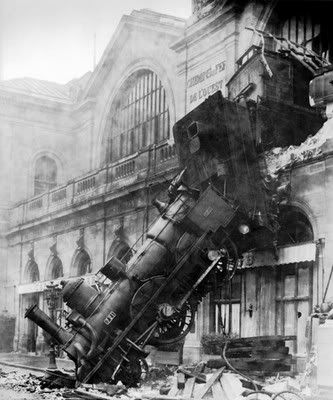
In between our two Thanksgiving feasts last week, my girlfriend and I sort of randomly made our way over to the movies to see whatever was playing at that time. The film we saw was Martin Scorsese's new 3-D excursion Hugo. The young protagonist Hugo works as a clockmaker (or timekeeper) in the Montparnasse train station in 1920s Paris. Honestly, we had to leave the film early because of time constraints but it was an okay film. Visually beautiful but a bit slow-moving. The reason I bring it up is because of a brief but very noticeable cameo by none other than JAMES JOYCE himself. And, of course, after all the work I did on my big essay this year comparing Joyce and Salvador Dali (noting that there is no record of them ever having met), the scene shows James Joyce and Salvador Dali sharing a table at a café in the train station. It's one of the first scenes in the film.

This morning I received word from the editors of the James Joyce Quarterly that they will have an answer for me within the next two weeks about whether or not they will accept my Joyce-Dali paper to be published in their journal. Very hopeful, very excited.

And now, to tie a knot on this synchronistic little post, here is a famous picture of a train crash at the aforementioned Montparnasse train station in Paris in 1895:

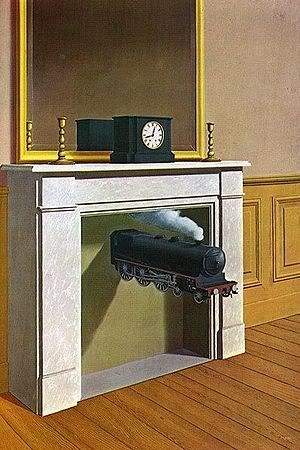
And here is a famous Surrealist painting called Time Transfixed by René Magritte.

Wednesday, April 27, 2011

Dream Architecture

This started out as a long response in the comments section of this recent post, but it immediately became worthy of its own post.


I read a great article on Finnegans Wake a while back (same article discussed here and here) in which a whole class that was studying the book found the Wakean replication---or dream distortion---for each of their own names.

It's a weird and interesting characteristic about the book that you can find something that at least sounds like or in some way resembles your name somewhere in there. My favorite instance of this is Marshall McLuhan mentioned as "Meereschal MacMuhun" on pg 254.

Seana had commented that she was under the impression the title "A Building Roam" had been adopted from a Joyce phrase somewhere. It wasn't. Not as far as I know, at least. I tried a few searches in the Wake Concordex to see if there was anything that came close to "A Building Roam" and found this great sentence:

"Within was my guide and I raised a dome on the wherewithouts of Michan: by awful tors my wellworth building sprang sky spearing spires, cloud cupoled campaniles: further this." - FW pg 541
Beautiful. Let's break it down right quick: 
  • Within was my guide and I raised a dome on the wherewithouts - corresponds to my being self-compelled by the guide within to emigrate from New York a few years back, and throughout the roam thus far I've established myself, set up shop, or "raised a dome" in a few different locations amid the wherewithouts.  
  • my wellworth building sprang sky spearing spires -  refers to the Woolworth Building in downtown Manhattan, the same majestic old building under which I stood daily during four years of college, awaiting the express bus to bring me home to Staten Island. Also, the awful tors or "awful tours" are the often rough, stressful patches in my travels thus far. 
  • cloud cupoled campaniles - a cupola is a dome on a building and campanile is Italian for "bell-tower" (The Leaning Tower of Pisa is a campanile), confirming for us that the whole sentence is about buildings, architecture and growth. 
  • further this -instructions to roam, to keep moving, keep growing

Tuesday, August 24, 2010

Almost

Well tonight was almost a full moon and sure enough there was an almost no-hitter. The Texas Rangers held the Twins hitless until there was one out in the 9th inning.

I eagerly await tomorrow night's slate.

Monday, August 23, 2010

Tuesday's Full Moon Augurs Another No-Hitter

Since we've had three straight no-hitters that have all occurred on the night of the full moon (and because no-hit bids are happening often enough) I am predicting that we will see a no-hitter on Tuesday night August 24th which is a full moon. But who will throw it? I've identified some potential candidates out of the moundsmen who are scheduled to pitch that night. We can look at the batting average (since we're talking about a no-hitter, not necessarily a perfect game) of the opposing team and the batting average allowed and overall dominance of the starting pitcher. Keep in mind he'd also have to be a guy who can go the full 9 innings without getting pulled for running up a high pitch count (although that didn't stop Edwin Jackson two full moons ago when he threw 149 pitches).

We've actually got a few strong candidates pitching that night.

Most likely:
Adam Wainwright vs the Pittsburgh Pirates

By far the strongest candidate to throw a no-no on Tuesday, Wainwright is one of the most dominant pitchers in the league right now. He leads the NL in ERA and WHIP, ranks behind only Roy Halladay with his 5 complete games, and has the 4th most strikeouts in the league. He is facing a Pittsburgh Pirates lineup that has the second-worst batting average in all of baseball.

Other candidates:

Cole Hamels vs Houston Astros
Hamels had a game against St. Louis last month in which he allowed only 2 hits in 8 innings and before his most recent start (a clunker against the Giants) he had a string of 3 consecutive dominant games, striking out nearly ten per game during that span and pitching into the late innings each time. The Astros as a team are batting .246 on the year (ahead of only Pittsburgh in the NL) even though they've actually played a bit better of late. If it's not a no-hitter, it should still be a pretty dominant game for Cole Hamels.

R.A. Dickey vs Marlins, Josh Johnson vs Mets
The knuckleballing sensation known as R.A. Dickey nearly threw the first no-hitter in Mets history last week, giving up only 1 hit (to the pitcher Cole Hamels) while throwing a complete game. The Marlins rank in the bottom third in the majors with a .255 batting average and have been no-hit already this year but they've got plenty of threats in their lineup, particularly Hanley Ramirez. While Ramirez is having a subpar season by his own standards (117 OPS+ after three seasons above 140) he's still an excellent hitter and, as the leadoff man, will be granted at least 3 chances to hit Dickey's knuckler.

Opposing Dickey and the Mets will be the towering (6 foot 7) ace for the Marlins, Josh Johnson. For most of the year Johnson has been nearly untouchable but he's slowed down recently and was even knocked out of a game in the 4th inning by the Reds. The Mets are pretty bad in the batting average department (.248) and in Johnson's 12 innings against them so far this year they've batted just .182 against him. They've been pretty pathetic at the plate lately, culminating in a weak showing in Pittsburgh. They were held to 1 run on 5 hits earlier today against the Pirates' Zach Duke. Should be an interesting pitcher's duel in Queens.


Gio Gonzalez vs Cleveland Indians
He's prone to wildness so he might rack up a high pitch count but he still has the potential to dominate, especially against a flimsy Cleveland lineup (they were the victims in the famous Armando Galarraga perfect game incident). Opposing hitters are batting just .227 against Gonzalez this year.


Not likely but certainly possible:


Josh Beckett vs Seattle Mariners
Beckett hasn't had a good year at all so far. While his strikeout and walk numbers are fine (8 Ks and 2 walks per 9 IP), he's been shelled for an OPS against of .856. But on this night he'll be facing the absolute worst lineup in major league baseball. The Mariners are hitting a pathetic .238 as a team.

Gavin Floyd vs Baltimore Orioles
I see Floyd as the wild card of the group. He's been hit hard in his past two starts and these Baltimore Orioles he'll be facing are playing much better than the lowly O's I saw earlier this year at Petco. Floyd has occasionally put it all together and pitched some dominant games this year including a game at Wrigley in which he had a no-hitter going with two outs in the seventh inning. I don't think he'll get one against Showalter's boys but he belongs on this list as someone who might do it.

One-In-A-Million Shot Bonus:

Ervin Santana vs Tampa Bay Rays
Nothing against Santana, but this is just kind of a joke because the Rays have already been no-hit twice this year and once last year. In all seriousness though, it is definitely not out of the realm of possibility that the Tampa Bay Rays, who might be the best team in major league baseball (or, at worst, the second-best behind the Yankees), will go hitless in a game for the third time this season. Santana has three complete games already this year and has been pretty stingy in his two most recent starts, giving up 4 hits or less in both games. It would be a memorable and historic event if the Rays were the victims of a no-hitter again but perhaps not as strange as having four consecutive no-hitters occur on the night of a full moon.

Friday, June 25, 2010

Is this also an example of Synchronicity?

Earlier today I posted about tonight's extremely rare lunar eclipse featuring a large (illusively large) moon because of its proximity to the horizon. Funky, weird things are thought to happen during full moons. I think weird full moon occurrences represent a perfect example of what Jung means when he's describing how the concept of synchronicity conflicts with the entire premise of our inherent cause-and-effect perspective on things. The full moon does not cause people to act crazy or weird events to happen, it is instead a coincidental and noticeable pattern in time.

Anyway, I find it very interesting, astounding perhaps, that on a night when we have a full moon and a rare lunar eclipse, we've also had some rare and strange occurrences in the evening's baseball games. I've already mentioned Edwin Jackson's 8-walk 148-pitch no hitter (against a strong offensive team, albeit one that's now been held hitless thrice in the last calendar year) but by far the weirdest thing that happened tonight was the Blue Jays-Phillies game. Nothing particularly strange from the action on the field but the game itself was strange: it was a home game for the Toronto Blue Jays and a road game for the Phillies...but was played at Citizen's Bank Park in Philadelphia. This rarity happened because major league baseball changed the location of the game due to security concerns in Toronto with the G20 summit on global economy taking place.

The Phillies won the game 9-0 led by their ace pitcher Roy Halladay, acquired from (guess who?) the visiting home team Toronto Blue Jays over the winter. Halladay also threw the last (official) no-hitter prior to Edwin Jackson's tonight. Weird.

(And here's the info behind that awesome picture.)

**Edit: One more thing that was crazy (but not exactly unusual) from today's baseball action: Carlos Zambrano's tirade after pitching a miserable one inning and exiting the game versus the White Sox in Chicago.

***Edit Part 2: Looking back at my post from last month, Roy Halladay's no-hitter (and the other wild baseball events that night) occurred with a full moon in the sky.

Here's an Example of Synchronicity

I had the Padres-Marlins game on my television, muted, this afternoon/evening while I did the dishes, ate cake, listened to music. At one point, while wiping off the kitchen counter, I watched as my screen silently displayed the highlights of an old baseball game. I saw AJ Burnett in a gray Marlins uniform celebrating and hugging catcher Charles Johnson and said mockingly to myself "We did it! A no-hitter!...with 8 walks..." He'd actually walked 9 in that game (against the Padres).

I just found out that Arizona Diamondbacks pitcher Edwin Jackson threw a no-hitter (another no-hitter! the fourth [fifth counting Armando Galarraga] of the season) against his former team, the Tampa Bay Rays today. He walked 8 batters.

It's a very subjective experience, of course, but that's exactly what synchronicity is.

*   *   *

Something else interesting about it: Jackson had the same exact pitching line for the game (9 innings, 0 hits, 8 walks, 6 strikeouts) as Dock Ellis in his famous no-hitter that he pitched against the San Diego Padres in a stadium that's barely a mile away from my current location back in 1970. He later admitted that he'd pitched that game while on LSD. It's one of the coolest events in baseball history. Here's a funny animated video that was made about it last year:


Wednesday, June 23, 2010

Preparatory to Anything Else...Synchronicity

Synchronicity. I've mentioned the term here a few times now, most recently in light of the recent coincidence that occurred to me a few weeks ago, but I haven't taken the time to discuss the topic or its importance. Since it will probably recur pretty often on this blog and especially because it's a main theme of Ulysses (although Joyce wrote about these "epiphanies," as he called them, years before Jung coined the term) which I'll be exploring soon, I would like to orchestrate a brief introduction to synchronicity here. Instead of my own ramblings, I've assembled a collection of quotes from my personal library and my notebooks, presented in a format similar to that of DJ Fly Agaric. Enjoy.

"Most of us in the course of life have observed coincidences in which two or more independent events having no apparent causal connection nevertheless seem to form a meaningful pattern. On occasion, this patterning can strike one as so extraordinary that it is difficult to believe the coincidence has been produced by chance alone. The events give the distinct impression of having been precisely arranged, invisibly orchestrated.
Jung first described the remarkable phenomenon he named synchronicity in a seminar as early as 1928. He continued his investigations for more than twenty years before at last attempting a full formulation in the early 1950s."
---Richard Tarnas, Cosmos and Psyche, pg 50

"...a concept that formulates a point of view diametrically opposed to that of causality. Since the latter is a merely statistical truth and not absolute, it is a sort of working hypothesis of how events evolve one out of another, whereas synchronicity takes the coincidence of events in space and time as meaning something more than mere chance, namely, a peculiar interdependence of objective events among themselves as well as with the subjective (psychic) states of the observer or observers."
---from Carl Jung's "Foreword to the I-Ching or Book Changes" translated by Richard Wilhelm

"...the meaningful coincidence or equivalence (a) of a psychic and a physical state or event which have no causal relationship to another. Such synchronistic phenomena occur, for instance, when an inwardly perceived event (dream, vision, premonition, etc.) is seen to have a correspondence in external reality: the inner image of premonition has 'come true'; (b) of similar or identical thoughts, dreams, etc. occurring at the same time in different places. Neither the one nor the other coincidence can be explained by causality, but seems to be connected primarily with activated archetypal processes in the unconscious."
--from the Glossary on pg 400 of Jung's autobiography entitled Memories, Dreams, Reflections

"It seems, indeed, as though time, far from being an abstraction, is a concrete continuum which contains qualities or fundamentals which can manifest themselves in relative simultaneousness in different places and in a parallelism which cannot be explained, as in cases of simultaneous appearance of identical thoughts, symbols, or psychic conditions...Whatever is born or done at this particular moment of time has the quality of this moment of time."
---Carl Jung, Collected Works, vol. 15,  pg 56

"Struggling with this phenomenon, Jung became very interested in the developments in quantum-relativistic physics and in the radically new worldview to which they were pointing. He had many intellectual exchanges with Wolfgang Pauli, one of the founders of quantum physics, who was his client and personal friend. Under Pauli's guidance, Jung became familiar with the revolutionary concepts in modern physics, including the challenges to deterministic thinking and linear causality it had introduced into science. Jung was aware of the fact that his own observations appeared much more plausible and acceptable in the context of the new emerging image of reality. Additional support for Jung's ideas came from no less than Albert Einstein who, during a personal visit, encouraged Jung to pursue his idea of synchronicity because it was fully compatible with the new discoveries in physics. Toward the end of his life, Jung became so convinced about the important role that synchronicity played in the natural order of things that he used it as a guiding principle in his everyday life."
---Stanislav Grof, When the Impossible Happens, pg 5

"Jung believed that synchronicities generally seemed to serve the same role as dreams, psychological symptoms, and other manifestations of the unconscious, namely, to compensate the conscious attitude and move the psyche from a problematic one-sidedness toward greater wholeness and individuation. Not only did the unexpectedly externalized pattern of meaning seem to represent more than mere chance coincidence; it also appeared to serve a definite purpose, impelling the psyche toward a more complete psychological and spiritual realization of the individual personality. This self-realization was achieved through a deeper integration of conscious and unconscious, which ultimately required of the individual a discerning surrender of the usual conscious attitude of knowing superiority."
---Richard Tarnas, Cosmos and Psyche, pg 53

"Synchronicity is no more baffling or mysterious than the discontinuities of physics. It is only the ingrained belief in the sovereign power of causality that creates intellectual difficulties and makes it appear unthinkable that causeless events exist or could ever occur. But if they do, then we must regard them as creative acts, as the continuous creation of a pattern that exists from all eternity, repeats itself sporadically, and is not derivable from any known antecedents."
---Carl Jung, Synchronicity: An Acausal Connecting Principle, pg 102

"...I think Joyce has a feeling that you live this way if you are open enough inside. Somehow you have premonitions of what's to come, and events unfold in mysteriously appropriate ways, with what Jung called 'synchronicity.'"
---Joseph Campbell, Mythic Worlds, Modern Words, pg 69

"It appears to have been Jung's growing recognition of the magnitude of these implications for the modern world view that impelled him to labor so strenuously, even courageously, to bring critical awareness of the phenomenon of synchronicity into the intellectual discourse of the twentieth century."
---Richard Tarnas, Cosmos and Psyche, pg 60

Thursday, June 3, 2010

I control the Universe

"Coming events cast their shadows before."
--Ulysses, pg 165

On Sunday I attempted to unite this blog's two most common themes so far, baseball and James Joyce, in my discussion of Billy Sunday. Then last night I told a little story of how I witnessed the Padres beat the Mets with a walk-off grand slam last year. Well, I think the baseball gods were reading.

Today, the angry eyes of the baseball world are all on umpire Jim Joyce whose botched call ruined a perfect game this afternoon. The botched call came on what should have been the final out of a perfect game for Detroit's Armando Galarraga. Jim Joyce's name will forever be remembered in the baseball world for the gaffe.

And, in a game I watched in person before begrudgingly having to leave in the 8th inning for a prior engagement, the Padres beat the Mets...on a walk-off grand slam. Their second walk-off grand slam in the history of Petco Park, both against the Mets, both games I attended.

Synchronicit-me.