Showing posts with label links. Show all posts

Friday, December 15, 2017

In Memory of William Gass (1924-2017), One of the Consummate Sentence Sculptors of Our Time


The true alchemists do not change lead into gold; they change the world into words.
- William H. Gass 
I think of myself as a writer of prose rather than a novelist, critic, or storyteller, and I am principally interested in the problems of style. My fictions are, by and large, experimental constructions; that is, I try to make things out of words the way a sculptor might make a statue out of stone.
- William H. Gass


One of my favorite writers, William H. Gass, died last week at age 93. Since discovering his work a few years ago, I'd actually found it surprising that he was still alive. A figure such as he, tirelessly devoted to the primacy of the aesthetic experience of literature, seemed entirely incongruent living within our current times besotted with screen-addiction and momentary attention spans.

Gass made his living as a philosophy professor in St. Louis, Missouri of all places, while carving out a career as a prolific author and literary critic. His novels sit high atop the postmodern pedestal, but it was the delicious prose of his award-winning essays that led me to prostrate before the master in awe. Gass was a prose stylist extraordinaire, a devoted sentence sculptor who sought the perfect arrangement of sound and syllable in everything he wrote. I'll never forget the initial jolt of excitement upon experiencing his writing for the first time. It struck me that I now had all my life to devour everything this magnificent author had written. I was on vacation in Denver, staying at an Airbnb in a refurbished old gas station when I cracked open the book of essays A Temple of Texts and was entranced at the erudition and passion Gass delivered through a prose that was alive, popping, rhythmic, serious yet fun. I've never encountered anyone who can so perfectly communicate the rapturous pleasure of reading books, actual physical texts. I encountered his incredible essay "A Defense of the Book" and nearly stayed up all night reading it; only Gass could turn lit crit into a page-turner. Observe his argument for owning books and keeping a library:

Should we put these feelings for the object and its vicissitudes down to simple sentimental nostalgia? to our commonly assumed resistance to change? I think not; but even as a stimulus for reminiscence, a treasured book is more important than a dance card, or the photo that freezes you in mid-teeter at the edge of the Grand Canyon, because such a book can be a significant event in the history of your reading, and your reading (provided you are Significant) should be an essential segment of your character and your life. Unlike the love we've made or meals we've eaten, books congregate to form a record around us of what they've fed our stomachs or our brains. These are not a hunter's trophies but the living animals themselves.
It was my friend Charlie, a fellow book fiend whose knowledge bank is substantial with 20th century scribes, who pointed me towards William Gass. A few years ago I had asked him to recommend some modern authors who specialize in exquisite prose style. He'd already led me to Pynchon's novels and now he recommended the likes of William Gaddis and William Gass. I soon read Gaddis' A Frolic of His Own and sought out Gass, zipping through his short story collection and the monograph On Being Blue with mixed feelings about both. Once I found my way into the Temple of Texts, though, there was no escaping. I picked up another essay collection, Finding a Form, and marveled at pieces like "The Book as Container of Consciousness" and "The Vicissitudes of the Avant-Garde" and then slowly devoured Life Sentences whose most striking piece was a lengthy, sober meditation on the unfathomable, sublime quantity of people slaughtered by the Nazi regime. Since learning of his passing, I've summoned copies of the other essay collections produced by Mr. Gass from all corners of the globe to converge in my library.

The recommendation from Charlie came on the strength of the novel The Tunnel, Gass's masterpiece that he labored on for 30 years. I've been distantly circulating around that cinderblock-sized meganovel for a little while now, reluctant to get too close to it but intending to read it eventually. Book critic Steven Moore called it "truly one of the great books of our time" and observed, "The sheer beauty and bravura of Gass's sentences are overwhelming, breathtaking; the novel is a pharaoh's tomb of linguistic treasures."

I had actually written up my thoughts about William Gass last weekend upon hearing the news of his death, only to have that piece suddenly disappear into the ether. It was a rare and infuriating experience, but I soon accepted Joyce's dictum that mistakes are portals of discovery. It dawned on me that William Gass had nearly finished composing his first novel, Omensetter's Luck, when the manuscript was stolen off his desk, forcing him to devote six months to rewriting it all from scratch. (The resulting novel was hailed by The New Republic as "the most important work of fiction by an American in this literary generation" and listed among David Foster Wallace's "direly underappreciated" novels of the latter half of the 20th century.) This kind of devotion and determination exemplifies Gass's standing as a writer's writer. He was a fiercely passionate celebrant of the artfully written word, a prolific composer of ornate prose, and his penchant for luxuriating on the love of letters has served to exponentially amplify my own enjoyment of literature.

In the wake of his passing, a number of thoughtful obits have popped up. Here are links to those with some choice chunks from each as well as links to some Gass interviews.

Saturday, March 2, 2013

An Eclectic Array of Bullet Points

Limiting myself to just one picture to sum up this weird post.
My writing has begun to fall off the rails a bit the last few weeks as I've been drawn in many different directions by a combination of life events (all good ones!) and overindulgent devouring of my favorite types of brain food. The latter is always the source material for my writing but instead of taking the time and focused energy to express my thoughts about these things I've been just been consuming it all. In an attempt to start bringing balance to this gluttony, here are some words on the extremely varied things I've been spending so much time gobbling up the last few months.
  • The Coolest Game on Earth: The return of hockey sucked me in immediately and I've been closely following the new NHL season ever since. While the lockout that wiped away half the league's regular season was an ugly and embarrassing disaster for the sport, the actual gameplay on the ice hasn't suffer from it one bit. Hockey is still amazing to watch. Perhaps more than ever. (I can't help but watch anytime it's on---a game currently plays in the background as I type this.) Similar to the NBA's lockout-shortened season last year, the abbreviated schedule feels easier to digest. I'm of the opinion that every sport, with the possible exception of the NFL, has an overly long and drawn-out schedule that badly needs to be pared down. A 48-game NHL regular season (in which each team only plays opponents from their own conference) seems perfect. It bears mentioning that the sportswriting conglomerate site Grantland.com now features two great hockey writers in Katie Baker and Sean McIndoe whose work has been contributing to my intense interest in the sport this year. To be posted here soon will be a large post of all my thoughts on the NHL season thus far.
  • Spring Has Sprung: The arrival at my doorstep of Baseball Prospectus 2013, the annual season preview book, has officially signaled the beginning of spring and the return of the beautiful outdoor game. I love watching and keeping up with the NHL and NBA but inevitably each year when the new BP annual shows up and Spring Training begins, my baseball obsession quickly stirs awake from its winter slumber, making it hard to maintain any balance in my sports fanhood. For the fourth time since this blog's inception, I'll be putting together my own season preview/predictions for each team in the weeks to come. Also, expect a critique of the BP annual soon as the phonebook-sized text which I look forward to reading every year made some major changes, mostly for the worse.
  • "Yeah I'm Underground/ Straight Outta the Bat Cave": Two new hip hop albums have brought me lots of audio ecstasy already this year. The latest offering from Bronze Nazareth and his Detroit-based Wisemen crew is a solo album for the group's dynamically grimy and gravelly-voiced flow master Phillie entitled Welcome to the Detroit Zoo (produced and directed by Bronze). A pure album in every sense of the word, it is front-to-back filled with quality tracks, not a single bad beat (as per usual with Bronze & crew), and maintains a thought-provoking theme variously inflected throughout: that of captured animals in zoos being a metaphorical equivalent to "what it's like to be a n**** in America" as the oft-quoted Katt Williams has it. After two full months of constantly listening to and never getting bored with that album, another long-awaited record has just recently reached its release. The mesmerizing psycho-cosmic-occult-spiritual-street-poetic mysticism of Wu-Tang tribe shaman Killah Priest bursts forth through a massive 41-track collection in his most ambitious project to date, his tenth studio album, a double-cd entitled The Psychic World of Walter Reed (aka PWOWR). I'm still absorbing it, but will soon have lots to more to say about it as well as a full review of Phillie's album.
  • Engaged in Guerilla Ontology: Inspired by the ongoing reading group over at the Robert Anton Wilson fan blog RAWillumination.net, I've been reading RAW's historical fiction novel Masks of the Illuminati. Through his always refreshingly smooth and creative prose, Wilson weaves a strange tale of secret societies, occult magic, astral projection, and global conspiracy with a thoroughly spooked main character who happens to cross paths with two of the greatest minds of the 20th century, James Joyce and Albert Einstein (at the earliest cusp of their fame), who are compelled to help him solve his harrowing dilemma. As always happens when I indulge in reading RAW's books closely, weird yet innocuous synchronicities keep popping up around my life lately.
  • Finnegans Everything! I've got a new favorite blog and, as you can probably ascertain from reading this space, it's a weird one. Entitled Groupname for Grapejuice (a phrase from Finnegans Wake), this blog uses a mix of comparative mythology, occult knowledge, numerology, and some subjective free association to engage in what I can only call synchronicity detective work. The process might rankle the corduroys of the average skeptical rational materialists, but for me, having often indulged in this kind creative associative detective work myself, it's a delight to read. If you any interest in Finnegans Wake, synchronicity, numerology, Kabbalah, or conspiracy theories, then I can't recommend this blog highly enough. While the synchro-knots revealed can be a little scary sometimes, it's a good kind of scary, the kind that shakes up your world view, forcing you to reorganize your reality tunnel. Healthy mental exercise. Robert Anton Wilson would've loved it. In addition to that, I spent a month obsessively reading arguably the best critical work on Finnegans Wake called Joyce's Book of the Dark by John Bishop. It's an incredibly dense, information-filled book and so my attempt to summarize and review it has been a difficult one, but I'm about halfway done with that review piece so expect to see a big post on that soon at my other blog. My friend Gerry Fialka, who runs the long-standing Marshall McLuhan/Finnegans Wake Reading Group in Venice, California recently published a superb article weaving together a variety of threads, the associative style of which will appeal to anyone who derived intellectual pleasure from this specific bullet point.

Thursday, March 15, 2012

More Links: Madvillain Edition

Catching up with a growing stack of new hip hop material...

Let's start with the legend known as MF DOOM, one of my favorite word weavers. The quarterly publication Frank 151 will be primarily featuring the Doomster in their upcoming Spring 2012 issue. The booklet will feature illustrations, photos, articles, and more, all revolving around that most enigmatic and mysterious metal-masked lyricist. Should be awesome. Stones Throw will carry copies of it once it's available.

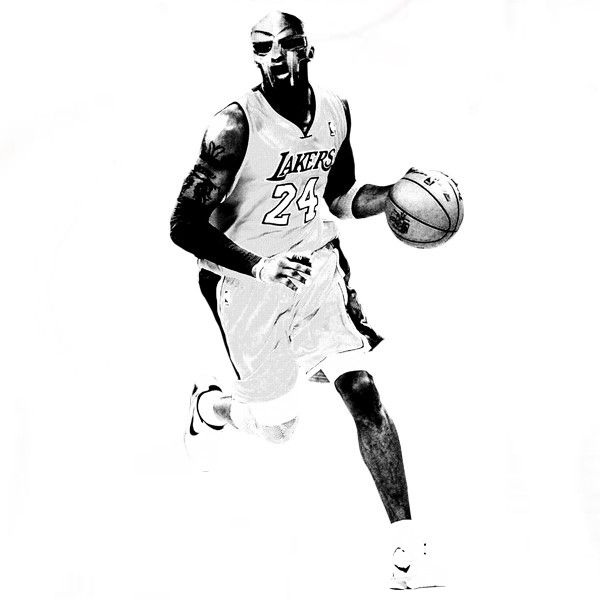
Any basketball fan of even the most basic hip hop knowledge could've probably seen this coming: now that the Lakers' Kobe Bryant has to wear a face mask to protect his broken nose, DigitalGravel has created a cool-looking tee shirt showing Kobe rocking an MF DOOM-style mask (pictured above). If I can rub a few nickels together, I might have to acquire one of those.

Thursday, March 8, 2012

Lots o' Links: Roundball Edition

Following a sudden shift of surroundings when I moved (for the 5th time in 4 years) four weeks ago, I seem to have fallen off the blogging groove. I try now to climb back onto it as the baseball season approaches, the NBA season runs on by, and I absorb books and music much too fast for me to stop and compose reviews about them. So, in the interest of getting the ball rolling, today we'll do what any good blog does and take a look at some other people's work that I've enjoyed around the web.

First, I've got a little treat for you:


Not very long ago, a large conglomerate of talented bloggers and sportswriters gathered together to launch a new website featuring interesting, perhaps "high-brow" pieces on sports and its surrounding culture. Led by Free Darko mastermind Bethlehem Shoals, the site (called The Classical) seemed a perfect rival to Bill Simmons' recently launched Grantland project. As someone who prefers Shoals' writing style to anything Simmons could possibly devise, I had very high hopes for this endeavor but The Classical has, in my eyes, gotten off to a slow start. In the meantime, Grantland has gathered awesome writers (Jonah Keri, Rany Jazayerli, Bill Barnwell, Katie Baker, Jay Caspian King) covering every sport and I can't help but check out their content almost every day.

With the locked-out basketball season finally starting to get its wind and a fresh baseball season showing its first signs of life, The Classical is responding with some excellent pieces. I don't want this post to turn into a collection of nothing but Grantland and Classical pieces but... they've written a bunch of great stuff lately. These works in particular have really grabbed my attention:

Sunday, August 28, 2011

"Teems of times and happy returns"


After finally completing that big list about James Joyce in the last post, I wanted to let it simmer atop the page for a while. I didn't intend to let the blog go dormant for three weeks, though.

Things have gotten a little hectic here lately, my life is becoming more and more like that of a normal young person: very busy. I'm only working 20 hours a week (to avoid succumbing to the soul-killing clutches of a cubicle) but my girlfriend and I are sharing a car and managing to stay occupied from morning until early evening, which doesn't allow me all that much creative/reading/relaxing/baseball-watching time. I'm not stressing about it though, because I know plenty of people my age have it a lot worse than me. Aside from the slow suffocation of my finances (and similar bodily reactions to the intense Texas heat), life here in Austin is pretty damn good. At the moment I'm sitting outside at a coffee shop with wooden decks extending up into the woods. Very cool place.

In the intervening three weeks between blog posts, I did manage to complete two rather large and detailed hip hop album reviews as part of a trio. I'm in the midst of writing the third review and once they're all finished I will share them here. I've got a bunch of posts coming up soon (if I can find the time) including a big one covering all the new Wu-Tang-related music that's springing up right now.

For the moment, I want to share a few (mostly) Joyce-related links that have interested me lately:

- friend of this blog Bobby Campbell is a very talented artist and graphic designer and he recently produced a smooth, peripatetic illustration of the scene in chapter 3 of Ulysses where Stephen is "walking into eternity along Sandymount strand" that is definitely worth checking out. This represents one of my favorite sections from Joyce, as I wrote about last month.

- More great stuff from BC, he created some spectacular looking artwork (including the piece atop this blogpost) demonstrating Vico's four cycles of history which Joyce used as the structure of Finnegans Wake. Go check it out at the Maybe Logic Academy blog, it is part of a nice essay entitled "Falling on Deaf Ears" elaborating on Vico's philosophy, the Wake, Marshall McLuhan, and more.

- The past couple weeks I've been reading an extremely fascinating essay on Finnegans Wake by Dan Weiss that was posted on the The Brazen Head blog. It is written in an easy-to-read style of short sections and it serves as both an introduction to the complexities of the Wake and an exploration of how Joyce tried to construct it so as to encompass the entire universe, thus creating something that closely resembles modern hyptertext and the internet. The essay is lengthy but well-written and worth the read. Another piece covering Joyce in a similar vein (internet, universe, hypertextuality) made my brain cells swell recently; it explores Joyce, Jorge Luis Borges, and Thomas Pynchon and their attempts at creating a "cosmic web" through their art.

- This last link is not exactly Joyce related (though the author maintains multiple blogs with Joyce and Wake material), but Steven James Pratt (aka Fly Agaric 23) wrote an intriguing and thought-provoking blog post about the recent race riots in the UK using his favorite splicing style of weaving together mini essays, poems, and article clips. I highly recommend you check it out.

Please stay tuned as there will be more to come soon.

Thursday, July 21, 2011

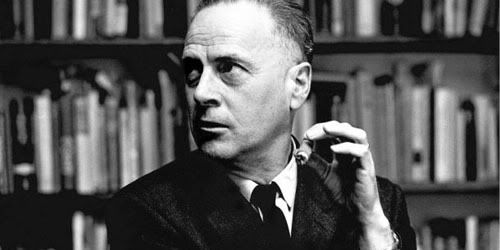
The McLuhan Centennial


Today is the 100th birthday of the great influential thinker Marshall McLuhan. McLuhan died back in 1980 but his influence has exploded over the last decade or so as most of what he used to talk about in the 1960s has come to fruition lately. I spoke about this in two recent posts reviewing Douglas Coupland's excellent new biography of McLuhan.

Ever since reading that book, I've been devouring all the McLuhan material I can find albeit without picking up any of his books yet (I'm already far behind on a bunch of other books). I can't quite pinpoint what it is exactly that so fascinates me about McLuhan but his intense erudition and his nonchalant, almost humorous way of presenting it certainly appeals to me. He was also a devout student of Joyce, especially Finnegans Wake and he often brings up the Wake in his writings, lectures, interviews, etc. He was also a sort of modern public mystic, one with the physical appearance of a 50-something-year-old English professor (which is exactly what he was). For someone who was technically a literary scholar writing books about the future of technology, he was also very much a poet, an artist.

There is an audio clip of an interview with Robert Anton Wilson that I often listen to where he discusses Finnegans Wake at length and in the opening he describes James Joyce as "one of the greatest archeologists who ever lived." The more I look into McLuhan, the more that quote resonates in my mind and I've been starting to see McLuhan as a sort of successor to Joyce in that respect, a perfect connecting link between Joyce (who flourished in the first three decades of the 20th century) and the current times.

I need not try to expand on all of that here as the 100th anniversary of his birth (his birthday is actually just three days after mine, I turned 26 on Monday) has brought about a whole slew of interesting pieces and profiles all over the interwebs.

A couple weeks back, this big article appeared in Toronto Life completed with photos and an engaging write-up of his rise to fame. Here's a quote from it:
McLuhan didn’t really care if he was right. Right or wrong and good or bad had nothing to do with it. He was, he often claimed, not a moralist but an observer. An explorer, not an explainer. He was too fond of the paradox and the pun, always more of an imagistic and satiric poet. He was not a sociologist, nor was he, strictly speaking, a futurist. “If you really are curious about the future,” he said on CBC’s Ideas, “just study the present.”
That last part brings to mind a quote from Wyndham Lewis that I recently came across (no surprise since McLuhan was buddies with Lewis for a while): "The artist is always engaged in writing a detailed history of the future because he is the only person aware of the nature of the present."

The Toronto Star also has a couple of pieces about him. 

Douglas Coupland, author of the aforementioned book You Know Nothing of My Work!, wrote a piece on MM in the Guardian.
 
The American Spectator has an interesting piece talking about McLuhan and Mark Zuckerberg.

And, of all the McLuhan pieces I've read today, the best one is this blog post by Nicholas Carr.

A few more McLuhan links I'd like to share:

Friend of this blog Bobby Campbell created an illustrated article on McLuhan a few years back called "The State of the Art." (Hat tip to the Maybe Logic blog.)

I think I've already linked to this before but here is a great article about McLuhan and Giordano Bruno.

And here is a really good interview McLuhan did back in 1971 (I actually burned this on CD and have listened to it during my daily commute---McLuhan starts off slow but then takes off). This is Part 1 of 6:

Monday, June 7, 2010

Links: More on Jim/James Joyce plus Bronze Nazareth and Madlib

I'm a bit late with this little follow-up to the Jim Joyce-Armando Galarraga situation but I'd like to briefly bring attention to a few links. Alex Belth, Joe Posnanski, and Peter Gammons all had very similar reactions to mine, especially Posnanski:
And in that moment when he had a perfect game so unfairly taken away from him, he smiled. In the interview after the game, he simply said that he wasn’t sure about the call but he was proud of his game. When told afterward that Joyce felt terrible about the missed call, Galarraga said that he wanted to go tell Joyce not to worry about it, that people make mistakes.
Galarraga pitched a perfect game on Wednesday night in Detroit. I’ll always believe that. I think most baseball fans will always believe that. But, more than anything, it seems that Galarraga will always believe it. The way he handled himself after the game, well, that was something better than perfection. Dallas Braden’s perfect game was thrilling. Roy Halladay’s perfect game was art. But Armando’s Galarraga’s perfect game was a lesson in grace.
And when my young daughters ask, “Why didn’t he get mad and scream about how he was robbed?” I think I will tell them this: I don’t know for sure, but I think it’s because Armando Galarraga understands something that is very hard to understand, something we all struggle with, something I hope you will learn as you grow older: In the end, nobody’s perfect. We just do the best we can.
I swear I hadn't yet read his article when I wrote my blog post. I guess Galarraga's handling of the mistake just had that kind of a strong impact on people.

Besides praising how the participants handled the whole mess, the big discussion in the aftermath of that blown call has been whether to implement more usage of instant replay into baseball. One of my favorite current writers, Josh Wilker, wrote a piece about this very topic and the quality of the writing is absolutely superb. He gets creative at the beginning, letting the content dictate the style of writing almost to a point of absurdity (and of course some of the commenters didn't catch what he was trying to do). Check it out:
But you can't stop time and you can't even really digress much these days, because who wants to sit around reading long, looping, allusive sentences that suddenly veer off target to reach for things that are lost for good, like one of the mushy baseballs my brother and I used to buy at the general store down the road and then knock into the tall baseball-eating grass where our sheep grazed (Virginia was her name, and she was in some ways the symbolic center of my family's 1970s back-to-the-land dream, which eventually failed [symbolically ending the day Virginia came home in little white packages that everyone was too sad to ever eat] and in failing became eligible to be deemed, in retrospect, a mistake, perhaps even something to have been avoided, had there been some technological, time-stopping means of doing so), the loss of one of the mushy balls always seeming like the product of some mistake that disabled our flimsy two-boy game and opened us back up to the fading of the light from the sky, the end of the day, the march of time, the inevitable -- I mean who wants to get involved in that kind of melancholy textual aimlessness these days what with all the other quick-hitting entertainment opportunities available? 
Once he gets to the point he's trying to make, although it may not be all that persuasive, it's as well written as anything I've read on the subject.
Something about the profoundly boring and predictable nature of the uproar over the event, and the uproar-fueling media-led mob-march toward legislating in rules to make everything smooth as an android's skin, has me wanting to argue in defense of mistakes.
Yes, I'm excerpting alot but I'm that impressed with the writing. Here's one more, my favorite paragraph and then I'm done with it:
Maybe mistakes are our only divergence from the inevitable. I mean, in the vastness of barren space, this tiny blue globe of vibrant life stands out as a brief, inexplicable mistake. And everywhere on this earth, mistakes key strange, unexpected growth. Jazz singer Jon Hendricks once said, "It wouldn't be jazz without the mistakes." Christopher Columbus found this continent by mistake. Judging from my mother and father's separation from one another in the 1970s, a separation that suggested the original coupling was a bad call, my very existence was the product of a mistake. My parents' attempt during that mistake-filled decade to establish a utopian life in the country, in which we would grow all our own food, also proved to be untenable, another mistake, though I trace the deepest loves and joys and hopes of my life to the love and joy and hope embedded in that mistake.
The personal stuff he touches on at the end of the paragraph is a main focus of his recent book, Cardboard Gods, which is amazing. I received it back in April and read it pretty quickly but have not been able to direct my focus towards writing a review as of yet. But the review is coming soon enough.

*   *   *
With Bloomsday coming up soon there's been a slight bubbling up of James Joyce material in the blogosphere lately. The Allmusic.com blog had a nice piece about the music in Ulysses (as you can tell from a brief scan of the post, Ulysses is filled with music) including brief audio clips of some of the songs featured in the novel and also the two existent audio recordings of Joyce reading aloud from his books (I'll have a post about those recordings soon).

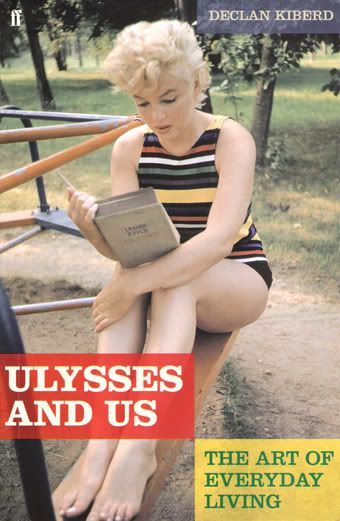
It's very lengthy but I highly recommend reading the Dublin Book Review's take on Declan Kiberd's new book, Ulysses and Us. I haven't read Kiberd's book yet but I intend to and the review speaks very highly of it. Kiberd attempts to rescue "the damned monster novel" (Joyce's own words) from the tight grips of academic institutions and bring it back to the common man. Although it is certainly a challenging read, Kiberd explains that "Ulysses was designed to produce readers capable of reading Ulysses … it offers not only a text but a training in how to decode it." It's that cool.

I also like Kiberd's assertion that the corporate university, which essentially "took over the work of interpretation" of the great book, "praised Joyce as the supreme technician and ignored Ulysses as a modern example of wisdom literature. However, modernism, like any other great movement of art, is full of lessons." This, to me, is one of the main reasons why so many people avoid trying to read it. Not only because it's difficult reading at times but because the "supreme technicality" seems daunting and hard to understand, yet Ulysses is as much an occult wisdom book as a supremely-architectured labyrinth.

Moving on...

Go here to hear Stephen Colbert reading the "Calypso" episode.

*   *   *
I'll be incorporating music into this blog more as I move forward with it and lyricist/producer extraordinaire and Wu-Tang affiliate, Bronze Nazareth, will undoubtedly feature prominently so his recent interview with Wu-international.com is a good start. Here's a snippet where he's discussing his new album entitled School for the Blindman:
I bang my head on the walls trying to make sure every word is visual, not too complex but still clever. I really truly stress myself out, sometimes I get to a point where I don't like anything I'm writing, so what actually makes it on a track lyrically on my album has gone through a heavy filter. 
Aside from the quality of his music (the lyrics make my brain tingle, the instrumentals strike my emotions heavily) it's this type of approach which I find most appealing about Bronze (here explaining the title for his upcoming album):
"School for the Blindman" is me just saying I'm giving my thoughts words, experience, and knowledge to listeners, through music. You could be physically blind, listen to it and take something from it as well as you can be blind mentally and learn through it. So this is my experiences and schooling for those who can and will listen.
His first album, The Great Migration, came out back in 2006 and played a major role in my life over the next few years. It even helped inspire my own Great Migration from New York to San Diego.

*   *   *
Speaking of music...Madlib and his one-album-per-month Medicine Show this year will also feature heavily here in my music discussions so I'll let this serve as a little taste of things to come (I suggest you fast-forward to about the 1:58 mark for my favorite part):

Monday, April 26, 2010

Links: Beach, Joyce, and a lost Guru

As I type this, the Padres are losing 10-0 to the Marlins and Jaroslav Halak is becoming a Montreal Canadiens playoff hero, withstanding a barrage of shots from the vaunted Washington Capitals. Just as I typed his name, he allowed the first Caps goal of the game on their 52nd shot.

I've got a few links to bring attention to.

I found another article on Sylvia Beach and James Joyce, this one from the Irish Times. The article has another cool photo of Beach and Joyce with JJ sporting his dapper suit, walking stick, and sneakers. Just like the last piece I discussed, this one begins with some extremely high praise for Beach:
SYLVIA BEACH would not have considered herself a candidate for sainthood: yet it is hard not to feel a certain reverence and awe when faced with someone who so assiduously and indefatigably advanced the difficult cause of literary Modernism in the early decades of the last century.
But the article doesn't have such high praise for the editing work done on her letters which have been gathered in a new book (it is this book that generated these recent Beach news items), noting many factual errors and faulty editing.

Speaking of which: an anonymous commenter had some very interesting things to say regarding my recent post on the "new" Finnegans Wake that recently came out. He brought my attention to John Kidd, a deceased Joyce scholar who had come under fire not too long ago for criticizing Danis Rose, the same editor who is largely responsible for this new "corrected" Wake. In an incisive article for The New York Review of Books, Kidd shed light on the new "Reader's Edition" of Ulysses that Mr. Rose had edited and released in the late 90s, changing much of Joyce's writing in the process to the point where the Joyce Estate went to court demanding that James Joyce's name be stripped from the book's cover and spine. They cited that Rose had made almost 7,000 editorial changes "that do not appear in any existing manuscript or edition, [and] are so anti-Joycean that the author is Danis Rose, not James Joyce."
It's actually pretty funny to read Kidd ripping Rose a new one. Rose described his own new edition of Ulysses as one which "liberates the text… and makes it possible for the first time for the general reader to relish every nuance and beauty of Joyce’s masterpiece” and he brags about smuggling Ulysses "out of the ivory tower of the academics" to bring it back to the common man in the marketplace. But before his version of the book even begins there's 80 pages of ridiculous prefatory material (preface, three-part introduction, appendix, footnotes, and something called a Technical Appendix discussing Rose's novel techniques) which "alone will intimidate all but the professional textologist or software engineer."

I'm still reading up on John Kidd after the interesting info the commenter passed along but I can say that, after thumbing through the two latest editions of the James Joyce Quarterly I don't agree with his negative assessment of it (the commenter paraphrased him describing it as a "circle-jerk") but it could be that they've changed things up since Kidd's scathing indictment.

*     *     *
Along the same subject of forging an artist's words...One of my favorite hip hop emcees of all time, Guru from the group Gang Starr, passed away from cancer last week at the age of 43. The sad news comes a few months after he'd entered into a coma spawning swirling rumors of his untimely death. But last week it happened for real. Guru was the voice behind the legendary Gang Starr along with producer DJ Premier and he's responsible for some of the greatest hip hop songs of all time including one of my favorites, "Above the Clouds" featuring Wu-Tang Clan's Inspectah Deck:


Guru's intelligent lyrics provided a major influence throughout my teenage years and, along with the Wu-Tang Clan, helped inspire me (amidst a materialistic, dummy culture prominent amongst the youth in my hometown of Staten Island, New York) to become, or at least try to become, an intellectual. Over melodic, booming DJ Premier beats, Guru glorified the mind ("Street knowledge, intellect and spirituality: my survival package as I deal with reality") and downplayed material objects ("My sense of self and my mental health is much more powerful than any inch of wealth").

The controversy that has arisen after his death has been more than a bit discomforting for me. A slimy, sleezeball named "DJ Solar" who had been working with Guru the last few years (and was possibly involved with him romantically) apparently would not allow Guru's family members to see him on his deathbed, he also tried to prevent long time collaborator DJ Premier from seeing his old friend. The "official" statement that was released after his death seemed to overly praise Solar and there are rumors that he's trying to get in on the royalties from the deceased artist's estate. Things have gotten so bad that Guru's father, a prominent Massachusetts lawyer, had to send police to recover his son's body from the covetous Solar.

Here are two videos that perfectly paint the picture of the man trying to gain off the death of a so-called friend. The first is from a recent interview with MTV's Sway who openly grilled a sweaty, sunglasses-wearing Solar (the video has a bunch of segments, it is the second in the sequence which I bring attention to). The second is an interview with Solar and Guru which...speaks for itself.


*     *     *
Changing things up...A cool piece in GQ magazine about perhaps the most unique (and entertaining) player in baseball.
*     *     *
This sounds very cool: a marathon where actors are reading Joyce's books aloud. And they all drink beer afterwards. It's the James Joyce Ramble. Sign me up.

And, last but not least, the Ulysses spacecraft discovers our solar system's biggest comet. Somehow, the article doesn't allude to the "Ithaca" chapter.

Friday, March 19, 2010

Links, Time, and Ferris Bueller

My job and some extracurricular activities (notably, a second job I worked on at home for a few days) completely consumed me this week and by the time I finally came up for air, the week was over. My blog: postless. The last five days seemed to zoom by at light speed. Why? I guess you'd say it's because I've been very busy and, as always seems to happen, when one is occupied or busy in some way---time flies. The opposite phenomenon is the watched pot that never boils. During those last few minutes of work or class when you're staring at the clock, time seems to take its time. If you stop and take the time to focus on something, time will seemingly slow down or, in rare instances, stand still. In the "Oxen of the Sun" chapter of Ulysses, the carousing drunken medical students notice Bloom (pg 416) staring deeply at the label on a beer bottle, totally hypnotized and in another dimension, and Joyce (speaking through his characters) says:
Any object, intensely regarded, may be a gate of access to the incorruptible eon of the gods. 
Ferris Bueller said "Life moves pretty fast. If you don't stop and look around once in a while, you could miss it" and as I get more and more involved with my job and let the days breeze by I realize the importance of that statement. It's very similar to what I described in the last paragraph of my introductory baseball post, where the timeless nature of a live baseball game often promotes reflection and consideration of where I am in life. Thankfully, baseball season (and spring!) is upon us.

Anyways, I'm back and I have some links. St Patrick's Day brought Joyce back into the news a bit and there's been some fun and excitement in hockey and interesting baseball stuff. I'm still figuring out how to unite and display such a weird conglomeration of topics so I'll break 'em up here.

Baseball
- Bill James' interviews usually suck because he comes across as cold and not wanting to be bothered. This one's cool but he makes some weird assertions.
- Major League Baseball's grouchy old get-off-my-lawn attitude when it comes to the internet media boom is annoying
- Torii Hunter, who has the same birthday as me, said some silly things recently and got lambasted for it but here's a slightly more sober view.
- Nice piece from Josh Wilker on the film "Sugar" and the lives of Dominican baseball players.
- Why people hate Yankee fans. I've gotta learn how to make my blog look that pretty.
- Another beautiful blog that makes me jealous. On the recent news about Texas Rangers' manager Ron Washington.
Hockey
I could've sworn there were a bunch more hockey things I wanted to link to but...this is what happens when you don't heed the words of Ferris Bueller.

Joyce
- A  short interview with a scholar who won a battle with the Joyce estate after they tried to block her from using any of his writings in her new biography of Lucia Joyce, his schizophrenic daughter. The interview is nothing in depth really but it brings up a couple interesting things: the Joyce estate and Joyce's daughter Lucia. The Estate of James Joyce or rather, Mr. Stephen Joyce, the writer's sole living descendant, has caused alot of trouble for scholars over the last few years, withholding and even destroying some of his work and being extremely stingy with giving a stamp of approval on anything while asking for lots of dough in royalties when they do approve stuff. The interview I linked to is with the author of a biography of James Joyce's daughter, Lucia, who was considered to have schizophrenia and spent the last 30 years of her life in a mental institution. Here's some more info about the sad story. It's been said that she inherited her father's genius but, whereas he was able to channel it into his writings, she had no sufficient outlet and was overcome by it.

- I really don't like this guy's article at all but the headline is nice: "The Best Book Ever Written is Irish"


Random
- My ladyfriend showed me a pretty cool documentary on this weird experiment and now it's gaining more attention with a television show. The chilling part: "The Milgram experiment showed that people will submit to authority no matter what its form: military, political, medical, a boss — or now a television host." Check it out.