As Robert Anton Wilson liked to point out, reading about or discussing synchronicity usually tends to vastly increase the amount of strange coincidences in one's life. In my experience, whenever I've been engaged in reading Carl Jung, or the I Ching, or Wilson himself, synchronicities do tend to swirl around me.
This same thing especially applies to reading James Joyce. His major works are filled with synchroncities and coincidences. In his book Joyce the Creator, Sheldon Brivic attempts to document all the synchronicities embedded within the single day of Ulysses and he lists over a hundred of them. Robert Anton Wilson's book Coincidance has a few excellent essays about synchronicity in Finnegans Wake. It's safe to say that it's a big part of Joyce's major works (though the word "synchronicity" was coined by Jung more than ten years after Joyce's death).
These past few weeks I've been undertaking the task of thoroughly reading Finnegans Wake, this deep involvement tending to leave me in an unusual mindstate. I find myself thinking about certain words or phrases all throughout the day and often I can't wait to get home and dive back into the strange book. I've read four chapters thus far and I'm really enjoying it. With lots of notes already written about it, I'll have plenty to say about the book in an upcoming post.
For now, I'd like to share three funny coincidences that occurred over three consecutive days right around the time I'd begun reading the Wake.
Showing posts with label CG Jung. Show all posts
Showing posts with label CG Jung. Show all posts
Tuesday, July 31, 2012


Thursday, March 15, 2012
Thirst for Knowledge Thursdays: Jung's World-View-Flipping Memories, Dreams, Reflections
"A man who has not passed through the inferno of his passions has never overcome them. They then dwell in the house next door, and at any moment a flame may dart out and set fire to his own house. Whenever we give up, leave behind, and forget too much, there is always the danger that the things we have neglected will return with added force."
- Carl Jung, Memories, Dreams, Reflections pg. 277
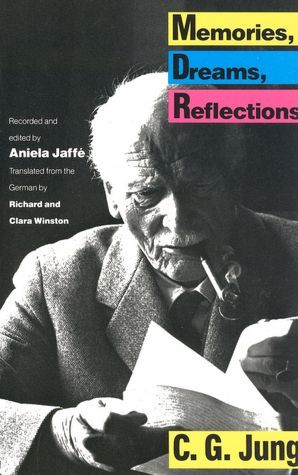
As is perfectly fitting for the man who coined the term "synchronicity," Jung's book suddenly popped up in my atmosphere again that same night as I was reading a recently-discovered blog called Brain Pickings. Seemingly out of the blue, there was Jung's Memories, Dreams, Reflections at the top of the page with a little blurb and even an illustrated diagram summarizing the book's story. This, of course, prompted me to start piecing together ideas for a blog post and I faintly remembered taking copious notes on the book when I had first read it in early 2009.
It was in November of 2009 that I initially started writing this blog, but before I ever decided to start sharing my own thoughts on the internet I had been practicing my writing privately in notebooks for a few years. Digging up my old notes for Jung's book I came across not only a dozen or so pages worth of quotes I had copied down from it, but even a thorough, glowing 8-page review I wrote for it. Looking back at the review, I'm glad to see that I meticulously documented the strong effect the book had on me because I've only read it once but I recall that it struck me powerfully. As I wrote back then, "Upon first rendering, it's a glorious flash of light but it is necessary to approach the material again and sit in its glow for a time. This is extremely powerful, illuminating stuff."
Tuesday, October 12, 2010
New (old) Books Scooped Up Recently
Went to my favorite used book store last night and picked up some gems. Got into an interesting exchange with the cashier too when he foolishly dissed Joyce, more on that in a minute.
.JPG) A few years ago there was a period I went through when I was carrying around Emerson's Nature and Selected Essays in my back pocket just because every time I read any selection from it I always found it was such an enlightening and enjoyable read, like imbibing a refreshing drink. Looking at this biography about him called The Mind on Fire I couldn't help but get it when I saw reviews that said stuff like this:
A few years ago there was a period I went through when I was carrying around Emerson's Nature and Selected Essays in my back pocket just because every time I read any selection from it I always found it was such an enlightening and enjoyable read, like imbibing a refreshing drink. Looking at this biography about him called The Mind on Fire I couldn't help but get it when I saw reviews that said stuff like this:
 And then the top book on the pile is a copy of A Portrait of the Artist as a Young Man featuring a whole bunch of critical texts and commentaries from sources like H.G. Wells, Ezra Pound, and more. Definitely will be using this to help construct my Dali-Joyce essay I'm brainstorming on right now.
The last thing I got is by far the coolest:
 It's an amazing edition of Ulysses that's put together like The Bible or some other great holy book. The arabesques all over the cover are amazing and perfectly representative of the verbal arabesques that twirl throughout this entire epic. And this is the good edition of the text, not the butchered Hans Walter Gabler version. Here's some more pics, check out the gold-tipped pages.

 It even has illustrations throughout the book from Kenneth Francis Dewey. This one is from the Lotus-Eaters episode.
 It's a great book to have and read and such a perfect rendition of the monstrous, so thoroughly intricate novel. Before I knew this edition existed, I'd have hoped someone would make one like it.
Upon seeing the Joyce books, the cashier said "Well, these will be torture" to which I laughed thinking he was kidding. When it was clear he meant it I said "Nah man, I'm obsessed with this stuff" and he blatantly let out his foolishness with an emotional and insulting blurt of "He couldn't write a coherent sentence to save his life!" I was tempted to crack open to any page in Ulysses and teach him what a random line is saying but he then admitted (if it was indeed true) that he'd tried to read the book once and immediately gave up because it was like gibberish. My girlfriend later revealed that she was amazed at how calm I was when the guy seemed to flat out insult my favorite writer, but I explained that his reaction to Joyce is the same as most people who haven't really tried to read and understand it. It's the consensus, mainstream opinion that he's too difficult because nobody actually dares to dig in.
 When I was in the cultural utopia of San Francisco last week I also scooped up a few great Joyce books, especially this one of super high-quality old photos, drawings and paintings called Joyce Images by Bob Cato and Greg Vitiello with an introduction by my old buddy Anthony Burgess. The cover is a drawing of Joyce made up of signatures ("Signatures of all things I am here to read.") of the names of Joyce's characters all weaved together.
Also got a nice copy of Harry Levin's entertaining study of Joyce (a rare and out of print book) and a newer paperback version of Ulysses to replace my current tattered copy (this was of course before I had bore witness to the huge masterpiece above).
.JPG)
[This is] one of those exciting books that flash bolts of lightning across an entire intellectual era and up and down modern history.And then Jung's book on Mandala Symbolism is great and has a whole bunch of illustrations of mandalas from himself, patients of his, artists, and historic art from around the world. Great pick up. Check this out:

The last thing I got is by far the coolest:


Upon seeing the Joyce books, the cashier said "Well, these will be torture" to which I laughed thinking he was kidding. When it was clear he meant it I said "Nah man, I'm obsessed with this stuff" and he blatantly let out his foolishness with an emotional and insulting blurt of "He couldn't write a coherent sentence to save his life!" I was tempted to crack open to any page in Ulysses and teach him what a random line is saying but he then admitted (if it was indeed true) that he'd tried to read the book once and immediately gave up because it was like gibberish. My girlfriend later revealed that she was amazed at how calm I was when the guy seemed to flat out insult my favorite writer, but I explained that his reaction to Joyce is the same as most people who haven't really tried to read and understand it. It's the consensus, mainstream opinion that he's too difficult because nobody actually dares to dig in.
 When I was in the cultural utopia of San Francisco last week I also scooped up a few great Joyce books, especially this one of super high-quality old photos, drawings and paintings called Joyce Images by Bob Cato and Greg Vitiello with an introduction by my old buddy Anthony Burgess. The cover is a drawing of Joyce made up of signatures ("Signatures of all things I am here to read.") of the names of Joyce's characters all weaved together.
Also got a nice copy of Harry Levin's entertaining study of Joyce (a rare and out of print book) and a newer paperback version of Ulysses to replace my current tattered copy (this was of course before I had bore witness to the huge masterpiece above).
Friday, June 25, 2010
Is this also an example of Synchronicity?
Earlier today I posted about tonight's extremely rare lunar eclipse featuring a large (illusively large) moon because of its proximity to the horizon. Funky, weird things are thought to happen during full moons. I think weird full moon occurrences represent a perfect example of what Jung means when he's describing how the concept of synchronicity conflicts with the entire premise of our inherent cause-and-effect perspective on things. The full moon does not cause people to act crazy or weird events to happen, it is instead a coincidental and noticeable pattern in time.
 Anyway, I find it very interesting, astounding perhaps, that on a night when we have a full moon and a rare lunar eclipse, we've also had some rare and strange occurrences in the evening's baseball games. I've already mentioned Edwin Jackson's 8-walk 148-pitch no hitter (against a strong offensive team, albeit one that's now been held hitless thrice in the last calendar year) but by far the weirdest thing that happened tonight was the Blue Jays-Phillies game. Nothing particularly strange from the action on the field but the game itself was strange: it was a home game for the Toronto Blue Jays and a road game for the Phillies...but was played at Citizen's Bank Park in Philadelphia. This rarity happened because major league baseball changed the location of the game due to security concerns in Toronto with the G20 summit on global economy taking place.
The Phillies won the game 9-0 led by their ace pitcher Roy Halladay, acquired from (guess who?) the visiting home team Toronto Blue Jays over the winter. Halladay also threw the last (official) no-hitter prior to Edwin Jackson's tonight. Weird.
(And here's the info behind that awesome picture.)
**Edit: One more thing that was crazy (but not exactly unusual) from today's baseball action: Carlos Zambrano's tirade after pitching a miserable one inning and exiting the game versus the White Sox in Chicago.
***Edit Part 2: Looking back at my post from last month, Roy Halladay's no-hitter (and the other wild baseball events that night) occurred with a full moon in the sky.
The Phillies won the game 9-0 led by their ace pitcher Roy Halladay, acquired from (guess who?) the visiting home team Toronto Blue Jays over the winter. Halladay also threw the last (official) no-hitter prior to Edwin Jackson's tonight. Weird.
(And here's the info behind that awesome picture.)
**Edit: One more thing that was crazy (but not exactly unusual) from today's baseball action: Carlos Zambrano's tirade after pitching a miserable one inning and exiting the game versus the White Sox in Chicago.
***Edit Part 2: Looking back at my post from last month, Roy Halladay's no-hitter (and the other wild baseball events that night) occurred with a full moon in the sky.
Wednesday, June 23, 2010
Preparatory to Anything Else...Synchronicity
Synchronicity. I've mentioned the term here a few times now, most recently in light of the recent coincidence that occurred to me a few weeks ago, but I haven't taken the time to discuss the topic or its importance. Since it will probably recur pretty often on this blog and especially because it's a main theme of Ulysses (although Joyce wrote about these "epiphanies," as he called them, years before Jung coined the term) which I'll be exploring soon, I would like to orchestrate a brief introduction to synchronicity here. Instead of my own ramblings, I've assembled a collection of quotes from my personal library and my notebooks, presented in a format similar to that of DJ Fly Agaric. Enjoy.
"Most of us in the course of life have observed coincidences in which two or more independent events having no apparent causal connection nevertheless seem to form a meaningful pattern. On occasion, this patterning can strike one as so extraordinary that it is difficult to believe the coincidence has been produced by chance alone. The events give the distinct impression of having been precisely arranged, invisibly orchestrated.
Jung first described the remarkable phenomenon he named synchronicity in a seminar as early as 1928. He continued his investigations for more than twenty years before at last attempting a full formulation in the early 1950s."
---Richard Tarnas, Cosmos and Psyche, pg 50
"...a concept that formulates a point of view diametrically opposed to that of causality. Since the latter is a merely statistical truth and not absolute, it is a sort of working hypothesis of how events evolve one out of another, whereas synchronicity takes the coincidence of events in space and time as meaning something more than mere chance, namely, a peculiar interdependence of objective events among themselves as well as with the subjective (psychic) states of the observer or observers."
---from Carl Jung's "Foreword to the I-Ching or Book Changes" translated by Richard Wilhelm
"...the meaningful coincidence or equivalence (a) of a psychic and a physical state or event which have no causal relationship to another. Such synchronistic phenomena occur, for instance, when an inwardly perceived event (dream, vision, premonition, etc.) is seen to have a correspondence in external reality: the inner image of premonition has 'come true'; (b) of similar or identical thoughts, dreams, etc. occurring at the same time in different places. Neither the one nor the other coincidence can be explained by causality, but seems to be connected primarily with activated archetypal processes in the unconscious."
--from the Glossary on pg 400 of Jung's autobiography entitled Memories, Dreams, Reflections
"It seems, indeed, as though time, far from being an abstraction, is a concrete continuum which contains qualities or fundamentals which can manifest themselves in relative simultaneousness in different places and in a parallelism which cannot be explained, as in cases of simultaneous appearance of identical thoughts, symbols, or psychic conditions...Whatever is born or done at this particular moment of time has the quality of this moment of time."
---Carl Jung, Collected Works, vol. 15, pg 56
"Struggling with this phenomenon, Jung became very interested in the developments in quantum-relativistic physics and in the radically new worldview to which they were pointing. He had many intellectual exchanges with Wolfgang Pauli, one of the founders of quantum physics, who was his client and personal friend. Under Pauli's guidance, Jung became familiar with the revolutionary concepts in modern physics, including the challenges to deterministic thinking and linear causality it had introduced into science. Jung was aware of the fact that his own observations appeared much more plausible and acceptable in the context of the new emerging image of reality. Additional support for Jung's ideas came from no less than Albert Einstein who, during a personal visit, encouraged Jung to pursue his idea of synchronicity because it was fully compatible with the new discoveries in physics. Toward the end of his life, Jung became so convinced about the important role that synchronicity played in the natural order of things that he used it as a guiding principle in his everyday life."
---Stanislav Grof, When the Impossible Happens, pg 5
"Jung believed that synchronicities generally seemed to serve the same role as dreams, psychological symptoms, and other manifestations of the unconscious, namely, to compensate the conscious attitude and move the psyche from a problematic one-sidedness toward greater wholeness and individuation. Not only did the unexpectedly externalized pattern of meaning seem to represent more than mere chance coincidence; it also appeared to serve a definite purpose, impelling the psyche toward a more complete psychological and spiritual realization of the individual personality. This self-realization was achieved through a deeper integration of conscious and unconscious, which ultimately required of the individual a discerning surrender of the usual conscious attitude of knowing superiority."
---Richard Tarnas, Cosmos and Psyche, pg 53
"Synchronicity is no more baffling or mysterious than the discontinuities of physics. It is only the ingrained belief in the sovereign power of causality that creates intellectual difficulties and makes it appear unthinkable that causeless events exist or could ever occur. But if they do, then we must regard them as creative acts, as the continuous creation of a pattern that exists from all eternity, repeats itself sporadically, and is not derivable from any known antecedents."
---Carl Jung, Synchronicity: An Acausal Connecting Principle, pg 102
"...I think Joyce has a feeling that you live this way if you are open enough inside. Somehow you have premonitions of what's to come, and events unfold in mysteriously appropriate ways, with what Jung called 'synchronicity.'"
---Joseph Campbell, Mythic Worlds, Modern Words, pg 69
"It appears to have been Jung's growing recognition of the magnitude of these implications for the modern world view that impelled him to labor so strenuously, even courageously, to bring critical awareness of the phenomenon of synchronicity into the intellectual discourse of the twentieth century."
---Richard Tarnas, Cosmos and Psyche, pg 60
"Most of us in the course of life have observed coincidences in which two or more independent events having no apparent causal connection nevertheless seem to form a meaningful pattern. On occasion, this patterning can strike one as so extraordinary that it is difficult to believe the coincidence has been produced by chance alone. The events give the distinct impression of having been precisely arranged, invisibly orchestrated.
Jung first described the remarkable phenomenon he named synchronicity in a seminar as early as 1928. He continued his investigations for more than twenty years before at last attempting a full formulation in the early 1950s."
---Richard Tarnas, Cosmos and Psyche, pg 50
"...a concept that formulates a point of view diametrically opposed to that of causality. Since the latter is a merely statistical truth and not absolute, it is a sort of working hypothesis of how events evolve one out of another, whereas synchronicity takes the coincidence of events in space and time as meaning something more than mere chance, namely, a peculiar interdependence of objective events among themselves as well as with the subjective (psychic) states of the observer or observers."
---from Carl Jung's "Foreword to the I-Ching or Book Changes" translated by Richard Wilhelm
"...the meaningful coincidence or equivalence (a) of a psychic and a physical state or event which have no causal relationship to another. Such synchronistic phenomena occur, for instance, when an inwardly perceived event (dream, vision, premonition, etc.) is seen to have a correspondence in external reality: the inner image of premonition has 'come true'; (b) of similar or identical thoughts, dreams, etc. occurring at the same time in different places. Neither the one nor the other coincidence can be explained by causality, but seems to be connected primarily with activated archetypal processes in the unconscious."
--from the Glossary on pg 400 of Jung's autobiography entitled Memories, Dreams, Reflections
"It seems, indeed, as though time, far from being an abstraction, is a concrete continuum which contains qualities or fundamentals which can manifest themselves in relative simultaneousness in different places and in a parallelism which cannot be explained, as in cases of simultaneous appearance of identical thoughts, symbols, or psychic conditions...Whatever is born or done at this particular moment of time has the quality of this moment of time."
---Carl Jung, Collected Works, vol. 15, pg 56
"Struggling with this phenomenon, Jung became very interested in the developments in quantum-relativistic physics and in the radically new worldview to which they were pointing. He had many intellectual exchanges with Wolfgang Pauli, one of the founders of quantum physics, who was his client and personal friend. Under Pauli's guidance, Jung became familiar with the revolutionary concepts in modern physics, including the challenges to deterministic thinking and linear causality it had introduced into science. Jung was aware of the fact that his own observations appeared much more plausible and acceptable in the context of the new emerging image of reality. Additional support for Jung's ideas came from no less than Albert Einstein who, during a personal visit, encouraged Jung to pursue his idea of synchronicity because it was fully compatible with the new discoveries in physics. Toward the end of his life, Jung became so convinced about the important role that synchronicity played in the natural order of things that he used it as a guiding principle in his everyday life."
---Stanislav Grof, When the Impossible Happens, pg 5
"Jung believed that synchronicities generally seemed to serve the same role as dreams, psychological symptoms, and other manifestations of the unconscious, namely, to compensate the conscious attitude and move the psyche from a problematic one-sidedness toward greater wholeness and individuation. Not only did the unexpectedly externalized pattern of meaning seem to represent more than mere chance coincidence; it also appeared to serve a definite purpose, impelling the psyche toward a more complete psychological and spiritual realization of the individual personality. This self-realization was achieved through a deeper integration of conscious and unconscious, which ultimately required of the individual a discerning surrender of the usual conscious attitude of knowing superiority."
---Richard Tarnas, Cosmos and Psyche, pg 53
"Synchronicity is no more baffling or mysterious than the discontinuities of physics. It is only the ingrained belief in the sovereign power of causality that creates intellectual difficulties and makes it appear unthinkable that causeless events exist or could ever occur. But if they do, then we must regard them as creative acts, as the continuous creation of a pattern that exists from all eternity, repeats itself sporadically, and is not derivable from any known antecedents."
---Carl Jung, Synchronicity: An Acausal Connecting Principle, pg 102
"...I think Joyce has a feeling that you live this way if you are open enough inside. Somehow you have premonitions of what's to come, and events unfold in mysteriously appropriate ways, with what Jung called 'synchronicity.'"
---Joseph Campbell, Mythic Worlds, Modern Words, pg 69
"It appears to have been Jung's growing recognition of the magnitude of these implications for the modern world view that impelled him to labor so strenuously, even courageously, to bring critical awareness of the phenomenon of synchronicity into the intellectual discourse of the twentieth century."
---Richard Tarnas, Cosmos and Psyche, pg 60
Subscribe to:
Posts (Atom)