Showing posts with label Timothy Leary. Show all posts

Saturday, March 28, 2015

The Allure of Gravity's Rainbow and Its Mysterious Author

Japanese cover for Gravity's Rainbow

[Preface: Last year I developed a fascination with Timothy Leary's deep interest in author Thomas Pynchon & Gravity's Rainbow which led me to reach out to the highly knowledgable OG (Michael from Overweening Generalist) for his input on this topic. A lengthy e-mail discussion ensued and out of that grew a two-part crossover collaboration between "A Building Roam" and "Overweening Generalist". While my piece focuses on the intrigue of Gravity's Rainbow, the mystery of Pynchon, and Leary's role in all of this, the OG further explores Leary's relationship with Pynchon's postmodern epic. So read my piece, go read OG's piece (entitled "Fugitive Thoughts: Timothy Leary's Reading of Gravity's Rainbow") and let us know what you think.]


What could possibly compel someone to read such a beastly and tedious book as Gravity's Rainbow? For me, it was a series of reinforcing recommendations that sparked a compulsive interest.

My initial fascination with the work of heralded author and notorious recluse Thomas Pynchon can be traced back to three events. First, I heard Michael Schur (aka Ken Tremendous), the creator of Parks and Recreation, tout Pynchon's work passionately on a baseball podcast a few years ago. That led me to at least familiarize myself with the author. Then, while discussing books once with my remarkably well-read friend Charlie, he insisted I read Pynchon's work, particularly Gravity's Rainbow, in response to both my love for Joyce and my interest in paranoia. And, most significantly, I was struck when I heard Dr. Timothy Leary rave about Pynchon and express intense adoration for Gravity's Rainbow in multiple lectures and interviews from the Psychedelic Salon podcast archives.

Leary flat out declared Gravity's Rainbow "the best book ever written in the English language" and hailed the genius of Thomas Pynchon on many occasions. While his pal Robert Anton Wilson was known to frequently evangelize about the genius of Joyce, Leary championed Pynchon as a literary god any chance he got. An old 1980s interview clip on YouTube shows Leary calling Pynchon his "hero" and the finest living writer, pleading for the aloof Pynchon to get in touch with him. There are accounts of Leary, stuck in solitary confinement during the mid-1970s, receiving and repeatedly reading the recently published Gravity's Rainbow. He also praises Pynchon in his autobiography Flashbacks, likening him to Joyce and Dante.

How great could this Pynchon guy possibly be to elicit such fervent admiration? Somehow a modern, contemporary writer being so historically special didn't seem possible to me. All the very best writers are dead, aren't they? My inquiries in Google brought back frequent comparisons to Joyce, especially holding up Gravity's Rainbow next to Ulysses and Moby-Dick as the grandest epics of Western literature. My fascination swelled.

*   *   *

Gravity's Rainbow made quite a splash when it landed in 1973. It was the third book to appear from the completely hidden-from-the-public-eye author Pynchon, whose writing had established a lofty reputation from his first novels V. (1963) and The Crying of Lot 49 (1966). A gigantic, densely elaborate and confounding epic, a huge messy tale revolving around German rocketry and the end of WWII, Gravity's Rainbow would go on to win the National Book Award (Pynchon sent comedian Irwin Corey to accept the award on his behalf) and generate controversy when it was unanimously selected for the Pulitzer Prize in fiction yet ultimately rejected because of a passage involving coprophilia. So turned off by the perversions of Pynchon, the Pulitzer board elected to give the prize for fiction to nobody. The Pulitzer board described the novel as "unreadable", "turgid", "overwritten" and "obscene" and, after reading the book, I can't help but agree wholeheartedly with each of those adjectives, though I certainly did enjoy the experience overall.

Despite some annoying, disturbing, and offputting qualities ("turgid" really sums it up well), it's undoubtedly a brilliant work of literature by one of the finest writers of the last hundred years. The New York Times lavished it with praise upon its release, likening it in scope to Ulysses and Moby-Dick, and Richard Lehmann-Haupt poured it on pretty thick in a humorous review published in the New York Times Book Review:
'The Adventures of Rocketman' 
Gravity's Rainbow is fantastic---fantastically large, complex, funny, perplexing, daring, and weird---weird as an experience you've never really been through before. Fantastic! ...  
So what can I tell you? That Pynchon writes like an angel and clowns like the very devil? ...  
Perhaps I can only say this: if I were banished to the moon tomorrow and could take only five books along, this would be one of them. And I suspect that's a feeling that's going to last.

Sunday, January 4, 2015

A Quick Rundown of Books Read in 2014


Breakfast of Champions by Kurt Vonnegut
Zipped through this hilarious little gem on my flight to Portugal in the spring. This was my second foray into Vonnegut and, while my socks certainly weren't knocked off by this book, I'm starting to love the guy. His style of writing is just so damn clear and concise, the humor always incisive. With a rather mundane story focused in middle America, Vonnegut brings the absurdity of our modern existence to light as only he can. Few books have made me laugh out loud as much as this one. Upon finishing it, I planted my copy in the bookshelf of the Lisbon apartment we stayed at. Hopefully it will bring someone else joy and bewilderment.

Cat’s Cradle by Vonnegut
A friend, whose brother had originally insisted I read Slaughterhouse Five last year, handed me a copy and urged me to read Cat's Cradle, which he feels is Vonnegut's best book. Much like Breakfast of Champions, Vonnegut's economy of style and constant wit blew me away but the story didn't capture me until a sudden plot twist toward the end. The last 100 pages or so have many quotable lines, here's one of my favorites: "When a man becomes a writer, I think he takes on a sacred obligation to produce beauty and enlightenment and comfort at top speed." There's a strange affect I've noticed when reading Vonnegut that compels you to crave more. I now see why his easily digestible books are so adored. Can't wait to dig into the next one.

Joyce’s Book of the Dark by John Bishop
The premier critical text of James Joyce's Finnegans Wake, occupied an inordinate amount of my brain energy for most of the year. While I completed it in January of 2013 (it shows up on my book list for last year), I felt so adamant that a thorough summary review needed to be written that I spent all of 2013 re-reading it, then spent most of 2014 re-re-reading it and writing a review which became one of the longest pieces I've ever written. You can read all about it here.

Baseball Prospectus 2014
The ol' reliable doorstop made some drastic changes with its 2014 edition. After major complaints from readers (myself included) about the 2013 edition with its shortened team essays and run-of-the-mill writing, the BP editors not only brought back the extended-length essays but brought in outside writers to cover each team. They also broke with a long tradition of leaving the essays without a byline, presumably for the appeal of having some well-known baseball writers featured. It made for a great edition of this often terrific annual, but I remain perplexed at the direction it's headed. Bringing in 30 outside writers is a nice gimmick, but I'd like to see the actual cadre of Baseball Prospectus analysts get back to banging out unique, awesome essays on their own like they used to.

Football Outsiders 2014
This book was partly responsible for me winning my second fantasy football championship in a row. I wrote about it a bit more extensively here. It's an encyclopedic annual overflowing with stats and elevated by always impressive analytical essays. The heyday of Baseball Prospectus has passed, the fantastic Pro Basketball Prospectus series got snatched up and turned into online content by ESPN, but the Football Outsiders/Prospectus group maintains its powers. This is a must-read every year for devoted football fans and fantasy football geeks.

Wednesday, October 30, 2013

Short Reviews for Books Read in 2013

In loosely chronological order...

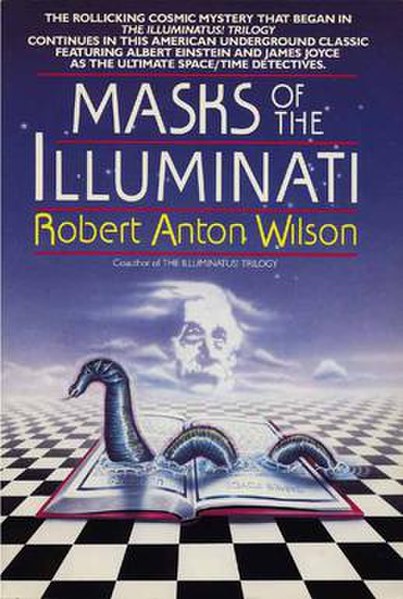
1. Masks of the Illuminati by Robert Anton Wilson
This was my first experience of RAW's fictional work and I enjoyed it thoroughly. A very entertaining, smooth read, this story takes place in the early 20th century and stars none other than James Joyce and Albert Einstein teaming up to help a distressed man who fears he's been the victim of a conspiracy perpetrated by Aleister Crowley. It reads like a detective novel, the clues generated through flashbacks and chewed on by our sleuths, two of the greatest geniuses of their generation, drawing the reader into its mystery until a somewhat ridiculous, confounding (though humorous) conclusion. The novel's shifting writing style often mimics the various styles employed by Joyce in Ulysses and there's even a subplot here of the young Joyce, thanks to his conversations with Einstein on relativity, fully conceiving his grand idea for a new book that would become Ulysses. Joyce describes his idea for "A multi-dimensional, multi-level, multi-meaningful book. A puzzle-book, one might say---and what could be more appropriate to our times, when all the best minds recognize increasingly that our existence is a profound puzzle?" (I read this book along with Tom Jackson's reading group over at his site RAWillumination.net. Go here to see more about the reading group.)


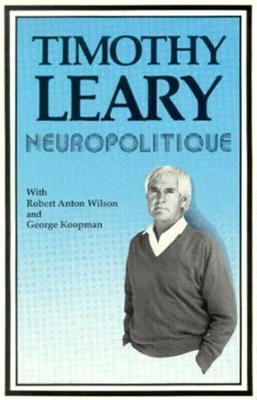
2. Neuropolitique by Timothy Leary and Robert Anton Wilson
A collection of essays from Leary mainly from the early-1970s, this features a wide array of pieces mostly written while in prison. I most enjoyed his overview of what occurred during the 1960s and early 70s which morphs into an incisive (and humorous) condemnation of the system of glorifying crime and punishment in the US, eventually covering his arrival and assimilation into maximum security prison culture, being in a cell next to Charles Manson, and working a deal with law enforcement to shorten his sentence. There are also essays on the 8-circuit model of consciousness (including one written by RAW) and space migration. My favorite aspect of Leary's spiel tends to be his view of DNA and evolution and I love the way he ties space migration into this. He likens space migration to "the movement from marine to amphibian life or from reptile to mammalian." Why don't people say this kind of stuff anymore? The quality of the pieces definitely seems to tail off towards the end but this book is worth reading for the first half. (This also seems to be the only Leary book without his enduring wide grin on the cover. He means business here.)

3. Info-Psychology: A Manual for the Use of the Human Nervous System by Timothy Leary
Continuing my foray into the life and work of Leary (temporarily put on hold at the moment as I work on some big writing projects), this was the book that always seemed most appealing to me since it's Leary's own introduction to the 8-circuit model of consciousness, which RAW so perfectly examined in his book Prometheus Rising. While it has its bright spots, I found this book lacking in many respects (including its physical appearance, the New Falcon re-issue feeling cheap with rigid, stiff paper). While it gave me a better understanding of the overall picture, especially the higher four circuits, the book doesn't make the ideas seem very intriguing at all and even frequently refers to other books of his for further elaboration (whereas I thought this was the key text). At the same time, its subtitle claims it to be a manual but there really isn't anything interactive here, unlike Prometheus Rising which is a book that can literally change your life. You also get a clear sense that Leary was still hammering out some of the details of his model while writing this book, the re-issue even has an awkward set of footnotes at the end suggesting alternatives or retractions for the preceding material. This is another book that Leary wrote while in prison and, while the ideas and insights are staggering at times, it all seems a little disorganized. I don't blame him.

4. Quantum Psychology by Robert Anton Wilson
This is essentially the sequel to his classic Prometheus Rising. Here RAW makes use of the worldview(s) suggested by discoveries in quantum physics and attempts to work these into our experience of everyday life, with lots of interactive exercises that would work best in a group setting. (Once again, Tom Jackson's RAW-focused website had an online reading group for this one.) While there's certainly plenty of fascinating and important stuff here with RAW's usual combo of Zen parables, historical anecdotes, and hard science examining things like psychosomatics, relativity and the 8-circuit model of consciousness, I managed to breeze right through this book without too much of it really sticking in my head. Maybe I'll need to read it again with a more focused attitude and willingness to try all the exercises.

5. The Book of the Breast by Robert Anton Wilson
I picked up the original version, a hardcover edition with pictures, published by Playboy Press (it was later revised and reissued by New Falcon under the title Ishtar Rising). It's one of RAW's earlier works and provides an interesting glimpse at the period when he worked as an editor with Playboy. The subject matter is anthropological and very sophisticated for a book published by Playboy, it reminds me Joseph Campbell's books with its insights developed by a combination of psychology, history, poetry, art, myth, and sociology. At the same time, any regular reader of RAW's works will notice his prose feels a little bit different. Probably due to some combination of the intended audience, the era, the publisher, and the stage of his craft, the writing occasionally tries too hard to come across as hip and cool, man. Ya dig?

6. Baseball Prospectus 2013
This annual stalwart took a major dive by changing its structure, junking its unique, creative essays for a boring, uniform style. Wrote a full review here. Thankfully, they've considered the harsh feedback and are going back to the fun style.

7. Operating Manual for Spaceship Earth by Buckminster Fuller
A very short book but not a very quick read. The eminent architect-engineer-poet Bucky Fuller conveys his thoughts in a dense manner, heavy on metaphors. Great insights, though, and certainly a book that arouses one's optimism as he asserts the essential truth about our global problems---that they are entirely solvable if we restructure our attitudes.

8. Slaughterhouse-Five by Kurt Vonnegut
Somehow I'd never before read this classic, so a friend insisted I borrow it. What a beautiful prose stylist, this Vonnegut guy. I zoomed straight through this excellent and hilarious story of the misadventures of some American POWs in the German city of Dresden toward the end of World War II. A quirky, spectacularly awkward soldier/time-traveler/dentist named Billy Pilgrim is the star of the show and Vonnegut has fun with his pathetic hero. The prose is very simple, poignant, plain, practical. Repeated motifs like the simple phrase "So it goes" give the novel a vital continuity. With the firebombing of Dresden at its epicenter (in which an entire city was reduced to ashes, killing more people than the bombing of Hiroshima), the depiction of the horrors of war is piercing and unsettling but not overly teary or sentimental. Vonnegut's curt prose lets the reader fill in the blanks. Definitely a book to be read multiple times through one's life.

9. Manage Your Day-to-Day: Build your routine, find your focus & sharpen your creative mind by the team at 99u
This little book speaks perfectly to my struggles as an aspiring writer---it's a collection of essays on how to remain focused and manifest your creativity in an era of technology and distractions galore. What it all seems to boil down to is showing up every day, never waiting for inspiration, instead getting your ass to the desk and working. The name for their website comes from the Thomas Edison quote, "Genius is is one percent inspiration, ninety-nine percent perspiration." Basically, put your nose to the grind and work. Highly recommended book for all creative people out there.

10. Joyce's Book of the Dark by John Bishop
I'm almost done with my second reading of this book. Began it last December upon completing Finnegans Wake and, when my attempts to write a summarizing review failed, I had to jump back in and read it again for a better understanding. It's a vast and rich study, a dizzying deconstruction of that most obscure of books, Finnegans Wake, and it may actually be one of the all-time great works of art criticism. In an attempt to explain just what the hell Finnegans Wake is, Bishop begins with Joyce's own frequent hints that it is a book of the night, of the sleeping state, and then proceeds to wrap an astounding array of material from the Wake around his argument through increasingly fascinating chapters, hammering home his points thoroughly and highlighting the deep mysteries of our nightly descent into unconsciousness. His analysis includes large etymological flowcharts, illustrations and diagrams, and even giant maps representing the domain of a sleeping body ("Nocturnal Geography" he calls it). It's definitely not an easy read, but it's arguably the best book ever written about Finnegans Wake and contains some of the most unique and well-argued takeaways from Joyce's puzzling masterpiece I've thus far encountered. Look out for my full review coming soon at my other blog Finnegans, Wake!

Honorable Mention:
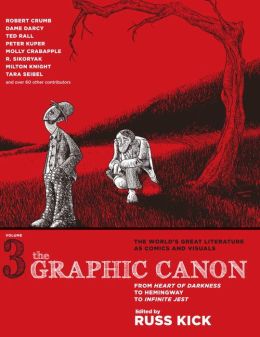
The Graphic Canon Vol. 3: From Heart of Darkness to Hemingway to Infinite Jest

Putting it down here because I haven't read this one in its entirety. Not even close. It's an enormous
book, sort of like an illustrated almanac of 20th century literature featuring a wide array of artistic styles. This serves as both a grab bag of visual candy and a nice primer to the best literature of the last 100 years. It's got just about everything from Joyce and Yeats to Pynchon and Wallace, Aldous Huxley and Hemingway, Kafka, Faulkner, Eliot. You name it, it's here. More importantly, the artwork is awesome. Sometimes it's in graphic novel form, other times weird, trippy, psychedelic paintings, or sharp colorful computer-generated graphics. It's a perfect book to leave out on a coffee table and flip through randomly. So much good stuff here, you'd probably never get through it all.

Thursday, May 16, 2013

Retracing Recent Ramifications of Thought, Part 2 (Room 237 and beyond)


"What do we know about what we put into anything? Though people may read more into Ulysses than I ever intended, who is to say that they are wrong? Do any of us know what we are creating?" - James Joyce
I've been remiss not to have mentioned Room 237 on this blog yet. I first learned of this film last October when Chuck Klosterman wrote a review for it at Grantland and began: "I just saw a documentary that obliterated my cranium. It's the best nonfiction film I've seen all year." From there I was compelled to read every Room 237 review I could find, then searched desperately for a way to see it (unsuccessfully until just a few weeks ago), and have frequently been bringing up the film as a conversation piece with friends.

Room 237 quickly turned into a mini obsession for me because the premise of the film---creative interpretation of art---aligned exactly with what I've been pursuing for a couple years now. It is a documentary by Rodney Ascher exploring alternate interpretations of Stanley Kubrick's 1980 film The Shining through the voices of five people outlining their own unique theories. Their analysis, through which they verify a specific subjective interpretation by pointing out numerous correspondences throughout The Shining, is exactly what Salvador Dali referred to as "paranoiac critical analysis," a critical approach I've written about here and in my monograph on Dali and James Joyce.

As the ultimate auteur who carefully pieced together every single element that appears on screen, Kubrick's artistic style lends itself perfectly to this type of deep analysis. Microscopic scrutiny of minute elements reveals a wealth of possible meanings. Hence, the cans of Calumet baking powder displayed in some kitchen scenes hints at an underlying theme of Native American genocide, or so argues Bill Blakemore. Frequent occurrences of the number 42 allude to the Jewish Holocaust since Auschwitz opened in 1942 says Geoffrey Cocks, a noted scholar on Nazi Germany who sees the film through those goggles.

Juli Kearns, with a New England accent sounding a lot like Doris Kearns Goodwin (of Ken Burns Baseball documentary fame) graphically outlines inconsistencies in the architectural arrangement of The Shining's Overlook Hotel, indicating a spooky morphology in the building itself. Colorful Kubrick obsessor John Fell Ryan chuckles through his discussion of minor continuity errors which are, he argues, edited that way intentionally to add a further element of eeriness and subtly shock the viewer's unconscious. The most compelling (and initially ridiculous) argument in the film is made by Jay Weidner who posits that The Shining is Kubrick's confession that he helped the American government fake the Apollo 11 moon landing.*

*Though he makes it clear he is not stating the moon landing didn't occur, only that the footage was faked. Here's my take, for what it's worth: I had heard this Kubrick moon landing conspiracy theory prior to seeing the film and brought it up in a late night outdoor discussion under a full moon with some folks. They knew all about it already. A Houston native told me the story of growing up attending high school with the children of NASA employees, they told him the moon landing footage was indeed faked but we absolutely did go to the moon. The real footage was burned up in the Earth's atmosphere upon return, they said. That Kubrick was working closely with NASA on 2001: A Space Odyssey (a film featuring plenty of moon surface scenes) all throughout the 1960s adds to the intrigue of this whacky idea. True or not, it has to be the coolest conspiracy theory I've ever heard.

The entire documentary is presented through a cut-up of scenes from The Shining and various other film clips with voiceovers of the analysts detailing their stories and ideas. We don't see any of the usual documentary-style scenes of sedentary people talking and there's no narration aside from the interviewees telling their stories and theories. This immersion into the worlds of the obsessed observers actually brings the film some humor as the speakers occasionally go off the edge in their theories (most memorably when it is asserted that the face of Kubrick appears airbrushed into the clouds during the opening sequence).

Sunday, March 24, 2013

On the Lofty Potential of the Human Brain

Stephen Wiltshire draws a city from memory

Soaking in certain books and lecture materials (mainly revolving around the works of Robert Anton Wilson and Timothy Leary) over the last few weeks has had me often floating in a deep, blissful and prolonged appreciation and consideration of the human brain, nature's astounding biocomputer.