Wednesday, February 23, 2011

Potent Postables

Geopoliticus Child Watching the Birth of the New Man by Salvador Dali

At last, I am reconnected to the internet. Not counting a couple nights in a La Quinta Inn, I haven't had regular internet access since the end of January.

It's certainly been a productive interval, though. We drove for four days through California, Arizona, New Mexico and the dreadfully huge and empty wilderness of Texas; scoped out and settled into an apartment; did our best to make it a cool and comfortable place to live; and I've finished the first part of my three-part essay on Joyce & Dali which I'm submitting for the North American James Joyce Conference.

Now that I've got my connection to the interwebs back, I've got plenty to post about on here. Here are a few of the things you can expect to see.

- I've had this half-finished post sitting in the pipeline for a while but I'm determined to finish it up in the next week or two: "16 Reasons Why James Joyce is the Greatest Writer Ever."

- Along those same lines...one of the great things so far about Austin is a chain store called Half Price Books. Their selection is ENORMOUS and, unlike the big corporate bookstore chains, they aren't promoting the usual bullshit, heavily-marketed, high-budget junk. Instead they've got aisles and aisles of whatever you want. It's like a huge, well-stocked library where the books cost 5 bucks or less. Anyway, the store near downtown Austin had a shockingly rich Joyce collection. Naturally, I picked up a bunch of books (for an average price of about 4 bucks each). But they've also got a special secluded section in the store for rare books. In there I found a gem that was so freakin' cool I had to acquire it for my treasure chest even though it was a bit expensive.
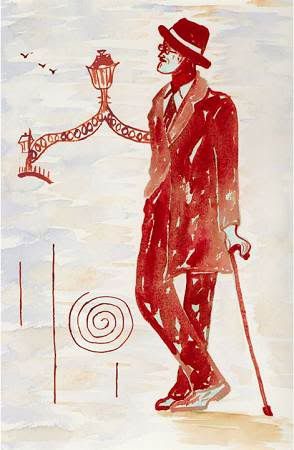
It's an elongated, beautifully designed artsy collection of Joyce's poetic writings (including all of his poems as well as his epiphanies and some of the most poetic selections from all of his books). What makes it so special, to me at least, is that it's a book from 1969 that was printed in Poland with English on one side and Polish translation on the other, put together by a famous Polish translator named Maciej Słomczyński. With exquisite etchings all throughout and thick parchment paper it's certainly pleasing to the eye but reading Słomczyński's introduction is what drew me in. It begins:  
James Joyce was probably one of the greatest poets who ever lived on our globe, so abundant in poets, but he did not trouble himself to create within the limits of this or that literary genre. 
His words on Joyce's masterpiece are also worth sharing:
Almost everybody who had enough strength and patience to make his way, day after day, step by step, through the incredible labyrinth of [Finnegans Wake], realized that he is dealing with an extraordinary book, great but inaccessible.
I remember my first reading and my impression of listening to someone singing beautifully, but in an incomprehensible language, accompanied on some unknown instruments which issued fascinating sounds yet unlike anything I had known before, sounds I was unable to define in any musical scale.
Years later I began to understand: Finnegans Wake, in which Joyce wanted to embrace everything---the whole history of man, all his arts, sciences, misfortunes and expectations---is a book written in the Tower of Babel in mixed languages and in dialects of all epochs and all countries. And, to my mind, it is the purest poetry I could imagine.
 
- When I contemplated who are, at this moment in time, my favorite artists in any genre, those whose work I'm highly passionate (near obsessive) about, I came up with a pretty interesting list and I will be sharing that here very soon.

- Moving on to the hip hop sphere... All throughout the road trip from Cali to Texas and our subsequent drives around to explore this new city, and while we unpacked our stacks of boxes in the new place, I had the same album playing over and over again on the speakers and it's only continued to sound better and better. The album is a brand new release from Kevlaar 7 of the Wisemen (his first official solo album, actually), an EP entitled Who Got the Camera? that deals entirely with themes of revolution and social upheaval, exactly what we need in this country right now but also, synchronistically, exactly what is going on throughout the world right now (the album was released on February 1st and the Cairo street protests started escalating right about the same time). It's a highly emotional, musically superb, big-palmed slap to the plastic face of our criminally oppressive (at home and abroad) empire. When I was first listening to it, hearing one of my favorite current hip hop artists speak so clearly, openly, informatively (and angrily) about this current situation just perfectly embodied, to my mind, Ezra Pound's famous words on the social importance of the artist: "The artist is the antenna of the race, the barometer and voltmeter." Not the journalist, the TV news anchor, or the politicians. The artist is the antennna tuned into the current frequency of the world and he (or she) interprets it through art, in this case: music. What's in the air? "Pungent smells of classism and oppression" or as Kevlaar later announces: "Storms of persecution should spark swarms of revolutions."

I've been so struck by this album and the weighty message it carries that I have created a new blog which will be entirely devoted to analyzing, expanding upon, and discussing the content of it as well as educating folks on some of the many historical figures mentioned and keeping up with the happenings of the world and the crumblings of the New Roman Empire.


The first song I will analyze is called "I Have a Dream," the first single (released on MLK Day) off the album, its immensely strong beat provided by an expert underground loop-crafter named Woodenchainz (whom I've spoken about here before). Lyrically, it is a modern day retelling of Dr. Martin Luther King, Jr.'s "I Have a Dream" speech, an update so to speak.

Spectrums of creative suffering,
the mainstream is bubblin'
showing zero substance, I've had enough and passion's doublin'

   Stumblin' in the valley of anguish,
                                            hungry for dreams,
                                                           in fact: WE FAMISHED
                      deep-rooted, examinin' antics

I have a dream today that the devil vanished
                              Replant this in our handbooks, TEACH OUR CHILDREN THE ANSWERS

- I'm thinking of starting a couple of regular weekly posts on here. The first will be "Thirst for Knowledge Thursdays" in which I will randomly select a book from my Jacob's Ladder Bookcase and discuss it, explain why it should be read, and how I came across it. Another is "Potent Quotables" and that'll just be a cooler name for something I've already been doing a little bit of: posting cool quotes. (The title for this post is from an oft-used Jeopardy category that always stayed in my head from watching SNL's Jeopardy parodies. "Potent Potables" actually means strong, alcoholic drinks.)

- The chronicles of my journey across the southwestern quadrant of the US will definitely have to be put together and I will share it here on the blog, although, since it will inevitably take up many many paragraphs, I'll stick it behind some kind of "Read the rest of this entry" wall instead of clogging up the page with it.

- I'd like to write a couple of posts about my time in San Diego because it was an extremely cool place and time. I met a lot of great people, in fact, you can definitely expect a post about "The Coolest Person I've Ever Met" all about a good pal of mine in San Diego.

- Also, coming along down the line.... MLB 2011 season preview, Carmelo/Knicks and other NBA gushings, some sports book reviews and all kinds of other things. Stay tuned.

Saturday, February 19, 2011

Music of the Spheres

Astrological Projection by Salvador Dali
"Our psyche is set up in accord with the structure of the universe, and what happens in the macrocosm likewise happens in the infinitesimal and most subjective reaches of the psyche." - Carl Jung

"Study constellations, they personify the Sun!" - Kevlaar 7
I don't really pay much attention to my horoscope at all unless I come across it randomly. Then I'll check it out just for the heck of it and usually put very little stock into what it says. I never really knew or cared much about astrology or the Zodiac signs actually until a couple years ago when two different books on the subject randomly confronted me and hit like lightning bolts.

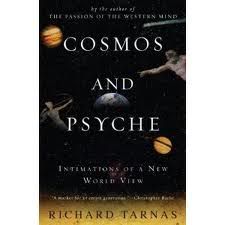
The first was a book by Richard Tarnas, an eminent scholar who had previously written a book on the history of Western thought called The Passion of the Western Mind which received high praise from some of my favorite peeps like Joseph Campbell. That text has always been the book used in colleges around the country to teach Western history from Ancient Greece to modern times. This new book of his is actually a sequel though it deals entirely with what's called archetypal astrology; basically, the view that each planet (plus the Sun and Moon) embodies certain principles or archetypes and there are discernible patterns and cycles throughout history corresponding to the position of the planets relative to the earth. Really, really paradigm-shifting stuff and this was coming from one of the most respected minds in the academic community which, of course, led to lots of harrumphs from the conservative geezers.

Still, though, the basic world view put forth by Tarnas (microcosm = macrocosm) is one that most of the advanced and integrated modern minds have been revolving around for a while now. Really, it's a modern revival of an ancient world view, "That which is above is the same as that which is below" as Hermes Trismegistus puts it.

When I first came across this book I was in a bookstore after visiting my dying grandmother in the hospital back in June of 2008. I quickly flipped to the index to see which names were referenced and written about. Sure enough, all of my favorites were there: Campbell, Carl Jung, Nietzsche, Fritjof Capra, Goethe, and even Stanislav Grof. One of the main blocks Tarnas builds on is synchronicity. The book certainly seemed worth checking out but it would have to wait because I was on a Nietzsche binge at that moment in time. I eventually bought it a few months later when I found myself at the California Institute of Integral Studies where Tarnas teaches in San Francisco. I got into a great conversation with the bookstore clerk there and he convinced me to pick it up.

It's a very good book, absolutely filled with world history presented in a clear, engaging manner though admittedly it is pretty long (around 500 pages) and he presents his case so thoroughly that it kind of drags on at times towards the end. But, as the magnum opus of a renowned world historian, it's certainly a worthwhile book and I can guarantee it will, at the very least, shake the frame through which you view your earthly existence and possibly make you rearrange your perspective a bit.

*   *   *

"As long as you still experience the stars as something 'above you,' you lack the eye of knowledge." - Friedrich Nietzsche
*   *   *

It was in December of 2008, right around Christmas, when I was first confronted with the possibility that astrology not only contained valid truths but shockingly precise assertions. On this night, I was with a group of friends in a small city east of San Diego called El Cajon, situated seemingly in the middle of nowhere amidst valleys and canyons. We had driven out there to see a movie which one of us heard was excellent and it was only playing in a theater out there in the boonies. The movie was Slumdog Millionaire.

The entire evening seemed to be imbued with a sense of mystery and the unknown. I had only been living in San Diego for about six months at that point and was with a group of four friends, all Mexican and talking to each other in Spanish (which I don’t speak), out in the middle of nowhere in Southern California on a starry December night. After arriving an hour or so early for the movie, we decided to kill time by loitering in a Best Buy across the parking lot.

As I roamed the aisles of the crowded store (it was Christmas time, mind you) it hit me that I was in a totally different world than I’d been used to in New York. I was in a huge, extremely packed store and yet there seemed to be absolutely zero chance that anybody would recognize me all the way out in the middle of this dark desert in California. Whereas, in the Staten Island Best Buy that I’d been used to, I would run into someone from my past just about every single time I was in the store.

Now I was a stranger. In a strange land. And it felt cool.

I stood playing Madden football on a huge TV set for a little while until I was hit with an urgent need to use the bathroom for number-2 purposes. My stomach was under attack. I rushed through clusters of people and aisles of electronics until I found the store’s bathroom. Each stall in the men’s room was absolutely, horrifically mutilated. Stacks of urine-drenched toilet paper covered the seats, unflushed excrement piled up in the bowl. I became enraged at humanity and burst out the bathroom door headed outside and next-door to Barnes and Noble.

The atmosphere of B&N hummed the essence of a sanctuary compared to the pounding bright images of Best Buy. It was crowded but calm. Classical music played and turned my frantic jogging into a fast-paced stroll. I asked for directions to the bathroom then maneuvered a maze of shelves until I approached a wide path that led to the bathroom. Just before I entered the bathroom, a book facing me from a shelf on the right caught my eye. Its big beautiful yellow cover boasted: The Only Astrology Book You’ll Ever Need. Though time was of the essence, I had just about reached my destination so I quickly stepped off the path and peeked at this book. It was big, well-organized, and had an air of authority. It also didn’t seem gimmicky and even if it did, this was something I knew nothing about. Since it was already an adventurous night, I figured I might as well pull a George Costanza and bring it into the bathroom with me. When else would I be able to do such a thing? If a store clerk confronted me I’d just ignore them and go ahead with fulfilling my urgent need to use the bathroom.

I’ll spare you any more lavatorial details. I flipped open the book and the first page I saw was from a chapter entitled “Astrology and Health” and I happened to open it on the page for my sign, Cancer. “They have delicate stomachs and digestive problems,” it stated. At that very moment I was experiencing stomach problems and I’ve had them throughout my entire life. It mentioned the Cancer’s inability to tolerate alcohol, which aggravates their sensitive stomachs, another problem I’ve dealt with. I became more interested. When the book pointed out a Cancerian susceptibility to varicose veins, an ailment which I’d experienced and had surgically corrected one year prior, I was sold. This shit is serious, I thought.

No need to flag this book because I was convinced that I needed to buy it. It has unremittingly enriched and shocked me and anyone else I’ve shown it to for two years now.


*   *   *
"Attributes shared by Krishna, Attis, and Mithra
Dionysus, exploiting astrological sequence,
the birth and the death of god's son"
-Kevlaar 7
In December, when there was an eclipse on the night of the Winter Solstice, I started preparing to write a post about the solar and lunar symbols underlying Homer's Odyssey using Joseph Campbell's thorough breakdown of this in his Occidental Mythology. That idea faded away until it came back and smacked me in the face recently.

In doing some research for this post I came across some information that rocked my world. I probably should've known it already by now but somehow I never came across it (though, admittedly, I did come close to reaching this conclusion in my post about the Tunc page). The story of Jesus is the story of the Sun. Since, as I'm now realizing, pretty much all ancient hero or god stories perfectly correspond with the path of the Sun, I guess it shouldn't be that much of a shock. But, reading the parallels thoroughly explained, I found it explosively enlightening.

I think it is very simplistic and materialistic of folks to wave their hands and dismiss the importance of such information. For, what could be more simple and primitive than worshiping the sun? I think it goes way deeper than that. It has to do with an identification with the Sun, the solar symbol of infinity and timelessness. An identification with what the Sun represents is also an identification with a star or, really, all the stars in the universe since our sun is just one of many trillion.

It is this path that leads to an identification with the universe, thus shattering the ego and the subject-object dualism.

Put your thinking cap on.

Sunday, February 13, 2011

Housecleaning

It's the 12th day of February and I think this is only maybe the second or third time so far this month that I've had internet access. My iPad keeps me posted on sports scores and I can look stuff up, check email and some other basics but I cannot write blog posts on it because it doesn't support the Blogger software. Can't watch any sports games on my favorite site for that either because the iPad doesn't handle most video applications.

Being limited has actually helped me be a little more productive in a way (getting back into my books heavier and finishing up my studies for the big Dali-Joyce essay I keep talking about) but it's been frustrating because I've often been bombarded and overwhelmed with ideas for new blog posts and I can't channel that properly. I'm left making notes to myself basically saying "write a post about this!" and then I just move on forward past 5 or 6 other ideas. It's as though I'm a passenger on a traveling train of thought and I've come to my stop but can't squeeze my way out. And the train just keeps going along to the other stops. More passengers come onto the train at each stop and the train car is getting overcrowded and uncomfortable, bunched up. And I gotta pee! Get me off this thing!!!


Now that I've finally managed to relieve the building pressure and get back to my Building Roam, I find that I'm overwhelmed with so many things I want to do and see.

I'm in a totally new city (for god's sake!) and I spent a week traveling across the whole Southwestern quadrant of North America.

I've had a new post all about astrology sitting unfinished in my drafts here for 2 weeks now and been dying to share it with the world. I'm still gonna finish it up (hopefully tonight) and get it out there but I've since piled up a Jenga stack of ideas on top of it. Plus, in the past couple weeks so much crazy, noteworthy stuff has happened in my life that I've got all that to talk about.

*   *   *

As I type this, the rows of teeth on the sides of my mouth are aching badly. During my last week in San Diego (I left on January 30th) I had five cavities filled. After somehow avoiding being stricken with even one single dental cavity for my entire life, I had seven of them spring up just in the past year. There are two possible reasons for this: a terrible case of acid reflux I've had for a while now, and the absence of fluoride in the California water---whereas New York's water has lots of fluoride. Either way it sucks. (Plus, I've been under the impression fluoride in our water is a bad thing anyway. Didn't the Nazis purposely put fluoride in the water to make people more docile?)

The cavity-correcting experience was, I guess, not so terrible compared to other more complicated dental work one could have (having my wisdom teeth removed by a shitty dentist years ago was a nightmare) but it was still pretty horrible. I absolutely hate going to the dentist. There's virtually no way I can accept having someone strongly poking and scraping around my teeth with sharp metal instruments. Just typing the words makes my teeth hurt more.

They gave me plenty of Novocaine and I even requested Nitrous gas for the session but I was nevertheless squeamish when the dentist, a petite young Vietnamese woman, really flexed her muscles and dug into small sensitive points in my mouth.

At one point the pain and discomfort was so unbearable, and the Nitrous gas so intoxicating, that I somehow managed to move my consciousness to a lower spot on my spine. It felt as though my center of apprehension was no longer in the center of skull but around my belly area looking upwards at the open-mouthed head that had other people's hands working inside of it. It was pretty awesome, maybe a little freaky. Reminiscent of my experience with Stanislav Grof's Holotropic Breathwork a couple years ago (that's a whole 'nother story to tell for another day).

I kept thinking throughout the process that having these things in our mouths, these calcified exposed bone-like structures, is in many ways a burden. I don't want these stupid things if I have to maintain them and have doctors operate on them like this. The whole thought of teeth and dentists just seemed so strange and distant to me at that time. I should mention that my lack of dental insurance and the thought of having to pay over a thousand bucks for the whole thing contributed to that line of thinking.

Two weeks later, the results have been weird. I know everybody's been getting fillings for years and years, my siblings were getting cavities filled when we were all very young and continued to do so throughout their lives but this is something totally new and unfamiliar to me. Two weeks after the process, I'm shocked that my whole set of teeth aches every time I eat something. It really sucks but I guess that's how one's mouth feels after having 5 teeth excavated.

*   *   *

My last post, written hastily in the chilly (it was 15 degrees outside and the building wasn't well insulated) hotel room of a La Quinta in downtown Austin last week, drew attention to Frank Delaney's awesome James Joyce birthday poem (or "rap" as he called it) and I found myself awestruck last night as I listened to it for a second time, especially the final verse. I was so struck by it that I felt the need to copy down the lyrics and I'd like to share them here.

I think Delaney, who's been doing a great job appraising the jewels in Ulysses' treasure chest for many months now in his weekly podcast, sums up very well the brilliance and appeal of this relatively unread writer who is nevertheless considered the greatest of all time by many of his readers (me included).

Here's what FD has to say about it (and please pardon my creative indentation).


Frank Delaney’s “James Joyce Birthday Rap”
[Verse 3]

Ya know, I often meant to find someone who’d draw me a horoscope
of the stars the night that Joyce was born,
does someone with a telescope
view unusual constellations, see cosmic abnormalities
that would explain this genius birth?

No,
there were no formalities,
                                    no comets crashed,
                                                no planets fell
And yet,
some force was present
some flashing light
some brilliant flame from some uncharted heavens
                                                that shot to earth
and on this baby’s formulated finger,
                                    giving gifts of passion and compassion that would linger
and consolidate until this master knew that he had seen us
            as an artist should,
                                    then wrote it down
            and that’s what was his genius.

He wasn’t born into a house of artistry and intellect,
            his father was a bombast who found it hard to get respect
Yet Jim,
from the time he went to school and then to college,

astounded all around him by the way he soaked up knowledge.

These are well-known facts
about his brain, his great capacity
but the fact is: he’s remembered chiefly for his great opacity
            that’s not why I’m drawn to him
and let me use this day of his to summarize his power for ME
the reasons why he always is the writer I return to
the novelist of primary choice.

To begin with,
            it’s the sound he makes
                        the gliding brilliance of his voice
It’s as clear as any bell
            with the bright led light of crystal
Every word he used inspires me
            he’s the writer’s
            starting pistol
And he’s FEARLESS in his concepts
I mean, just look at the degree
            to which he stretched his framework
                        to fit on Homer’s Odyssey

And next, just think of how he can describe
            a street, a house, a man
without ever giving details,
                        can you do that? who can?
In a sentence, you’re there with him
                        embracing all his references
and in that same damn sentence there might be 30 references
                        and all of them relevant
            with teams of meanings towering
Come on now…
Name another writer
                        whose gift is as empowering
            and the concept
                                    and execution
            THAT’s what makes Joyce shattering
He’ll have this big idea,
            (and I say this not to flatter him)
he’d then find the way, the PERFECT way
            to write it.
THAT’s why we need to warm to Ulysses and not to fight it;

the writer seen in all his power,
                        the literary artist without peer.
For me, it’s finally that one gift of bringing to us here
            all human life put on the page
in language rich and creamy
            he’s the man who showed us that a character can be dreaming
                        while living out his real life
            and often so precariously
so that EVERY page of Ulysses is “to be, or not to be”

and that’s also because he didn’t just call on Homer
            in fact,
            to call it Ulysses is kind of a misnomer
because he also framed it
            against Shakespeare’s Dane
                        Hamlet, prince of Denmark
                                    who was a royal pain
and Stephen, the brooding, suffering young man in Ulysses
is traveling across
                                    a different kind of seven seas
He’s on an inward journey
            and thus the point is taken
that Homer’s hero Odysseus (and here don’t get mistaken)
            isn’t just a sailor                                   
                        he’s a traveler of the psyche
and THAT’s the point of Joyce’s work,
                        however unlikely.
He’s saying that all the movements of our body through the universe
            are metaphors for our mental ships,                       
                        amazing and diverse
And each and every one of us
            though ordinary, IS unique
It’s a brilliant piece of thinking,
            he really means the meek DO inherit the earth
but we must do so by choice.
                        What a wonderful message.
Happy Birthday James A. Joyce

Thursday, February 3, 2011

The G.O.A.T.'s B-Day


I didn't get a chance to write anything about it yesterday because I was stuck having to drive across almost the entire state of Texas, but yesterday was James Joyce's birthday. It was also the anniversary of the first printing of Ulysses in 1922. Sitting in a hotel room with a clogged, cloudy head I can't muster up much to say about my favorite writer and artist right now but I promise I will have some major posts on the greatest writer of them all coming up very soon. 

(I can offer this one quick little nugget from the road trip that's relevant to the topic: We stayed a couple nights with a friend of mine in Arizona and she told us that her daughter is actually a direct descendant of Parnell.)

Until then, I encourage you to go listen to Frank Delaney's James Joyce Birthday Rap. And if you haven't been listening to his weekly 5-minute podcasts deciphering Ulysses then you've been missing out.

Tuesday, January 25, 2011

Illusions

"One day it will have to be officially admitted that what we have christened reality is an even greater illusion than the world of dreams." - Salvador Dali

Saturday, January 22, 2011

Jays, Halos, Rays Rekindle Hot Stove Flame

Ever since reading Moneyball back in 2003, I've been interested in following the chess moves of the notably intelligent, crafty GMs in baseball. Right around that same time, teams started hiring so-called whiz kids (young, Ivy League-educated baseball geniuses) to run their teams like Theo Epstein for the Red Sox, Paul DePodesta for the Dodgers, Jon Daniels with the Rangers, Josh Byrnes and the Diamondbacks, and Andrew Friedman for the Tampa Bay Rays. I'm fascinated by these young minds and usually follow their cunning schemes with precise attention, trying to figure out why they took that player or traded that aging slugger.

About a month ago I read a great interview with the Blue Jays' new hot shot general manager, Alex Anthopoulos, which sparked up my interest in that team and the plots Anthopoulos might have in mind to drag them back into contention again in a fiercely competitive AL East division.

Yesterday he made a trade that has the whole baseball analysis world lavishing the young executive with superlative praise. He somehow managed to get rid of arguably the worst contract in baseball, Vernon Wells' $86 million over the next four years, bestowed on the centerfielder by Antopoulos' predecessor, J.P. Ricciardi. Wells did manage to put up a strong showing at the plate last season (127 OPS+) but, going into his age 32 season, he's no longer a very capable centerfielder and yet he's due to collect $21.5 million per year over the next four years. That's more than the Phillies are paying ace Roy Halladay. FanGraphs ran some numbers and calculated that Wells' projected performance should be worth somewhere around $37-38 million over that span, instead he'll be getting $86 million!

Somehow, the Los Angeles Angels of Anaheim not only agreed to take Wells and his albatross contract off the Jays' hands, they also gave up a couple of pretty good pieces in catcher Mike Napoli and outfielder Juan Rivera. Napoli never really seemed appreciated in Anaheim but he's what I'll call a Bill James Abstract Favorite; a hitter whose assets are his ability to draw lots of walks and hit for power, basically a Three True Outcomes hitter. Focusing on his shitty batting average (.238 last year) or propensity for strikeouts (137 last year in just 510 at-bats) obscures the fact that he's a highly productive hitter because of his power and patience. He should fit right in on this slugging Blue Jays team.

Rivera is really nothing special at this point though he does have a little bit of power (in the game I attended up in Anaheim last summer he hit a moon shot) and maybe the homer-happy Jays can tap into that the way they did with Jose Bautista last year when he exploded for 54 homeruns.

I'm not really sure how Vernon Wells is supposed to fit on this Angels team. He's a lot like Torii Hunter in that he can hit a little bit but not enough to make sense as a corner outfielder, but he's too slow to cover ground in centerfield anymore. Hunter got bumped from center in the middle of the season last year for speedy Peter Bourjos, so I assume Wells will probably split time between left field and DH. Twice already (FanGraphs and Keith Law) somebody has referred to this as a "desperation move" on the Angels' part because they had been chasing after the big free agents all winter and fell short. Taking on an $86 million obligation and an aging mediocre outfielder really doesn't do them much good.

As for the Blue Jays, dumping off that chunky contract from their books puts them in a great position to stack up for serious battle against the AL East elites. Probably not this season, but by 2012 that entire division will feature contenders.

*   *   *
The division also got a whole lot more interesting yesterday when the Rays, who had been seemingly staying quiet all winter and let some great players go, signed two ex-Red Sox stars to bargain bin deals: Johnny Damon for $5.25 million and Manny Ramirez for $2 million. Both guys are approaching 40 but they can both still hit and should be comfortable jumping back into the division where they had the most success. They won a World Series together in 2004 when the Red Sox ended an 86-year drought for the franchise. Now, they'll be playing regularly against a completely revamped Red Sox powerhouse and, of course, the Yankees.

Manny was flaky, unproductive and possibly malingering for a crappy Dodgers team last year but if he's healthy, you can bet he'll still hit. He's one of the greatest hitters of all time and one of my favorite players to watch (not only because he's such a character but because the man can still hit with the best of them). Getting him at $2 million is an absurd bargain.

Damon had a tough time in Detroit's big ballpark last year (8 homers) but he can definitely still get on base and ought to be a tough out in that deep Rays lineup. I predict that these pick-ups won't be quite so big a deal in the AL East race because it's pretty much inevitable that both players will get banged up and spend some time sitting out. But it will sure as hell be fun to watch.

Friday, January 21, 2011

The Court of Raw Talents

I've really been in a basketball mood lately.

There are a couple of great highlights (courtesy of Outside the NBA) from the Warriors-Pacers game the other night that I must share. The matchup sounds like a pretty unspectacular game but it featured plenty of exciting players and (this is a main point I'd like to make in an upcoming lengthy write-up of the league's 1st half), really, there are very few teams that aren't fun to watch right now in the NBA.


The Golden State Warriors are one of my favorite teams to watch as they've got a flashy, darting young backcourt of Monta Ellis and Stephen Curry. The other night against the Pacers, Curry tossed up an alley-oop across almost the entire distance of the court:


and Ellis drilled a fadeaway jumper to win the game:


I haven't had a chance yet to write a full review for Pro Basketball Prospectus 2010-11 but it's an awesome read, covers every little nook & cranny of every single team with entertaining writing, and (just like their grandpappies at Baseball Prospectus) they present thoroughly revealing statistics and projections for the upcoming season. The 2010-11 projections have this young Golden State squad finishing as the 4th best team in the West which goes to show how much explosive potential is contained within this nascent squad. Currently, they're at 18-23, struggling to stay in the mix for the final playoff spot in the conference but they've won their last three and tonight they play against another team of raw, young, highly talented players---the Sacramento Kings. Their last matchup, an overtime clash won by the Warriors in Sacramento, was deemed a classic by hoops connoisseurs.

I must also mention that I freakin' love the Warriors current logo.

*   *   *

I'm still eating up The Book of Basketball feast and really enjoying its list of the top 96 players of all time. Just finished the entry for one of my favorite ballers, Vince Carter, who is also one of Simmons' most hated players. With good reason: "Of anyone in the league over the past fifteen years, his peers felt like Vince Carter was the one who could do anything. Well, except give a shit on a consistent basis." Carter is naturally gifted with the ability to do things on a basketball court that humans shouldn't be able to do, that's why his nickname was always Half-Man, Half-Amazin'. But, the majority of the time, he plays passively and lazily, bursting out for 40 points and highlight reel drives only here and there. He's admitted before that he often doesn't play the most inspired basketball and earlier this year when he blew up with a big performance for the Orlando Magic, his coach quipped that "Vince can play like that when he wants to."

He became a favorite of mine when I got to watch him regularly on TV while he was playing alongside Jason Kidd in New Jersey (where he played some of his best basketball) but he truly exemplifies the player that is supremely fun to watch but extremely frustrating to root for.


The above highlight video is from 2001, ten years ago, when my basketball fanhood was at its absolute peak. The final highlight is from the All-Star game that year, a game that I recorded on a VCR and then watched over and over again many times. I consider it the best All-Star Game I've ever seen (in any sport). Bill Simmons has a new piece up on ESPN.com, it's characteristically lengthy but a good read, and he thoroughly explains why he believes the upcoming 2011 All Star Game might be the best one ever. Certainly the best one since 2001:
Our last meaningful one happened in 2001, when a new generation of franchise guys tried to seize control of the post-Jordan era. All of them were looking for the upper hand like Marlo after Avon went to the clink. Kobe wanted to show that he wasn't just riding Shaq's coattails. Ex-teammates Vince and T-Mac wanted to prove they didn't need each other. Duncan, C-Webb and Garnett were vying for the "Best Power Forward Alive" crown; same for Kidd and Payton and the "Best Point Guard Alive" title. Iverson wanted to show everyone that the league now belonged to him. Marbury and Allen wanted to prove they were franchise guys. Throw in the magic of Chocolate City (that year's host), and everyone went hard. Iverson won the MVP; Kobe emerged as the West's crunch-time alpha dog; and in the fourth quarter, the East erased a 21-point deficit and ended up winning thanks to two gigantic 3-pointers from … (wait for it) … Stephon Marbury!
Ten years later, the box score doubles as a snapshot of the ensuing decade: The West was almost comically loaded; the East had waaaaaaaaaay too much riding on Iverson, Marbury, McGrady, Allen and Jermaine O'Neal; and there just weren't enough up-and-coming stars. It's no wonder the league swooned from 2002 to 2007. The All-Star Game teaches us more than you'd think. This year, it's going to teach us that the league is obscenely loaded right now.
Just as he does in his book, he crowns the 1987 All Star Game the greatest one ever and so, since we're in a YouTube mood, here's a vid of the top ten plays from the '87 All Star Game.


You can also actually watch the original broadcast of this game in its entirety on YouTube, here's Part 1.

Thursday, January 20, 2011

Sports Guy farts, pulls potato chip from couch crevice and eats it, disrespects women, scratches nuts and pens epic NBA philosophy tome

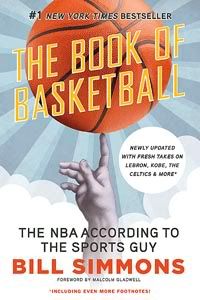
So I've been immersed in The Book of Basketball by ESPN's Bill Simmons (known as The Sports Guy) for a few weeks now and, as I'm now about halfway through the enormous (704 pages) book, I'd like to share a few thoughts on it. Specifically, I'd like to take a closer look at his list of undeserving MVP award winners throughout NBA history but first, some thoughts on the first five chapters.

Simmons' writing style is extremely readable. This book was one of many that I received for Christmas but once I started reading a couple pages, I was sucked into it and have mostly neglected the other books so far. There's really no doubt that he writes very well. What gets annoying very quickly, though, are the comically absurd number of footnotes on every single page. A glut of footnotes will always get annoying in any book because they interrupt or distract the reader's flow of information absorption, but here the footnotes almost seem to mock and tease the reader, bothering him to stop and look to the bottom of the page when all that's there is a horrifically inane or misogynistic sex joke, reality TV or pop culture reference, or some other bullshit.

He also has a tendency to be self-aware and self-conscious (basically, talking about the sentence he's writing while he's writing it) a bit too much and while his background as a comedy writer allows for some gems (I laughed out loud about 5 times already) it also leads to plenty of overdone jokes that completely miss the humor target. I find myself zooming past sentences and passages at times just because I literally don't want to waste the 2 seconds of time (and 2 milliliters of brain juice) that it takes to read a joke about Desperate Housewives or a Vegas strip club experience. Or dicks. Or cocaine. Enough already.

I'm giving complaints and criticism about it not because it's a terrible book, absolutely not. Overall the book is great and universally acknowledged as such. It was a New York Times bestseller, has a rating of 4 out of 5 stars on Amazon, and Simmons remains an extremely popular sportswriter. The New York Magazine book section had a nice series of columns discussing the merits and demerits of Simmons' basketball epic. I've been reading his NBA columns on ESPN.com for probably 5 or 6 years now and they alone usually awaken my NBA fanhood each season and get me following and caring about the games. I've definitely enjoyed the book and, when you dig past all the cloacal excess, there certainly is a basketball book in here and a very good one.

*   *   *

Simmons is positively obsessed with basketball and has been for many years. His sheer depth of knowledge is entertaining in and of itself sometimes. His thoughts are long-winded but precise, well-delivered, and always organized either in lists, bullet-points, or a marked tendency to title his own theory or award name which occurs on pretty much every other page ("Dumbest Commish Moment Ever"; "The Mom Test"; "Great Player Turned Bad TV Analyst"; "The League That Was Too Black had become the League That Raked in Shitloads of Money"). The Sports Guy is highly opinionated and he pretty much always states his case convincingly. In the Wilt-vs-Russell chapter, he does occasionally take his subjective snark too far but he definitely has me convinced Bill Russell was a greater player than Wilt Chamberlain. The What-If chapter didn't seem like it would be that appealing at first but it turned out to be the best chapter thus far. He properly lambasts the Trail Blazers for their selection of Greg Oden over Kevin Durant in the draft and deftly deconstructs the follies of the Phoenix Suns during the Steve Nash era. This book is truly Simmons' philosophical treatise on the NBA.

But when I was reading the "Most Valuable Chapter," cutting through the vines of his many arguments, I couldn't stop thinking about the stats. Simmons describes eight past MVP choices as "Outright Travesties" and delivers his reasons but I was left thinking what the advanced NBA stats might say about it. Particularly the stats that work to come up with a single number for a player's value, like Win Shares. In the chapter, Simmons takes a small swipe at these kind of stats and the analysts who have developed them saying "over the past ten years, a series of stat freaks inspired by the baseball revolution pushed a variety of convoluted statistics on us." But then his first question in the criteria for evaluating the true MVP is: "If you replaced each MVP candidate with a decent player at his position for the entire season, what would be the hypothetical effect on his team's record?" Those "stat freaks" have come up with something to measure exactly that.

While I'm still pretty new to the highbrow basketball stats world (I read Basketball Prospectus for the first time this year and loved it), I think it would be interesting to look at whether the basketball Win Shares statistic agrees with Simmons' assertions. Win Shares was originally a baseball stat created by Bill James to determine in one number, congealed and drawn out of a steaming stew of many statistics (including defensive numbers), how many wins a player was worth during a given season (it bears mentioning that, in baseball, a bunch of newer and better win value statistics have come about and surpassed James' relatively sloppy Win Shares by now, particularly Baseball Prospectus' WARP or Wins Above Replacement Player).

The stat was later adapted to measure the value of NBA players (you can read all the boring details here). While it's certainly not perfect, and I'm not positing that Win Shares should be the main determinant of the MVP award, I think it'll be worth looking at.

In Chapter 5, after elaborating 14 "features and subplots" that distinguish basketball from every other sport (most of which don't seem particular to basketball at all), The Sports Guy asserts that the Most Valuable Player award in the NBA matters more than in any other sport. His argument:
Wait, you don't believe me? Can you name the last ten NFL MVPs? You can't. Can you name the last ten MVPs in each baseball league, then definitively say which guy was better each year? Nope.
Then he insults hockey, a common punching bag for ignorant sportswriters (if you and SportsCenter don't have interest in something that doesn't automatically disqualify it from being cool---hockey's awesomeness is at its heights right now, same with basketball) before traveling back in time to "correct every mistake in MVP history." He has three categories of false MVPs, in order: Fishy But Ultimately Okay, Fishy and Ultimately Not Okay, and Outright Travesties.

Let's look at his eight travesties starting with #8 and comparing the Win Shares leaders (taken from basketball-reference.com) for each season in question. (FYI: Win Shares shows how many wins a player has created compared to what a dude-off-the-street, replacement player would produce.)

8. Kobe Bryant (2007-08 MVP)
Simmons rips Kobe often in the book and here he says this "should have been Chris Paul's trophy---nobody meant more to his team or his city---and if not him, then Garnett."

2007-08 Win Shares leaders
1. Chris Paul-NOH 17.8
2. LeBron James-CLE 15.2
3. Amare Stoudemire-PHO 14.6
4. Kobe Bryant-LAL 13.8
5. Chauncey Billups-DET 13.5


He's certainly right about Chris Paul. In fact, Paul is already leading the NBA in Win Shares this current season and he finished 2nd in 2009 but still hasn't won an MVP yet. So here, Simmons is on the money except for throwing Garnett in. He was 2nd in the league in Defensive Win Shares but overall was at just eighth in overall Win Shares with 12.9. (Although he was the leader and catalyst on the champion Celtics that season.)

7. Steve Nash (2004-05 MVP)

This one is preposterous for Simmons because it was the first time that "(a) a table setter won the award; (b) a non-franchise player won; and (c) a defensive liability won." He certainly admires Nash's game (who doesn't?) and describes him perfectly: "Here was a Canadian dude with floppy hair and a nonstop motor who looked like Kelly Leak, made throwback plays (like his trademark running hook), knew how to handle a fast break, made teammates better and always handled himself with class." But he feels that, in the MVP awards voting, "poor Shaq ended up getting robbed."

2004-05 Win Shares leaders
1. Kevin Garnett-MIN 16.1
2. Dirk Nowitzki-DAL 15.6
3. Amare Stoudemire-PHO 14.6
4. LeBron James-CLE 14.3
5. Shawn Marion-PHO 12.5

Looks like two of Nash's teammates may have been robbed. Though you can definitely argue that Nash propelled Amare and Marion to top-5 status that season and deserves a lot of credit for that. KG had a monster year but his team missed the playoffs, Dirk was great too but his Mavericks were knocked out of the playoffs by Steve Nash's Suns. Simmons (admitting "I'm no Bill James") makes the outlandish assertion that Shaq was responsible for a 40-game swing that season (the Heat gaining 17 wins once they acquired him and the Lakers losing 23) although Shaq sat out injured for 10 games and Win Shares-wise doesn't come close to the top even if considered on a per-minute basis. So, yes: Nash was a bad pick. But there are a few guys that should've had first dibs before Shaq.

6. Magic Johnson (1989-90 MVP)

"Everyone remembers Charles Barkley getting screwed when Jordan had a bigger gripe," he says before stating MJ's choice. He's got this one exactly right. 

1989-90 Win Shares leaders
1. Michael Jordan*-CHI 19.0
2. Charles Barkley*-PHI 17.3
3. Magic Johnson*-LAL 16.5
4. Karl Malone*-UTA 15.9
5. David Robinson*-SAS 15.1

Simmons explains why Jordan didn't win the vote for this award, one of the reasons was because "the media kept perpetuating the bullshit that Bird and Magic 'knew how to win' and Jordan 'didn't know how to win yet.' (What a farce.)" That perpetuated bullshit "know how to win" idea seems to be dying a slow death in sports coverage right now. Baseball especially is seemingly starting to move from that penumbra of ignorance.

5. Dave Cowens (1972-73 MVP)

Simmons concludes: "Kareem got robbed" and it certainly looks that way.

1972-73 Win Shares leaders
1. Kareem Abdul-Jabbar*-MIL 21.9
2. Wilt Chamberlain*-LAL 18.2
3. Tiny Archibald*-KCO 14.2
4. Walt Frazier*-NYK 13.0
5. John Havlicek*-BOS 12.1

Kareem had won the MVP in both seasons prior and, during a turbulent '72-73 season both on and off the court (seven friends were murdered at his house), led the league in Win Shares while carrying his debilitated team to 60 wins. Cowens does show up at the top of the Defensive Win Shares list but Kareem is far ahead of the rest of the pack on this one.


4. Charles Barkley (1992-93 MVP)

Here's where it starts getting heated (and the argumentative tone often produces the most entertaining and engaging writing in Simmons' opus). He lists the numbers for the top 3 MVP vote-getters that year: Michael Jordan, Hakeem Olajuwon, and Charles Barkley. "That's right, signature seasons from three of the best twenty players ever! Unfortunately, eighty-six voters overlooked the fact that Jordan and Hakeem were two of the most destructive defensive players ever and Barkley couldn't guard Ron Kovic."

1992-93 Win Shares leaders
1. Michael Jordan*-CHI 17.2
2. Hakeem Olajuwon*-HOU 15.8
3. Karl Malone*-UTA 15.4
4. Charles Barkley*-PHO 14.4
5. David Robinson*-SAS 13.2

On point once again. Sports Guy says it should have been MJ, Hakeem, then Barkley. MJ's Bulls went on to scorch the Suns in that year's championship giving Jordan vindication. The underappreciated greatness of Hakeem's 1990s domination was covered lengthily and brilliantly at FreeDarko not too long ago.

3. Steve Nash (2005-06 MVP)

So, Nash has to hand in both of his trophies, huh? This was the part of the chapter that made me want to look up the Win Shares, as Simmons asserts that Kobe was worth a minimum of 25 victories for his Lakers that year.

2005-06 Win Shares leaders
1. Dirk Nowitzki-DAL 17.7
2. LeBron James-CLE 16.3
3. Chauncey Billups-DET 15.5
4. Kobe Bryant-LAL 15.3
5. Kevin Garnett-MIN 14.9

He's about 10 wins off on Kobe. He doesn't even mention Dirk who carried his team to 60 wins and the NBA Finals (losing to the Heat). Regardless, it's definitely fun to read about Kobe's performance that season. "The dude scored 62 in three quarters against Dallas, then 81 against Toronto a few weeks later." And he was sure as hell fun to watch.


2. Willis Reed (1969-70 MVP)

Willis starred for the Knicks team that year that won a league-high 60 games and was such an endearing team that over a dozen books have been written about that Knicks season. As covered in The Undisputed Guide to Pro Basketball History , even a bunch of the players on that team wrote books. One of those books, Rockin' Steady: A Guide to Basketball & Cool, was writ by the great Walt "Clyde" Frazier whom Simmons mentions as a viable candidate for co-MVP with Reed for 1970. But that's just because, with the way the Knicks took the league by storm that year, "a Knick was getting the MVP and that was that." But Simmons argues that Jerry West was the best player in the league that year.

1969-70 Win Shares leaders

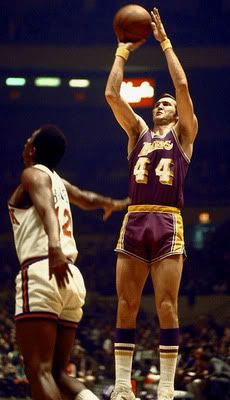
1. Jerry West*-LAL 15.2
2. Walt Frazier*-NYK 15.0
3. Willis Reed*-NYK 14.6
4. Kareem Abdul-Jabbar*-MIL 13.8
5. Oscar Robertson*-CIN 11.4

I'm impressed with how on point he is with this one. It's no wonder he has this one at #2 on the travesties list because West was indeed more valuable than Reed and just a tick above Frazier, while dragging his beaten-up team (Wilt Chamberlain and Elgin Baylor missed a big chunk of the season) to 2nd place in the Western Conference and taking them all the way to a Finals matchup with the Knicks (they lost). He argues that this was West's finest year and, as one of the 8 greatest players of all time, he should've won at least one MVP trophy in his career. This was his best chance, and he lost it because the Knicks were so damn entertaining. As a Knicks fan, I say: tough shit.


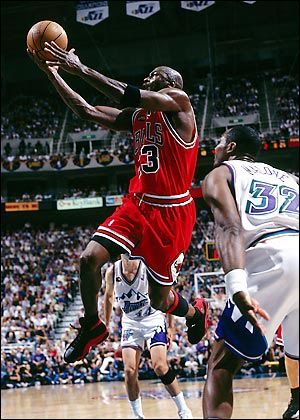
1. Karl Malone (1996-97 MVP)

Jordan had won the previous season, would win the award the following season, and should've won it this season too. The voting was pretty close and Karl Malone somehow came out on top. Simmons bubbles up a Vegas bachelor party story to state his case then blames it all on a silly "Malone-for-MVP" campaign among sportswriters that "got the ball rolling, and within a couple of weeks, this became the cute story du jour."

1996-97 Win Shares leaders

1. Michael Jordan*-CHI 18.3
2. Karl Malone*-UTA 16.7
3. Grant Hill-DET 14.6
4. John Stockton*-UTA 13.6
5. Scottie Pippen*-CHI 13.1

Not only was Jordan clearly the best player in the league, but his team won more games (69) than anybody that year and eventually met Karl Malone's Utah Jazz in the NBA Finals, smote them mightily and Jordan won Finals MVP. So there. Moral of the story: don't mess with Jordan.


While researching this post, I came across a cool piece by Kevin Pelton at Basketball Prospectus using win statistics to look at all the best players from the 1990s. Check it out here.

Tuesday, January 18, 2011

FreeDarko's Undisputed Macrophenomenality

My work days in San Diego are officially over. My last day was Friday. Having spent more than 2 years at the same job, it was a little sad to leave but everybody (all four of us) pretended nothing different was happening and just kinda hid the emotions we were all having. What's funny is that, without exception, I dreaded every day I had to work there, I woke up in the morning furious and wanting to kill my alarm many times (actually, this has occurred often throughout my entire work career), but the last couple days of work were kind of bittersweet. I was appreciating every little thing and thinking "oh man, I'm gonna miss talking to the mailman everyday." When stuck in the daily grind with no escape in sight, I tended to focus on the negative, but when it all came to an end I was almost overwhelmed by the simple things.

Now I'm back out floating in space. The future is a mystery. I do know that we are moving to Austin, Texas at the end of the month and I've got a bunch of things to do in order to prepare. As the moving day approaches, I'm starting to feel that same nostalgia for San Diego as a whole. That the weather has been absolutely perfect (cloudless sky, mid-70s) the last few days doesn't help matters. I'll probably write a big post on all the things I'm gonna miss about this city. But, for now, I'd like to wake this blog up with some basketball talk.

First, though I haven't really gotten to read much of it yet because I've been engrossed in Bill Simmons' b-ball book which I received at the same time, FreeDarko's The Undisputed Guide to Pro Basketball History has been getting rave reviews and I've been showing off its visuals to anybody I come across, including my pops who took it upon himself to try to name every player in the book's collection of artwork. I was particularly impressed that he successfully named every player in the Red Auerbach Celtics picture (capping it off with a proud "Bill Sharman! Because he's a sharp shooter...").

Recently I learned that Dr. Yago Colás, a professor at the University of Michigan, will be using the colorful tome as the key textbook in a course he is teaching called "Cultures of Basketball." That there's a college class all about basketball is awesome enough but using the FreeDarko book as a textbook is spectacularly cool and Dr. Colás is actually posting blog entries at his website documenting each day of the course. His first two posts have been very long but they're definitely worth a read. Here's a sample from Day 2 of the course, when the consideration of basketball as religion sparked lively discussion:

They came out with all kinds of great stuff: basketball involves ritual, basketball is a haven from earthly troubles, basketball involves superstition and the appeasing of higher powers, basketball awakens passions of love and hatred, basketball inspires devotion. Basketball, a couple of people collectively figured out, could even be seen as just one of the great religions alongside other sports like baseball, football or soccer as others. Ultimately, they decided, just as with “real” religions one can get caught up on the differences and become antagonistic and hostile or one can focus on the basic underlying commonalities. They talked about how you create value-systems through basketball. They talked about their own experiences as players and fans. We made fun of Lakers’ fans.  (Even the Lakers' Kid admitted Lakers' fans were insane, explaining that in a recent fan forum thread Lakers' fans said that if they had one player with which to start a franchise they'd choose Andrew Bynum over Blake Griffin.)   We felt bad for Cleveland fans: how would you feel if the Messiah abandoned you cause you were cold and a loser? We enjoyed making the obvious observation, with verbal winks at each other, about the Nike “Witness” campaign and about Lebron’s “Chosen One” SI cover.
We also talked about whether there was any drawback to seeing basketball as a religion or, more precisely, to experiencing it as a religion. This led to a discussion of perspective, with some students feeling that it was important not to lose sight of the fact that basketball is, after all, a game and not as encompassing or important as religion.  While in some ways this is obviously so (and I said so), I also wanted to resist the point. I think partly I felt a peevish resentment at being brought back down to earth, as though I was being told that it was time to get serious. But I also felt that there was an intellectual point -- at least a matter of rigor – at stake.
I would also add on to that point that basketball has its own gods, demigods, angels, martyrs, tortured souls (as Lamar Odom was compared to Job in the first FreeDarko book), tricksters, master builders, and so on. Basically, this is exactly the perspective (basketball as mythology/religion) that was so beautifully expounded in FreeDarko's excellent first book, The Macrophenomenal Pro Basketball Almanac.

The head FreeDarko honcho, who goes by the pen name Bethlehem Shoals, has been writing a regular column, "The Works," on the latest happenings of the NBA over at the AOL Fanhouse website which was being linked to on my sidebar to the right. Unfortunately, the AOL sports site has just recently been taken over by The Sporting News and now a wonderful writer like Shoals will soon be kicked to the curb. Pretty scary for me as an aspiring writer to see the mastermind behind two undisputedly brilliant books saying things like, "Don't hesitate to get in touch if you know of any writing or editing work!"

Not sure when the last column will be but they've got a new one up today all about LeBron's latest machinations and the great debate of Blake Griffin vs. Kevin Love, two young power forwards who've been tearing shit up thus far this season. 

Lastly, here's a video I came across via FreeDarko's twitter page, it was apparently filmed by Ron Artest's younger brother Daniel, an NYC playground legend and professional player overseas:

And here's the highlights of Blake Griffin's stomping of the Indiana Pacers last night:

Saturday, January 8, 2011

A Wakening

"Lift off my casket pillow and slapped all hands, I'm not ready!" - Kevlaar 7

*   *   *
From the Telegraph:

Woman being prepared for burial comes back to life

Maria das Dores was a few hours from being buried alive when an official noticed she was still breathing.
The 88-year-old was rushed back to the same hospital who had earlier declared her dead.
*   *   *
"The first clue to the method and mystery of the book is found in its title, Finnegans Wake. Tim Finnegan of the old vaudeville song is an Irish hod carrier who gets drunk, falls off a ladder, and is apparently killed. His friends hold a vigil over his coffin; during the festivities someone splashes him with whiskey, at which Finnegan comes to life again and joins in the general dance."
-p. 4, A Skeleton Key to Finnegans Wake
*   *   *
On Tuesday I drove up to Venice to take part in the monthly "Venice Wake" book club meeting. I'd gone up there for one of the meetings earlier in the year and had a great time but it's a terribly long drive and I always have to work the next day so I never went again. Since I'm moving to Austin at the end of the month I figured this might be my last chance for a long time to be part of a Finnegans Wake reading so I made the trek.

The reading club actually focuses on both Marshall McLuhan and Joyce, with the first half hour devoted to discussion of current events through the McLuhan tetrad, followed by a reading of two pages of the Wake by all the people in attendance. After that, the participants go through the text that was just read and try to uncover meanings, references, coincidences, jokes, songs, etc. It's all in there. This is my favorite part of the meetings as in just two pages of the Wake, there's enough material to form an encyclopedia (and, no, I'm not exaggerating).

Because of terrible Los Angeles traffic, I arrived an hour late but right on time for the text analysis. We read pages 362-363 which contained a plethora of gems:

"a sixdigitarian legion on druid circle" - apparently a reference to Stonehenge

"in condomnation of his totomptation and for the duration till his repepulation"

"Auspicably suspectable but in expectancy of respectableness"

"(thunderburst, ravishment, dissolution, providentiality)" - a clear statement of Vico's cycle, one of the main themes of the book. Surprisingly, nobody pointed this out.

"Guilty but fellows culpows!" - first time I spoke up during the meeting. This is a play on "felix culpa," the "happy fall" of Adam and Eve (happy because it led to the eventual redemption in Christ) as celebrated by St. Augustine. Again, surprisingly nobody realized this since it's a recurring phrase in the book. Usually as "Phoenix Culprit" for the incident that occurs in Dublin's Phoenix Park.

from there, the rest of that paragraph (pg 363) contains elements of an Eden scene, as we read "sindeade," "atome's health," "the wonderlost for world hips," and "unlifting upfallen girls."

Afterward, I hung out at a coffee shop with a few folks from the club and had great conversation. Two of the guys I chatted with were personal friends of the legendary Timothy Leary and told a bunch of stories about him and I gave them the gist of my upcoming paper on Joyce and Dali which they seemed to love. Hopefully I'll see those guys again sometime.

*   *   *
A safety coffin or security coffin is a coffin fitted with a mechanism to prevent premature burial or allow the occupant to signal that he has been buried alive.

Tuesday, January 4, 2011

Xmas Loot

Just a quick rundown of the Christmas loot I acquired, mostly a pretty spectacular array of books.


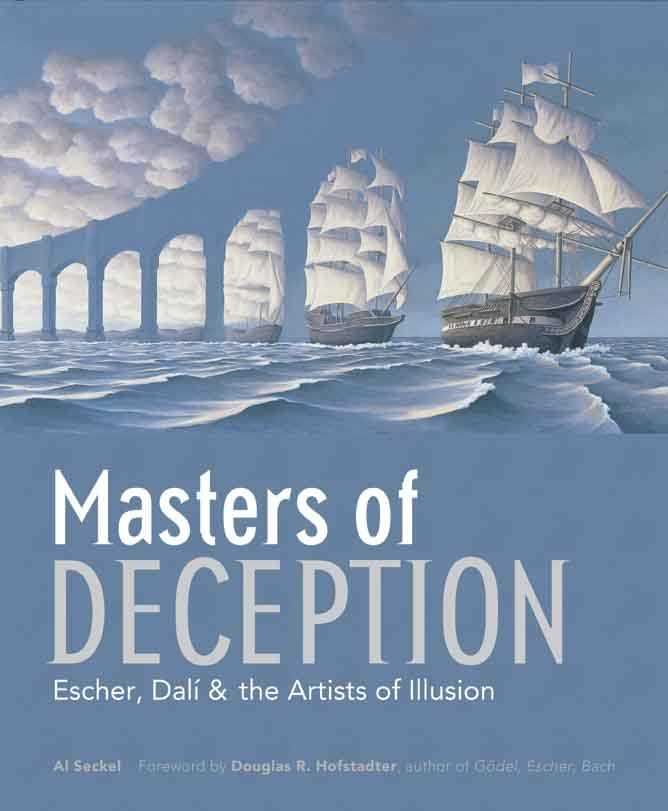
- The first thing I received was a book from my girlfriend's father, an artist himself who had listened to all my blabberings about Dali and the paranoaic-critical method which led to him getting for me an amazing book of trompe l'oeil and anamorphosis art including the works of Dali and M.C. Escher (another favorite of mine). The book is called Masters of Deception: Escher, Dali & the Artists of Optical Illusion and it's probably the coolest art book I've ever seen.


- Next thing, also from my girlfriend's pops, was a book I had been looking at in bookstores for a while and was hoping somebody would eventually get for me. It's a full exploration of the life and works of the Austrian painter Gustav Klimt. I've been fascinated by Klimt's style since first seeing his work a few months ago. With many of his paintings I look at them and hear music, which is the exact opposite synesthetic sensation induced by my favorite music which often conjures pictures, images, shades of different colors. I fuckin love art. Here's Klimt's Death and Life.

- Totally switching gears... The last five or six years, ever since I've gotten into reading books as a serious hobby, each Christmas there seems to be a theme. It's whatever I'm heavily interested in at the time or throughout that year. Years back it was Carl Sagan's work, then Joseph Campbell, last year it was James Joyce. This year it was basketball. As I've mentioned a few times, my interest in the NBA has been rejuvenated this season and I've been devouring basketball literature ever since. So my lady hooked me up with a nice trio of b-ball books this year:
  • FreeDarko presents The Undisputed Guide to Pro Basketball History. I was absolutely blown away by their first book (reviewed here) and was eager to check this one out. So far I've only had a chance to flip through it a couple times but the artwork is beautiful and once again they're inventing cool ways to graphically display vast amounts of data and stats. The chart of NBA fights is nuts. In my history as a sports fan, there's been no doubt that baseball inspires the greatest collection of literature. But basketball seemed to have been catching up lately and the FreeDarko books have blasted forward lightyears ahead of anything I've come across in sports books of any kind.
  • The Book of Basketball by Bill Simmons (new paperback edition). When this first came out a last year I was so immersed in Joyce books that I didn't care to check it out. I also figured it would make sense to hold out and wait for the paperback since all the errors would then be corrected and there would certainly be new material added. I'm glad I held out. Simmons' NBA columns have always been entertaining for me but after reading the reviews for his book, all of which seem to complain that there's almost as many porn and reality show references as basketball talk, I wasn't all that eager to start reading it nor did I have high expectations. But, of all the books I got for Xmas, this is the one I haven't been able to put down. His writing is annoyingly great, no big words and the candor is that of a diehard fan, yet it's a smooth and entertaining read if you're into basketball. It's also vast, the 700 pages cover the top 96 players of all time, the best teams ever, the worst MVP winners ever and much, more more.
  • Rockin' Steady: A Guide to Basketball & Cool by Walt Frazier. One of the few things I truly miss about living in New York is getting to hear Frazier as the color commentator on Knicks' games. His voice purls like a fountain while delivering a vast vocabulary, often with rhymes. The book was written during his playing days with the Knicks, though, and features lots of clear color photos of 1970s basketball, cool drawings, and Clyde's basketball wisdom plus, of course, how to be cool. I dig it.
- Last but not least is a book that I'd been reading on Google Books for a while but didn't want to pick up because it's an expensive, obscure scholarly text. The title, James Joyce and the Politics of Egoism, makes it sound extremely boring and dense but it's been a great read. With plenty of material on Jacques Lacan's studies of Joyce, I needed this book to finish up preparing for an essay I'm about to write on that subject. The book goes into much more than that, though, and I would recommend it to anyone interested in Joyce as it delves into a wide range of stuff that I've never heard of before.

Among the other blessings bestowed upon me by my immediate family were a Space Pen, an iPad, and a pair of tube socks. Thank you to all, and to all a good night.