Showing posts with label NBA. Show all posts

Sunday, August 23, 2020

Mixtape in Memoriam of Kobe

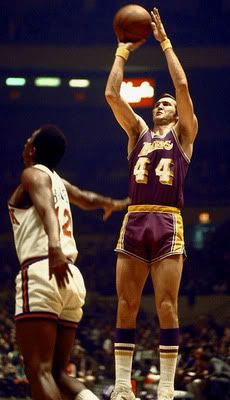
From its humble inception 11 years ago this blog began with me showing love for the beauty of Kobe Bryant's jump shot, so now since today would have been Kobe's 42nd birthday I'd like to share some thoughts on the late Lakers legend, plus post a mixtape of choice clips of the Black Mamba. 

While I was never a Lakers fan and was usually rooting against Kobe as a Knicks fan (or as a fan of Allen Iverson or Tracy McGrady or Vince Carter as they went up against Kobe), he was such an amazingly talented, flashy, dynamic, high-flying and insanely competitive player it was impossible not to be entertained by his game even as he was kicking your team's ass. Dude was an absolute legend. During the latter half of his career I spent some time living in Southern California and got to watch a lot of Lakers games on local cable. In those days I also had a friend who was a huge Lakers fan and we'd argue about Kobe's place among the all-time greats. 

Prior to his tragic death early this year, the most recent memories I had of Kobe, the events that stuck in my head as I-remember-where-I-was-when-that-happened kinda moments, were how bad I felt for him the night he tore his Achilles and how happy I was for him watching his unforgettable final NBA game when he dropped 60 in a win against Utah. And I remember seeing that video of Kobe and Gianna, the father teaching his attentive daughter as they sat courtside at a Brooklyn Nets game, a month before the accident that took their lives. 

Looking back on it, the horrible death of Kobe Bryant and his daughter Gianna in a helicopter crash on January 26th stands out as a harbinger of the unthinkably dark and depressing months to come. Strangely, that period of grieving and binge-watching Kobe videos, watching the memorial they held at Staples Center, that was actually the final period of normalcy we had before the world we knew suddenly collapsed. I remember I was at work, on a lunch break when I caught Michael Jordan's eulogy for Kobe at his memorial. (My office would soon be closed indefinitely.) The Staples Center that day was filled with the gods of basketball lore all gathered together in the arena Kobe called home, all mourning a fallen star. Everybody packed together in Los Angeles and just one month later all public gatherings would be banned, NBA's season indefinitely shut down, America's confrontation with the coronavirus escalating. 

I remember that Sunday afternoon hearing the news about Kobe and Gianna and it was a gut punch. That shit hurt for a while. I was shocked how hard it hit me. Just seeing headlines with the words The Death of Kobe Bryant just looked surreal, bizarre, fake or unthinkable like The Death of Superman. I kept talking to friends about it, trying to process it with anyone who understood the impact of the death of Kobe, and at night I'd get lost in watching every YouTube video of Kobe I could find, reliving his greatest highlights and reliving my history as a basketball fan, commiserating with every commentator on the loss of Kobe from late night talk show hosts and retired NBA greats to Randy Moss and Jason Alexander and anybody who felt or understood the impact of the death of Kobe. The shock was well captured by Jon Batiste talking to Stephen Colbert, describing that viscerally painful realization that "even the mighty among us, those who seem like they'll live forever, the immortal ones could be gone (snap) just like that."

After the death of Kobe I felt like something inside me broke. To heal it I had to binge watch Kobe videos. I was trying to keep my memories of Kobe alive, everything I had ever loved and been inspired by about Kobe, I was trying to bring it all back to life. Having had a while to think about it now, what made me love Kobe so much, besides the entertainment value of his game was his drive, his inspiration, his internal push to achieve greatness. He was born with gifts, the son of pro basketball player Joe "Jellybean" Bryant whose hoop genes he surely inherited, but Kobe was never complacent, he famously had an ethic to work as hard as he possibly could to get the most out of his gifts. He was notoriously an asshole in his competitive excesses but he was driven to be the absolute best to ever play the game of basketball, determined to outdo his idol Michael Jordan. There was a great scene in the ESPN Jordan documentary where you hear Jordan in the locker room before an All-Star game talking about the "little Laker boy" whose cockiness would get the best of him. Kobe/Jordan battles evolved sharply over the years until the torch was officially passed to the Black Mamba who reached his scoring peaks around when Jordan finished his twilight years with the Wizards. Seeing Jordan pour his heart out in mourning his little brother at the Kobe memorial, it felt extra heart-wrenching that young Kobe was being laid to rest while the older Jordan was delivering his eulogy. The whole thing brought to the forefront for me the unyielding passage of time, the inescapableness of death, and the cold reality of our loneliness as human beings who are, despite all of our impacts and connections, born alone and who die alone.  

At the same time, in the aftermath of the death of Kobe I felt the reality of the idea espoused in the works of James Joyce which essentially amounts to: in death, absence can become the greatest form of presence. I thought about Kobe more in the wake of his passing that I had in many years. Kobe was on my mind constantly for weeks. I know that was the case for a lot of people. Jordan captured that in his eulogy, describing how we all feel like some part of us died when Kobe died. I'm still thinking about and feeling some feelings about Kobe Bryant today on his 42nd birthday. 

And so in honoring his memory, here is a mixtape of some of my favorite videos that capture what made Kobe Bryant such an iconic and inspiring figure.

Friday, March 31, 2017

To Witness the NBA Renaissance

(Credit: Getty Images)

It was the best of times, it was the worst of times.

Amid the backdrop of a crumbling country, the NBA has been experiencing a new golden age.

And while the league reaches new heights, its storied New York Knicks franchise achieves ever deepening levels of rock bottom.

The frantic artistry and entertainment of last year's seven-game NBA Finals between the Warriors and Cavaliers sparked a surge in my basketball interest. When the 2016-17 season began, I was latched on to my favorite team, the increasingly frustrating and weird New York Knicks, keeping up with basketball mostly through them while they showed plenty of early promise. They were 14-10 at one point, creating the early illusion of a shot at playoff contention. During that first month of the season, when family members asked what they could get me for Christmas I figured some new Knicks gear might be a good idea.

Thursday, March 8, 2012

Lots o' Links: Roundball Edition

Following a sudden shift of surroundings when I moved (for the 5th time in 4 years) four weeks ago, I seem to have fallen off the blogging groove. I try now to climb back onto it as the baseball season approaches, the NBA season runs on by, and I absorb books and music much too fast for me to stop and compose reviews about them. So, in the interest of getting the ball rolling, today we'll do what any good blog does and take a look at some other people's work that I've enjoyed around the web.

First, I've got a little treat for you:


Not very long ago, a large conglomerate of talented bloggers and sportswriters gathered together to launch a new website featuring interesting, perhaps "high-brow" pieces on sports and its surrounding culture. Led by Free Darko mastermind Bethlehem Shoals, the site (called The Classical) seemed a perfect rival to Bill Simmons' recently launched Grantland project. As someone who prefers Shoals' writing style to anything Simmons could possibly devise, I had very high hopes for this endeavor but The Classical has, in my eyes, gotten off to a slow start. In the meantime, Grantland has gathered awesome writers (Jonah Keri, Rany Jazayerli, Bill Barnwell, Katie Baker, Jay Caspian King) covering every sport and I can't help but check out their content almost every day.

With the locked-out basketball season finally starting to get its wind and a fresh baseball season showing its first signs of life, The Classical is responding with some excellent pieces. I don't want this post to turn into a collection of nothing but Grantland and Classical pieces but... they've written a bunch of great stuff lately. These works in particular have really grabbed my attention:

Monday, April 11, 2011

Free Manny!


Two of my favorite sports entities have decided to hang it up. Controversial-yet-comical baseball slugger Manny Ramirez abruptly retired this weekend after learning of a failed drug test (his second one) and, rather than sit out with a 100-game suspension, the 39-year-old superstar decided to end his baseball career. At the same time, the basketball writing collective known as FreeDarko made their final blog post today and have decided to disperse as well.

I arrived very late to the Free Darko party, only hearing about them 6 or 7 months ago when I picked up their first book, The Macrophenomenal Pro Basketball Almanac. I quickly devoured that book (read my review here) and joined the chorus of ardent admirers of these basketball philoso-aestheticians. I'm still in the midst of reading their second book, The Undisputed Guide to Pro Basketball History, but I can say that I've frequently found myself bestowing laudatory praise upon it, describing it as literally one of my favorite books ever. Everything about that book is wonderful.

Their two incredible books sprung from the writing on their blog freedarko.com and the huge following they attained. As the main components of the FreeDarko collective (the writer known as Bethlehem Shoals and the artist Jacob Weinstein) have now decided to go on to other pursuits, the website and the legendary title associated with it have now called it quits. It's terrible news, especially since I only just recently started checking their work, and it will surely affect my appreciation for the NBA. If you're at all curious what they were all about, you should read their huge final post in which everyone who's ever written for the site describes what FreeDarko meant to them.

*   *   *

I wish the FreeDarko guys would have drawn up an image of Manny Ramirez. In my sports-watching life, I've never seen anyone like him. He would step up to the plate wearing the baggiest uniform you've ever seen, his beard all scraggly with a huge wad of gum or tobacco in his cheek, his enormous sleeves covering most of his muscular arms, and an unbelievably long hairdo of dreadlocks upon which his batting helmet barely fit. He was a mess. And yet when he swung a baseball bat, all those loose, scraggly items were seemingly shed in a supernova display of pure symmetrical, mechanical brilliance. The man was born to hit a baseball and for his entire career, he did it about as well as anyone ever has.
But he certainly wasn't born to be a public figure. He was childish, pouty, lazy, and not very articulate. As great a player as he was, he is viciously hated upon by a good number of sportswriters and he's an extremely polarizing figure among baseball fans.

He never played for any of my favorite teams, but I always considered him one of my favorite players because it was such a joy to watch him play. He started out as a showy masher of baseballs, frequently hitting loud homeruns and remaining in the batter's box to admire them. With the powerhouse Cleveland Indians of the 90s he went to the World Series and led the league in slugging a couple times before signing with the Red Sox. He became one of the most popular players in baseball with the Sox and eventually led them to their first World Series title in 86 years with a second title coming three years later.

In his last few years with the Sox his hair grew longer and longer into tweedy dreads and his threads got increasingly baggy. His cap and his helmet always popped of his head when he ran for a flyball or rounded the bases and he dragged around his shaggy clothes like a kid in a ghost costume. Baseball purists hated him.

I see the Manny experience as a wonderfully colorful and quirky episode in the game's storied history of characters. When he was traded to the Los Angeles Dodgers he exploded upon the National League (hitting .396 over the final two months of the season) and elevated his star status even higher while carrying the team to two consecutive NLCS matchups with the Phillies. It became a national news story when the team asked him to cut his hair which was getting out of control.

Everything about him looked sloppy, baggy, disheveled, except for his perfect swing which would often lead to a crisp "thwack!" and a lifted line drive. That's what I've always found so intriguing about him. No matter how dumb he seemed, no matter how crazy his hairdo, or how loose-fitting his uniform, the man could always crush a baseball with the utmost powerful precision (an achievement not nearly as brutish as it sounds---in fact, it's probably the most difficult thing to do in all of sports). And he knew it.

Although there are actually two other big hitters with the same last name (Aramis and Hanley Ramirez, all three of them unrelated) and the same penchant for admiring their homeruns, I've never seen anybody make such a comical show of himself at the plate after a homer as Manny. The one that sticks out in my mind is a game-winning smash against the Angels in the ALCS when he simply stood in the batter's box with his arms straight up in celebration before finally jogging slowly around the bases while chaos ensued in the stands.


I was really looking forward to watching how things would unfold with him playing in the AL East again, battling his old foes (and friends) as the Tampa Bay Rays' designated hitter but he has suddenly departed. We'll never get to see Manny hit a baseball again because he somehow managed to fail a drug test for the second time in three years. At the very least, his departure is perfectly Manny. Controversial, puzzling, stupid, and shocking. Sticking it to the man without any regard for how badly it hurts his fans. Only this time, we won't be able to forget about it all while watching his pretty swing.

Saturday, March 12, 2011

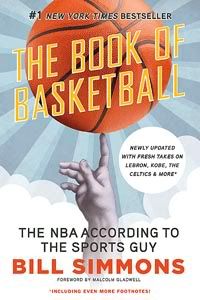
More Thoughts on The B.S. Book of Basketball

"Vast, I allow: but vile. Cloacae: sewers."
- Ulysses, pg. 131

I am not the type of person to trash someone's work. I've never given a book one or two stars on Amazon because, quite honestly, if a book sucks then I won't read it. I've always loved Bill Simmons' basketball writing. As I said in my post reviewing the first half of his book, I've always been eager to read his latest NBA columns because the thoroughly expressed passion and knowledge serves to spring up my interest in the game. In short, for many years Bill Simmons' writing always precipitated my basketball interest.

And yet, given the opportunity to write a full-fledged epic treatise on the game, he gave a sloppy effort and stuffed in so much self-praise, dirty jokes, and rambling bullshit that the book was often insufferable. Never in my life have I actually thrown a book in a fit of disgust until this one. And, after slogging through every last bit of it, the final lines made me want to rip the book in half. There's a part when he's talking about Kobe Bryant, and he uses an analogy that I think accurately describes how I felt about the book:
[It] was like having a friend purchase a beautiful $10 million mansion...then paint it a weird color, refuse to hire a housekeeper, decorate it with goofy modern furniture and basically ruin the house. Buddy, what the fuck are you doing? Don't you realize what you have here? (pg 578)
The book is certainly not all bad. I mostly enjoyed the first half (though the silly footnotes and jokes were irritating) and there is some great stuff in the enormous Pyramid section covering his list of the top 96 players of all time. That section takes up the bulk of the book (about 400 pages) and there are some bad stretches that made me question whether he just threw some paragraphs together and submitted a first draft, but I can say that I thoroughly enjoyed the writing for Bob Cousy, Elgin Baylor, and especially Dr. J. His thorough breakdown of Hakeem Olajuwon's uniqueness was also very good.

But most of the time his writing style sinks down to that of a frat boy or some other numb-minded "bro." That might be why he's so popular but it's just brutal to read. In my first review, I complained about his incessant dick jokes. Once I made it around page 600 I realized the man is thoroughly obsessed with penises and can't keep his mind off them for more than a page or two (a Freudian would have a field day with this, I thought). He also frequently feels the need to homophobically insist that he's not gay. Yet, the book also wreaks of misogyny; as one of the New York Magazine reviewers put it: "In my notes on TBOB, I actually stopped bothering to copy down the most egregious comments and figured I'd just note when Simmons mentioned a woman for any reason other than evaluating her appeal as something to put a penis in."

In the abstract, that stuff doesn't bother me so much. I'm obsessed with Joyce's books and during his life he was lambasted and his books burned because they were so "obscene" plus I listen to some of the grimiest hip hop music ever made. The main problem for me: this is a book about basketball! It's titled "THE Book of Basketball" and has the word BASKETBALL in huge letters along the spine. Yet, it's filled with the author's idiotic Vegas adventures, shitty pop culture references, and a ridiculous amount of the dirty stuff, while providing often sloppy basketball analysis. He constantly decries the use of stats to evaluate a player's true value and yet---just like the ignorant baseball writers who diss sabermetrics and then make arguments with RBIs and batting average---he always refers to the basic stats (points, rebounds, assists) and often jumbles them together in convoluted ways that support his argument. His arguments, of course, are always presented in an overly proud, assertive manner (basically, "what I say is right, fuck you if you don't like it") as he frequently alludes to a player as top-5, top-10 or whatever and never explains what these rankings are determined by.

Early in the book when he's using a bunch of Bill Russell quotes to proclaim the power of basketball's nebulous "Secret," he follows the Celtic legend's words with this comment: "I didn't see the word 'stats' or 'numbers' in there. It's all about winning." There are a few times he says stuff like that and so I laughed when reading the last chapter where he presents us with Kobe's entire playoff stat line to dismiss the possibility of Bryant "getting it" and becoming a team player when the Lakers won the 2009 championship.

If all of that weren't enough to deter me from enjoying the book, there's the sad fact that Simmons has embraced his popularity so much that he frequently feels the need to tell us how great he is or share lame celebrity anecdotes. Because, after all, he's a celebrity living in Los Angeles. An internet writer who gained his fame because of his "regular opinionated sports fan" character, he's now been bloated into a D-list celebrity sycophant. Name-dropping, shouting out famous friends, and the book's laughably conceited conclusion (driving up the Pacific coast in a convertible) serve to get in the way of hoops talk and confront the reader with the image of a corny mid-40s white guy in a sports jacket, standing at a bar scoping out the joint. That image, combined with Simmons' frequent allusions to his favorite show Miami Vice, make the author a perfect fit for Ben Stiller's character in that old ridiculous SNL short "The H is O".

I wanted to keep this brief but I'm going to Simmons-esque length already. I'll concede that the book is probably better if taken in small bites or as a reference guide. Reading it page-by-page, front-to-back was not pleasant and there were many times where I'd flip back to the praising reviews quoted at the front of the book and wonder if they were really talking about this book. There is so much more I can say about it but I'll leave it at that because I've spilled too much hate already plus there are other writers saying the same things more articulately than I can. In the end, I'm just so goddamn thankful for FreeDarko.

Monday, March 7, 2011

Holding a Golden Mac

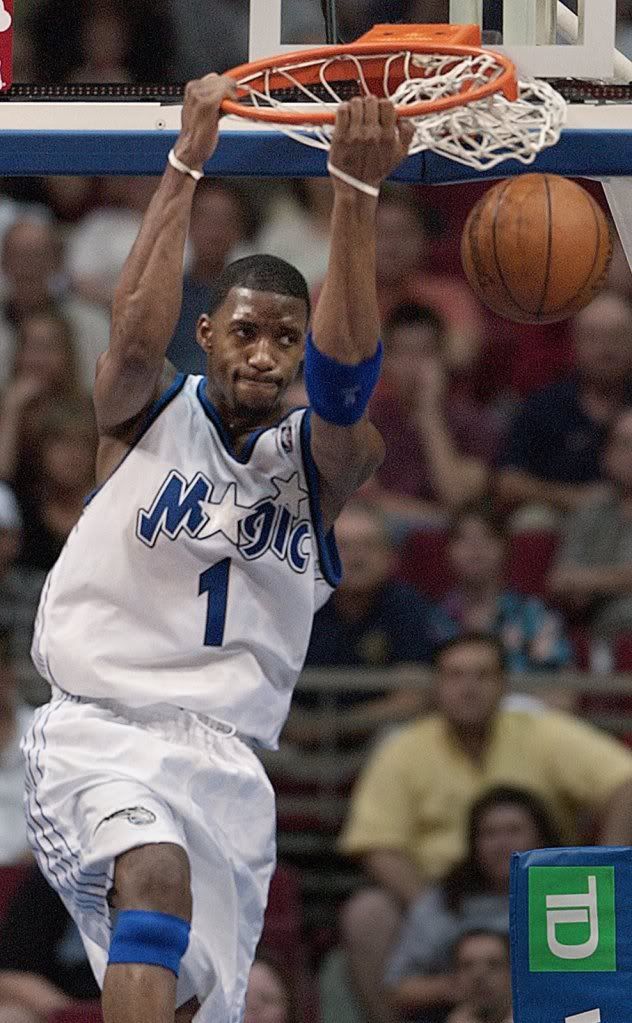
It's getting late. I'm tired and my eyes feel like they're half shut. What better time to write a little post about one of my favorite basketball players ever, one who is known in some circles as The Big Sleep: Tracy McGrady.

At the annual Sloan Sports Analytics Conference this weekend, McGrady was held up as an example of wasted talent; greatness squandered through laziness. His former coach, Jeff Van Gundy, cracked some jokes about poor practice habits and a whole auditorium laughed and listened to a few gentleman on a stage talk about how great T-Mac should have been, if only he gave a shit. If only he worked harder or practiced more.

Back in 2000, I read a Sports Illustrated piece about McGrady and his new role as Grant Hill's sidekick on the remade Orlando Magic. Interested in checking out what this McGrady guy had to offer, I started checking for any games on television featuring the Magic and watching him closely. It was right around this time that my NBA fanhood was reborn after a brief hiatus. McGrady was a spectacle to watch, a visual feast for basketball fans. A long, lanky athlete, he frequently looked like a pro who'd stepped onto a street ball court to have some fun. With his size and athleticism, he was basically the perfect basketball player. His jumpshot was a thing of beauty, a sudden rise and quick release that always seemed to create a perfect crisp snap of the net; he was one of the league's most exciting finishers at the rim; he possessed amazing court vision and passing skills that somehow forced his crappy teammates to make baskets (the superstar Hill was always in street clothes with severe ankle problems); his long-limbed, blanketing defense brought comparisons to Scottie Pippen---and he was only 21 years old.

With his droopy eyes and smooth lanky motions, the guy often looked like he was doing it all in his sleep. Writers and TV commentators often mentioned the humorous fact that one of his listed hobbies was sleeping. It didn't take long for the 6-foot-8 McGrady to acquire the nickname The Big Sleep.

During that time the Magic's games became must-see TV for me. I started tape-recording (with VHS tapes...on a VCR) their games any time they were on national TV or going up against the Knicks or Nets on a local channel. My favorite team, the Knicks, was clearly his favorite team to play against and he would frequently bring new moves to the table against them, embarrassing my team in such a way that I didn't care that they were getting their asses whooped. It was fun to watch! Even his headfakes were cool. Instead of just lifting up his chin for an apparent jumpshot, he lifted the ball high above his head like a yo-yo and then zoomed past the befuddled defender for a dunk or lay-up. On defense, he would frustrate and embarrass my favorite Knick, Allan Houston, with his long arms providing the perfect stopgap to Houston's only real weapon, a standstill jumper.

Over the next few years T-Mac became a superstar, his arrival punctuated by a self-pass-off-the-backboard dunk in the All Star Game. With Grant Hill sitting out on a bad ankle, McGrady established himself as a one-man show, carrying the Magic to three straight playoff appearances. His team fell short in the first round each time although McGrady averaged over 30 points in every series. A prolific scorer, passer, and defender---he still couldn't win by himself.


In 2004, the Houston Rockets acquired McGrady to team up with Yao Ming for a perfect match against the West Coast powerhouses but Yao soon succumbed to a series of injuries and left T-Mac to carry the team once again. There were many great moments with the Rockets, especially the epic 13-points-in-35-seconds to defeat the Spurs, one of those events which I'll always remember where I was when I saw it (standing enraptured right in front of my bedroom TV with my arms folded). But, once again, McGrady failed to lead his team past the first round of the playoffs and was harshly criticized for it.

Before turning 30, he was hit with a number of injuries that helped to erode his skills and over the last few seasons he's languished as an oft-injured part-timer for a couple of crappy teams (Knicks and Pistons). Because of an apparently poor work ethic, his career narrative is becoming imbued with a sense of failure and missed opportunity. Van Gundy and the Analytics Conference folks weren't the first to point it out. (Heck, I even mentioned it in my very first post on this blog.)

In opposition to this somber view, a few NBA bloggers have stepped up recently to defend the T-Mac legacy, reminding us of the heights he reached when he was healthy and the Hall of Fame career he had despite our best efforts to label him a failure. I particularly liked this piece from Dan Devine (a fellow Staten Island native, I've just realized) over at the Yahoo blog Ball Don't Lie and Zach Lowe of Sports Illustrated assertively set the record straight as well. Via Outside the NBA's Twitter page, here is another great post in defense of McGrady's excellence entitled Have Respect: He Was Legend which, among other things, calls to our attention that we once had to debate who was better: T-Mac or Kobe. Because of his defense and point guard-like passing skills, I still say T-Mac was better at that point in time but, of course, Kobe has gone on to win two more rings since then and continues to lead the Lakers to one of the best records in the West.

While farting around on Basketball-Reference.com a bit, I came across an interesting comparison between McGrady and Hall of Fame forward Billy Cunningham, a highly regarded player from the 60s and 70s. His career was also derailed by injuries yet Bill Simmons listed him as the 49th greatest player of all time (with McGrady at #77). The all-encompassing Win Shares statistic is by no means perfect but one of its best uses is for comparing players across different eras. Looking at their careers: McGrady had four seasons that were better than Cunningham's best year. T-Mac was also a more accurate shooter, better passer, and better defender. Cunningham was done as a player by the time he was 33 and, as he's currently playing out the string for shitty teams at age 31, we might soon see the last of The Big Sleep.

Let us hope the hoops community can open their eyes to his greatness instead of whining over our own shattered dreams for him.

Thursday, March 3, 2011

Catching up with the NBA fireworks

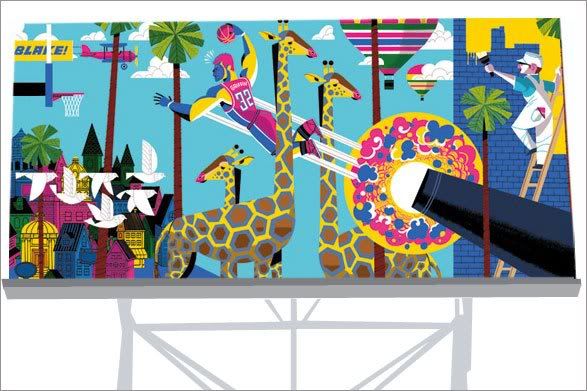
The NBA has certainly had a lively last few weeks. This new billboard by FreeDarko's Jacob Weinstein seems to embody it all pretty well.

The Dunk Contest and All-Star Game were as good as they've been in years. Blake Griffin (the dude on the billboard) put the ultimate exclamation point on everything with a jaw-dropping dunk, jumping over a car with a choir singing "I Believe I Can Fly." Outlandish? Yup. And one of the Dunk Contest's best participants, the gifted Toronto Raptor with the euphonious appellation of DeMar DeRozan, has made a stink about all the extra bells and cannons. He says he's done competing in the Dunk Contest if they continue to bring in so many props and gimmicks (JaVale McGee brought in a second hoop and dunked on both at the same time---cool, yes, but it's a dunk contest not a circus).

It's a shame because DeRozan is one of the more naturally gifted high-flyers in the league as evidenced by this (organic) dunk he did that night. Witness the grace and sheer athleticism in this video. (And I love the look on Darryl Dawkins' face as he watches proudly.)


I missed the entirety of the All-Star Game itself (still didn't have internet or TV hooked up) and have had to settle for highlights but it seems to have had a great ending, with Kobe Bryant kicking ass and taking home the MVP in his home arena.

Not long after all those fireworks, the NBA trade winds came blowing through town like a tornado, picking up pieces and tossing them to and fro. There were about a bajillion trades and you can read a nice analysis of all the deadline deals here and here.

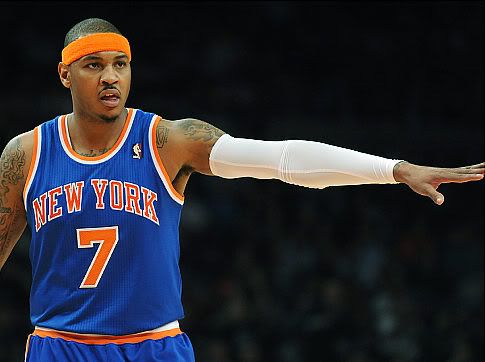
The biggest trades involved my own hometown favorite New York Knicks and New Jersey Nets. After six months of public haggling, the Denver Nuggets and the Knicks agreed on a deal that sent forward Carmelo Anthony, point guard Chauncey Billups (a favorite player of mine), and a few other small pieces to the Knicks in exchange for about 60% of the Knicks' roster as well as a bunch of other assets. The Knicks absolutely gave up a shitload to get Anthony, a great player but one who is definitely a notch below the game's biggest stars because he's a bit one-dimensional.

The former baseball stats genius and now famous election poll analyst Nate Silver actually chimed in on the value that Anthony provides to a team. First, he had an interesting piece about how Carmelo tends to make his teammates better by being such a good shooter (an article that Basketball Prospectus' Kevin Pelton responded to with a numbers-heavy piece of his own) then he wrote a huge article analyzing the State of the Knicks after giving up so much to get just a couple of players. The verdict: the immediate future for the Knicks is good. Not great because they'll have a top-heavy stars-and-scrubs lineup for a while, but good. For all the hoopla, I'm not sure that's a big success. But Pyrrhus would be proud.

I've tried to watch all the Knicks games since the trade and I can say that I'm definitely glad Chauncey Billups was in the deal. I love watching that guy play. Other than that, they look good...not great.

Across the river in New Jersey, the Nets made a pretty daring trade, one-upping their rivals by acquiring a better player in point guard Deron Williams from the Utah Jazz (whose fans are ready to bum rush the front office now). Williams is an all-around superstar and arguably the best point guard in the NBA. The problem for the Nets is that his contract is about to expire and they've got no guarantee that he'll stay with them. If he does, the Nets have themselves a great piece to build around. If not, they're shit outta luck.

Friday, January 21, 2011

The Court of Raw Talents

I've really been in a basketball mood lately.

There are a couple of great highlights (courtesy of Outside the NBA) from the Warriors-Pacers game the other night that I must share. The matchup sounds like a pretty unspectacular game but it featured plenty of exciting players and (this is a main point I'd like to make in an upcoming lengthy write-up of the league's 1st half), really, there are very few teams that aren't fun to watch right now in the NBA.


The Golden State Warriors are one of my favorite teams to watch as they've got a flashy, darting young backcourt of Monta Ellis and Stephen Curry. The other night against the Pacers, Curry tossed up an alley-oop across almost the entire distance of the court:


and Ellis drilled a fadeaway jumper to win the game:


I haven't had a chance yet to write a full review for Pro Basketball Prospectus 2010-11 but it's an awesome read, covers every little nook & cranny of every single team with entertaining writing, and (just like their grandpappies at Baseball Prospectus) they present thoroughly revealing statistics and projections for the upcoming season. The 2010-11 projections have this young Golden State squad finishing as the 4th best team in the West which goes to show how much explosive potential is contained within this nascent squad. Currently, they're at 18-23, struggling to stay in the mix for the final playoff spot in the conference but they've won their last three and tonight they play against another team of raw, young, highly talented players---the Sacramento Kings. Their last matchup, an overtime clash won by the Warriors in Sacramento, was deemed a classic by hoops connoisseurs.

I must also mention that I freakin' love the Warriors current logo.

*   *   *

I'm still eating up The Book of Basketball feast and really enjoying its list of the top 96 players of all time. Just finished the entry for one of my favorite ballers, Vince Carter, who is also one of Simmons' most hated players. With good reason: "Of anyone in the league over the past fifteen years, his peers felt like Vince Carter was the one who could do anything. Well, except give a shit on a consistent basis." Carter is naturally gifted with the ability to do things on a basketball court that humans shouldn't be able to do, that's why his nickname was always Half-Man, Half-Amazin'. But, the majority of the time, he plays passively and lazily, bursting out for 40 points and highlight reel drives only here and there. He's admitted before that he often doesn't play the most inspired basketball and earlier this year when he blew up with a big performance for the Orlando Magic, his coach quipped that "Vince can play like that when he wants to."

He became a favorite of mine when I got to watch him regularly on TV while he was playing alongside Jason Kidd in New Jersey (where he played some of his best basketball) but he truly exemplifies the player that is supremely fun to watch but extremely frustrating to root for.


The above highlight video is from 2001, ten years ago, when my basketball fanhood was at its absolute peak. The final highlight is from the All-Star game that year, a game that I recorded on a VCR and then watched over and over again many times. I consider it the best All-Star Game I've ever seen (in any sport). Bill Simmons has a new piece up on ESPN.com, it's characteristically lengthy but a good read, and he thoroughly explains why he believes the upcoming 2011 All Star Game might be the best one ever. Certainly the best one since 2001:
Our last meaningful one happened in 2001, when a new generation of franchise guys tried to seize control of the post-Jordan era. All of them were looking for the upper hand like Marlo after Avon went to the clink. Kobe wanted to show that he wasn't just riding Shaq's coattails. Ex-teammates Vince and T-Mac wanted to prove they didn't need each other. Duncan, C-Webb and Garnett were vying for the "Best Power Forward Alive" crown; same for Kidd and Payton and the "Best Point Guard Alive" title. Iverson wanted to show everyone that the league now belonged to him. Marbury and Allen wanted to prove they were franchise guys. Throw in the magic of Chocolate City (that year's host), and everyone went hard. Iverson won the MVP; Kobe emerged as the West's crunch-time alpha dog; and in the fourth quarter, the East erased a 21-point deficit and ended up winning thanks to two gigantic 3-pointers from … (wait for it) … Stephon Marbury!
Ten years later, the box score doubles as a snapshot of the ensuing decade: The West was almost comically loaded; the East had waaaaaaaaaay too much riding on Iverson, Marbury, McGrady, Allen and Jermaine O'Neal; and there just weren't enough up-and-coming stars. It's no wonder the league swooned from 2002 to 2007. The All-Star Game teaches us more than you'd think. This year, it's going to teach us that the league is obscenely loaded right now.
Just as he does in his book, he crowns the 1987 All Star Game the greatest one ever and so, since we're in a YouTube mood, here's a vid of the top ten plays from the '87 All Star Game.


You can also actually watch the original broadcast of this game in its entirety on YouTube, here's Part 1.

Thursday, January 20, 2011

Sports Guy farts, pulls potato chip from couch crevice and eats it, disrespects women, scratches nuts and pens epic NBA philosophy tome

So I've been immersed in The Book of Basketball by ESPN's Bill Simmons (known as The Sports Guy) for a few weeks now and, as I'm now about halfway through the enormous (704 pages) book, I'd like to share a few thoughts on it. Specifically, I'd like to take a closer look at his list of undeserving MVP award winners throughout NBA history but first, some thoughts on the first five chapters.

Simmons' writing style is extremely readable. This book was one of many that I received for Christmas but once I started reading a couple pages, I was sucked into it and have mostly neglected the other books so far. There's really no doubt that he writes very well. What gets annoying very quickly, though, are the comically absurd number of footnotes on every single page. A glut of footnotes will always get annoying in any book because they interrupt or distract the reader's flow of information absorption, but here the footnotes almost seem to mock and tease the reader, bothering him to stop and look to the bottom of the page when all that's there is a horrifically inane or misogynistic sex joke, reality TV or pop culture reference, or some other bullshit.

He also has a tendency to be self-aware and self-conscious (basically, talking about the sentence he's writing while he's writing it) a bit too much and while his background as a comedy writer allows for some gems (I laughed out loud about 5 times already) it also leads to plenty of overdone jokes that completely miss the humor target. I find myself zooming past sentences and passages at times just because I literally don't want to waste the 2 seconds of time (and 2 milliliters of brain juice) that it takes to read a joke about Desperate Housewives or a Vegas strip club experience. Or dicks. Or cocaine. Enough already.

I'm giving complaints and criticism about it not because it's a terrible book, absolutely not. Overall the book is great and universally acknowledged as such. It was a New York Times bestseller, has a rating of 4 out of 5 stars on Amazon, and Simmons remains an extremely popular sportswriter. The New York Magazine book section had a nice series of columns discussing the merits and demerits of Simmons' basketball epic. I've been reading his NBA columns on ESPN.com for probably 5 or 6 years now and they alone usually awaken my NBA fanhood each season and get me following and caring about the games. I've definitely enjoyed the book and, when you dig past all the cloacal excess, there certainly is a basketball book in here and a very good one.

*   *   *

Simmons is positively obsessed with basketball and has been for many years. His sheer depth of knowledge is entertaining in and of itself sometimes. His thoughts are long-winded but precise, well-delivered, and always organized either in lists, bullet-points, or a marked tendency to title his own theory or award name which occurs on pretty much every other page ("Dumbest Commish Moment Ever"; "The Mom Test"; "Great Player Turned Bad TV Analyst"; "The League That Was Too Black had become the League That Raked in Shitloads of Money"). The Sports Guy is highly opinionated and he pretty much always states his case convincingly. In the Wilt-vs-Russell chapter, he does occasionally take his subjective snark too far but he definitely has me convinced Bill Russell was a greater player than Wilt Chamberlain. The What-If chapter didn't seem like it would be that appealing at first but it turned out to be the best chapter thus far. He properly lambasts the Trail Blazers for their selection of Greg Oden over Kevin Durant in the draft and deftly deconstructs the follies of the Phoenix Suns during the Steve Nash era. This book is truly Simmons' philosophical treatise on the NBA.

But when I was reading the "Most Valuable Chapter," cutting through the vines of his many arguments, I couldn't stop thinking about the stats. Simmons describes eight past MVP choices as "Outright Travesties" and delivers his reasons but I was left thinking what the advanced NBA stats might say about it. Particularly the stats that work to come up with a single number for a player's value, like Win Shares. In the chapter, Simmons takes a small swipe at these kind of stats and the analysts who have developed them saying "over the past ten years, a series of stat freaks inspired by the baseball revolution pushed a variety of convoluted statistics on us." But then his first question in the criteria for evaluating the true MVP is: "If you replaced each MVP candidate with a decent player at his position for the entire season, what would be the hypothetical effect on his team's record?" Those "stat freaks" have come up with something to measure exactly that.

While I'm still pretty new to the highbrow basketball stats world (I read Basketball Prospectus for the first time this year and loved it), I think it would be interesting to look at whether the basketball Win Shares statistic agrees with Simmons' assertions. Win Shares was originally a baseball stat created by Bill James to determine in one number, congealed and drawn out of a steaming stew of many statistics (including defensive numbers), how many wins a player was worth during a given season (it bears mentioning that, in baseball, a bunch of newer and better win value statistics have come about and surpassed James' relatively sloppy Win Shares by now, particularly Baseball Prospectus' WARP or Wins Above Replacement Player).

The stat was later adapted to measure the value of NBA players (you can read all the boring details here). While it's certainly not perfect, and I'm not positing that Win Shares should be the main determinant of the MVP award, I think it'll be worth looking at.

In Chapter 5, after elaborating 14 "features and subplots" that distinguish basketball from every other sport (most of which don't seem particular to basketball at all), The Sports Guy asserts that the Most Valuable Player award in the NBA matters more than in any other sport. His argument:
Wait, you don't believe me? Can you name the last ten NFL MVPs? You can't. Can you name the last ten MVPs in each baseball league, then definitively say which guy was better each year? Nope.
Then he insults hockey, a common punching bag for ignorant sportswriters (if you and SportsCenter don't have interest in something that doesn't automatically disqualify it from being cool---hockey's awesomeness is at its heights right now, same with basketball) before traveling back in time to "correct every mistake in MVP history." He has three categories of false MVPs, in order: Fishy But Ultimately Okay, Fishy and Ultimately Not Okay, and Outright Travesties.

Let's look at his eight travesties starting with #8 and comparing the Win Shares leaders (taken from basketball-reference.com) for each season in question. (FYI: Win Shares shows how many wins a player has created compared to what a dude-off-the-street, replacement player would produce.)

8. Kobe Bryant (2007-08 MVP)
Simmons rips Kobe often in the book and here he says this "should have been Chris Paul's trophy---nobody meant more to his team or his city---and if not him, then Garnett."

2007-08 Win Shares leaders
1. Chris Paul-NOH 17.8
2. LeBron James-CLE 15.2
3. Amare Stoudemire-PHO 14.6
4. Kobe Bryant-LAL 13.8
5. Chauncey Billups-DET 13.5


He's certainly right about Chris Paul. In fact, Paul is already leading the NBA in Win Shares this current season and he finished 2nd in 2009 but still hasn't won an MVP yet. So here, Simmons is on the money except for throwing Garnett in. He was 2nd in the league in Defensive Win Shares but overall was at just eighth in overall Win Shares with 12.9. (Although he was the leader and catalyst on the champion Celtics that season.)

7. Steve Nash (2004-05 MVP)

This one is preposterous for Simmons because it was the first time that "(a) a table setter won the award; (b) a non-franchise player won; and (c) a defensive liability won." He certainly admires Nash's game (who doesn't?) and describes him perfectly: "Here was a Canadian dude with floppy hair and a nonstop motor who looked like Kelly Leak, made throwback plays (like his trademark running hook), knew how to handle a fast break, made teammates better and always handled himself with class." But he feels that, in the MVP awards voting, "poor Shaq ended up getting robbed."

2004-05 Win Shares leaders
1. Kevin Garnett-MIN 16.1
2. Dirk Nowitzki-DAL 15.6
3. Amare Stoudemire-PHO 14.6
4. LeBron James-CLE 14.3
5. Shawn Marion-PHO 12.5

Looks like two of Nash's teammates may have been robbed. Though you can definitely argue that Nash propelled Amare and Marion to top-5 status that season and deserves a lot of credit for that. KG had a monster year but his team missed the playoffs, Dirk was great too but his Mavericks were knocked out of the playoffs by Steve Nash's Suns. Simmons (admitting "I'm no Bill James") makes the outlandish assertion that Shaq was responsible for a 40-game swing that season (the Heat gaining 17 wins once they acquired him and the Lakers losing 23) although Shaq sat out injured for 10 games and Win Shares-wise doesn't come close to the top even if considered on a per-minute basis. So, yes: Nash was a bad pick. But there are a few guys that should've had first dibs before Shaq.

6. Magic Johnson (1989-90 MVP)

"Everyone remembers Charles Barkley getting screwed when Jordan had a bigger gripe," he says before stating MJ's choice. He's got this one exactly right. 

1989-90 Win Shares leaders
1. Michael Jordan*-CHI 19.0
2. Charles Barkley*-PHI 17.3
3. Magic Johnson*-LAL 16.5
4. Karl Malone*-UTA 15.9
5. David Robinson*-SAS 15.1

Simmons explains why Jordan didn't win the vote for this award, one of the reasons was because "the media kept perpetuating the bullshit that Bird and Magic 'knew how to win' and Jordan 'didn't know how to win yet.' (What a farce.)" That perpetuated bullshit "know how to win" idea seems to be dying a slow death in sports coverage right now. Baseball especially is seemingly starting to move from that penumbra of ignorance.

5. Dave Cowens (1972-73 MVP)

Simmons concludes: "Kareem got robbed" and it certainly looks that way.

1972-73 Win Shares leaders
1. Kareem Abdul-Jabbar*-MIL 21.9
2. Wilt Chamberlain*-LAL 18.2
3. Tiny Archibald*-KCO 14.2
4. Walt Frazier*-NYK 13.0
5. John Havlicek*-BOS 12.1

Kareem had won the MVP in both seasons prior and, during a turbulent '72-73 season both on and off the court (seven friends were murdered at his house), led the league in Win Shares while carrying his debilitated team to 60 wins. Cowens does show up at the top of the Defensive Win Shares list but Kareem is far ahead of the rest of the pack on this one.


4. Charles Barkley (1992-93 MVP)

Here's where it starts getting heated (and the argumentative tone often produces the most entertaining and engaging writing in Simmons' opus). He lists the numbers for the top 3 MVP vote-getters that year: Michael Jordan, Hakeem Olajuwon, and Charles Barkley. "That's right, signature seasons from three of the best twenty players ever! Unfortunately, eighty-six voters overlooked the fact that Jordan and Hakeem were two of the most destructive defensive players ever and Barkley couldn't guard Ron Kovic."

1992-93 Win Shares leaders
1. Michael Jordan*-CHI 17.2
2. Hakeem Olajuwon*-HOU 15.8
3. Karl Malone*-UTA 15.4
4. Charles Barkley*-PHO 14.4
5. David Robinson*-SAS 13.2

On point once again. Sports Guy says it should have been MJ, Hakeem, then Barkley. MJ's Bulls went on to scorch the Suns in that year's championship giving Jordan vindication. The underappreciated greatness of Hakeem's 1990s domination was covered lengthily and brilliantly at FreeDarko not too long ago.

3. Steve Nash (2005-06 MVP)

So, Nash has to hand in both of his trophies, huh? This was the part of the chapter that made me want to look up the Win Shares, as Simmons asserts that Kobe was worth a minimum of 25 victories for his Lakers that year.

2005-06 Win Shares leaders
1. Dirk Nowitzki-DAL 17.7
2. LeBron James-CLE 16.3
3. Chauncey Billups-DET 15.5
4. Kobe Bryant-LAL 15.3
5. Kevin Garnett-MIN 14.9

He's about 10 wins off on Kobe. He doesn't even mention Dirk who carried his team to 60 wins and the NBA Finals (losing to the Heat). Regardless, it's definitely fun to read about Kobe's performance that season. "The dude scored 62 in three quarters against Dallas, then 81 against Toronto a few weeks later." And he was sure as hell fun to watch.


2. Willis Reed (1969-70 MVP)

Willis starred for the Knicks team that year that won a league-high 60 games and was such an endearing team that over a dozen books have been written about that Knicks season. As covered in The Undisputed Guide to Pro Basketball History , even a bunch of the players on that team wrote books. One of those books, Rockin' Steady: A Guide to Basketball & Cool, was writ by the great Walt "Clyde" Frazier whom Simmons mentions as a viable candidate for co-MVP with Reed for 1970. But that's just because, with the way the Knicks took the league by storm that year, "a Knick was getting the MVP and that was that." But Simmons argues that Jerry West was the best player in the league that year.

1969-70 Win Shares leaders

1. Jerry West*-LAL 15.2
2. Walt Frazier*-NYK 15.0
3. Willis Reed*-NYK 14.6
4. Kareem Abdul-Jabbar*-MIL 13.8
5. Oscar Robertson*-CIN 11.4

I'm impressed with how on point he is with this one. It's no wonder he has this one at #2 on the travesties list because West was indeed more valuable than Reed and just a tick above Frazier, while dragging his beaten-up team (Wilt Chamberlain and Elgin Baylor missed a big chunk of the season) to 2nd place in the Western Conference and taking them all the way to a Finals matchup with the Knicks (they lost). He argues that this was West's finest year and, as one of the 8 greatest players of all time, he should've won at least one MVP trophy in his career. This was his best chance, and he lost it because the Knicks were so damn entertaining. As a Knicks fan, I say: tough shit.


1. Karl Malone (1996-97 MVP)

Jordan had won the previous season, would win the award the following season, and should've won it this season too. The voting was pretty close and Karl Malone somehow came out on top. Simmons bubbles up a Vegas bachelor party story to state his case then blames it all on a silly "Malone-for-MVP" campaign among sportswriters that "got the ball rolling, and within a couple of weeks, this became the cute story du jour."

1996-97 Win Shares leaders

1. Michael Jordan*-CHI 18.3
2. Karl Malone*-UTA 16.7
3. Grant Hill-DET 14.6
4. John Stockton*-UTA 13.6
5. Scottie Pippen*-CHI 13.1

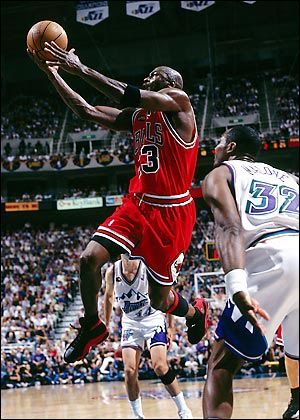
Not only was Jordan clearly the best player in the league, but his team won more games (69) than anybody that year and eventually met Karl Malone's Utah Jazz in the NBA Finals, smote them mightily and Jordan won Finals MVP. So there. Moral of the story: don't mess with Jordan.


While researching this post, I came across a cool piece by Kevin Pelton at Basketball Prospectus using win statistics to look at all the best players from the 1990s. Check it out here.

Tuesday, January 18, 2011

FreeDarko's Undisputed Macrophenomenality

My work days in San Diego are officially over. My last day was Friday. Having spent more than 2 years at the same job, it was a little sad to leave but everybody (all four of us) pretended nothing different was happening and just kinda hid the emotions we were all having. What's funny is that, without exception, I dreaded every day I had to work there, I woke up in the morning furious and wanting to kill my alarm many times (actually, this has occurred often throughout my entire work career), but the last couple days of work were kind of bittersweet. I was appreciating every little thing and thinking "oh man, I'm gonna miss talking to the mailman everyday." When stuck in the daily grind with no escape in sight, I tended to focus on the negative, but when it all came to an end I was almost overwhelmed by the simple things.

Now I'm back out floating in space. The future is a mystery. I do know that we are moving to Austin, Texas at the end of the month and I've got a bunch of things to do in order to prepare. As the moving day approaches, I'm starting to feel that same nostalgia for San Diego as a whole. That the weather has been absolutely perfect (cloudless sky, mid-70s) the last few days doesn't help matters. I'll probably write a big post on all the things I'm gonna miss about this city. But, for now, I'd like to wake this blog up with some basketball talk.

First, though I haven't really gotten to read much of it yet because I've been engrossed in Bill Simmons' b-ball book which I received at the same time, FreeDarko's The Undisputed Guide to Pro Basketball History has been getting rave reviews and I've been showing off its visuals to anybody I come across, including my pops who took it upon himself to try to name every player in the book's collection of artwork. I was particularly impressed that he successfully named every player in the Red Auerbach Celtics picture (capping it off with a proud "Bill Sharman! Because he's a sharp shooter...").

Recently I learned that Dr. Yago Colás, a professor at the University of Michigan, will be using the colorful tome as the key textbook in a course he is teaching called "Cultures of Basketball." That there's a college class all about basketball is awesome enough but using the FreeDarko book as a textbook is spectacularly cool and Dr. Colás is actually posting blog entries at his website documenting each day of the course. His first two posts have been very long but they're definitely worth a read. Here's a sample from Day 2 of the course, when the consideration of basketball as religion sparked lively discussion:

They came out with all kinds of great stuff: basketball involves ritual, basketball is a haven from earthly troubles, basketball involves superstition and the appeasing of higher powers, basketball awakens passions of love and hatred, basketball inspires devotion. Basketball, a couple of people collectively figured out, could even be seen as just one of the great religions alongside other sports like baseball, football or soccer as others. Ultimately, they decided, just as with “real” religions one can get caught up on the differences and become antagonistic and hostile or one can focus on the basic underlying commonalities. They talked about how you create value-systems through basketball. They talked about their own experiences as players and fans. We made fun of Lakers’ fans.  (Even the Lakers' Kid admitted Lakers' fans were insane, explaining that in a recent fan forum thread Lakers' fans said that if they had one player with which to start a franchise they'd choose Andrew Bynum over Blake Griffin.)   We felt bad for Cleveland fans: how would you feel if the Messiah abandoned you cause you were cold and a loser? We enjoyed making the obvious observation, with verbal winks at each other, about the Nike “Witness” campaign and about Lebron’s “Chosen One” SI cover.
We also talked about whether there was any drawback to seeing basketball as a religion or, more precisely, to experiencing it as a religion. This led to a discussion of perspective, with some students feeling that it was important not to lose sight of the fact that basketball is, after all, a game and not as encompassing or important as religion.  While in some ways this is obviously so (and I said so), I also wanted to resist the point. I think partly I felt a peevish resentment at being brought back down to earth, as though I was being told that it was time to get serious. But I also felt that there was an intellectual point -- at least a matter of rigor – at stake.
I would also add on to that point that basketball has its own gods, demigods, angels, martyrs, tortured souls (as Lamar Odom was compared to Job in the first FreeDarko book), tricksters, master builders, and so on. Basically, this is exactly the perspective (basketball as mythology/religion) that was so beautifully expounded in FreeDarko's excellent first book, The Macrophenomenal Pro Basketball Almanac.

The head FreeDarko honcho, who goes by the pen name Bethlehem Shoals, has been writing a regular column, "The Works," on the latest happenings of the NBA over at the AOL Fanhouse website which was being linked to on my sidebar to the right. Unfortunately, the AOL sports site has just recently been taken over by The Sporting News and now a wonderful writer like Shoals will soon be kicked to the curb. Pretty scary for me as an aspiring writer to see the mastermind behind two undisputedly brilliant books saying things like, "Don't hesitate to get in touch if you know of any writing or editing work!"

Not sure when the last column will be but they've got a new one up today all about LeBron's latest machinations and the great debate of Blake Griffin vs. Kevin Love, two young power forwards who've been tearing shit up thus far this season. 

Lastly, here's a video I came across via FreeDarko's twitter page, it was apparently filmed by Ron Artest's younger brother Daniel, an NYC playground legend and professional player overseas:

And here's the highlights of Blake Griffin's stomping of the Indiana Pacers last night:

Tuesday, January 4, 2011

Xmas Loot

Just a quick rundown of the Christmas loot I acquired, mostly a pretty spectacular array of books.


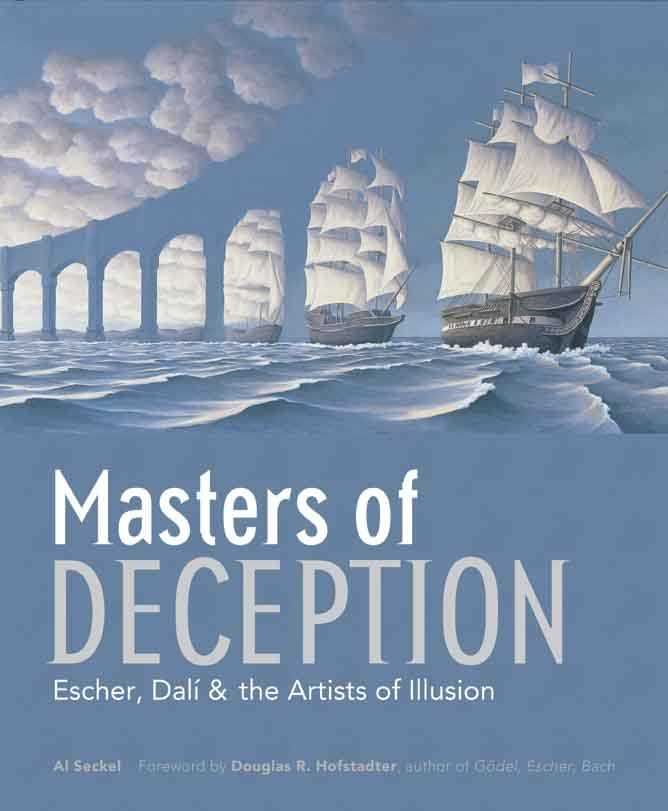
- The first thing I received was a book from my girlfriend's father, an artist himself who had listened to all my blabberings about Dali and the paranoaic-critical method which led to him getting for me an amazing book of trompe l'oeil and anamorphosis art including the works of Dali and M.C. Escher (another favorite of mine). The book is called Masters of Deception: Escher, Dali & the Artists of Optical Illusion and it's probably the coolest art book I've ever seen.


- Next thing, also from my girlfriend's pops, was a book I had been looking at in bookstores for a while and was hoping somebody would eventually get for me. It's a full exploration of the life and works of the Austrian painter Gustav Klimt. I've been fascinated by Klimt's style since first seeing his work a few months ago. With many of his paintings I look at them and hear music, which is the exact opposite synesthetic sensation induced by my favorite music which often conjures pictures, images, shades of different colors. I fuckin love art. Here's Klimt's Death and Life.

- Totally switching gears... The last five or six years, ever since I've gotten into reading books as a serious hobby, each Christmas there seems to be a theme. It's whatever I'm heavily interested in at the time or throughout that year. Years back it was Carl Sagan's work, then Joseph Campbell, last year it was James Joyce. This year it was basketball. As I've mentioned a few times, my interest in the NBA has been rejuvenated this season and I've been devouring basketball literature ever since. So my lady hooked me up with a nice trio of b-ball books this year:
  • FreeDarko presents The Undisputed Guide to Pro Basketball History. I was absolutely blown away by their first book (reviewed here) and was eager to check this one out. So far I've only had a chance to flip through it a couple times but the artwork is beautiful and once again they're inventing cool ways to graphically display vast amounts of data and stats. The chart of NBA fights is nuts. In my history as a sports fan, there's been no doubt that baseball inspires the greatest collection of literature. But basketball seemed to have been catching up lately and the FreeDarko books have blasted forward lightyears ahead of anything I've come across in sports books of any kind.
  • The Book of Basketball by Bill Simmons (new paperback edition). When this first came out a last year I was so immersed in Joyce books that I didn't care to check it out. I also figured it would make sense to hold out and wait for the paperback since all the errors would then be corrected and there would certainly be new material added. I'm glad I held out. Simmons' NBA columns have always been entertaining for me but after reading the reviews for his book, all of which seem to complain that there's almost as many porn and reality show references as basketball talk, I wasn't all that eager to start reading it nor did I have high expectations. But, of all the books I got for Xmas, this is the one I haven't been able to put down. His writing is annoyingly great, no big words and the candor is that of a diehard fan, yet it's a smooth and entertaining read if you're into basketball. It's also vast, the 700 pages cover the top 96 players of all time, the best teams ever, the worst MVP winners ever and much, more more.
  • Rockin' Steady: A Guide to Basketball & Cool by Walt Frazier. One of the few things I truly miss about living in New York is getting to hear Frazier as the color commentator on Knicks' games. His voice purls like a fountain while delivering a vast vocabulary, often with rhymes. The book was written during his playing days with the Knicks, though, and features lots of clear color photos of 1970s basketball, cool drawings, and Clyde's basketball wisdom plus, of course, how to be cool. I dig it.
- Last but not least is a book that I'd been reading on Google Books for a while but didn't want to pick up because it's an expensive, obscure scholarly text. The title, James Joyce and the Politics of Egoism, makes it sound extremely boring and dense but it's been a great read. With plenty of material on Jacques Lacan's studies of Joyce, I needed this book to finish up preparing for an essay I'm about to write on that subject. The book goes into much more than that, though, and I would recommend it to anyone interested in Joyce as it delves into a wide range of stuff that I've never heard of before.

Among the other blessings bestowed upon me by my immediate family were a Space Pen, an iPad, and a pair of tube socks. Thank you to all, and to all a good night.

Saturday, December 18, 2010

Macrophenomenal

For a variety of reasons (didn't have a TV or internet for a while, was focused on other things, etc) I drifted away from serious NBA fanhood during the last couple of years. While I managed to get into the playoff games and especially (with a die hard Lakers fan for a co-worker) the Finals, I had drifted away from reading about the happenings of the sport and watching any regular season games.

I've spent the last few months trying to get caught up.

The most glaring thing that slipped past my radar during that time is an extraordinary book entitled The Macrophenomenal Pro Basketball Almanac written by the collective of minds that publish the blog FreeDarko. The book was released in November 2008 so of course I'm very late to the party but I must sing its praises anyway. I cannot remember the last time I was this blown away by a book of any kind, not just a sports book.

It looks beautiful, with hardcover binding (no annoying dust jacket) and glossy pages each of which has the color and eye-catching presentation of a children's book. Read the words in it, and you'll see it's actually a book for adults, particularly those who enjoy and follow the game of basketball. For basketball fans this is a tablet descended from hoops heaven.

The vision presented by the creators of this book portrays the NBA and its stars in what would be best be called mythological terms. When I was first flipping through it, I was actually reminded of Joseph Campbell's work. If that sounds a bit over the top, the writing does seem to maintain a humorous tongue-in-cheek backdrop the whole time while still casting its subject in a mythological and analytical light, throwing in references from the whole history of culture. The Almanac is a study of today's game broken up into six chapters, each devoted to an archetype like Master Builders (Kobe, KG, Tim Duncan) and Destiny's Kids (LeBron, Chris Paul). Each chapter contains three sections spotlighting players that embody the given archetype while each respective player has a "Spirit Animal" in their jocoserious profiles along with comparable players and other traits.

The players are described through essays, artwork, graphs, comparison, stats, and it all goes together perfectly and looks great.

While the writing is intelligent, clear and condensed, and the artwork is worth the price of the book, it is the presentation of the stats that is perhaps the most amazing thing about this book. I'm admittedly a stats geek when it comes to sports. Have been for many years. But I've never seen any book or website that presents the numbers in as cool and sleek a fashion as this book. The first chapter has a beautifully colored and very understandable graph distinctly showing how Kobe Bryant's 81-point game outdid Wilt Chamberlain's famous 100-point performance. Lamar Odom's uncommon variety of skills is highlighted in an extremely creative, brilliant graph comparing him to pretty much every other player in the league. Pictures painted with numbers and math.

Above all, though, this book is about style and it is a wonderful celebration of it. The opening pages display FreeDarko's "Periodic Table of Style" with symbols to represent each part of a player's game, representing "exactly what occurs in an instant revealing style as a mix of the physical, emotional, spiritual." Each player's section features a different Style Guide breaking down step-by-step their signature moves. Tim Duncan's is perhaps the best of these as his two-page centerfold guide breaks down the "fundamental mechanical concepts" of his post moves. Amar'e Stoudemire's explosive array of dunks are also a Style Guide highlight.

My favorite chapter is the one highlighting two relatively unknown players (the only chapter that combines two players); enigmatic, awesome, yet frustrating peacocks Josh Smith and Gerald Wallace. These two are given the FreeDarko treatment to the highest and most aesthetically pleasing degree, with a splendid, intensely colorful image of them in the style of Mayan art, a sleek and colorful graph of beads that displays their unique batch of skills, a short-but-sweet Style Guide, and a marvelous mandala inspired by the Aztec's calendar system depicting (of all things) the results of Hawks-Bobcats games.

Other highlights include the "Lunacy of Artest" displaying the moon's phase during some of Artest craziest moments, the Yao Ming aggression chart comparing the layup/dunk ratio of NBA big men, the appreciation of Rasheed Wallace (with cryptic Wu-Tang reference included), the whole Amar'e chapter, the LeBron James essay, the "Alchemy of [Gilbert] Arenas."

If there's an NBA fan for whom you need to buy a gift this year: get them The Macrophenomenal Pro Basketball Almanac. It is a masterpiece. It doesn't matter if someone has just a small seed of basketball interest, this book will make anybody appreciate the NBA more than ever.

*   *   *
The FreeDarko peeps collaborated with Adidas for some commercials last year and the result was a couple of pretty damn cool videos. Check 'em out.


*   *   *
The crew has also just released a brand new book all about the history of the NBA. It's one of the top things on my Christmas list. Check it out here.

Sunday, December 5, 2010

Braindrizzles

My favorite musical group of all time, the Wu-Tang Clan, is performing right now and I reluctantly gave up on attending the show after getting over to the venue and seeing the line spanning all the way around the corner. Really, though, for a number of reasons I was at least ambivalent and at most uninterested in going to see the Clan in concert and seeing the humongous line just solidified my apprehension into nonattendance.

I've been physically ill, just feeling cruddy and cloudy with a boogery head cold and a combo of other ailments for the past 7 days, most likely brought on by the stressful work environment I'm in each day. Pretty much every day at work features me having to ward off angry vendors to whom we owe tens of thousands of dollars and tell them "we just don't have it" and variations of that pathetic statement. The owner, who is also my co-worker, is a trampled man. His company is crumbling to dust before his very eyes.

I actually saw Wu-Tang perform live here in San Diego exactly two years today and it was a spectacular show. My reluctance to go see them again though is partially because of their never changing up the set list when they perform together as a group; they play the same exact tracks every time. All the mid-90s classics. Never any more recent (last ten years) material. Plus my favorite member, The Rza, won't be performing on the current tour because he's in China directing his first movie, The Man with the Iron Fist starring Russell Crowe.

If one of the members was performing solo or alongside some of the lesser heard but highly skilled Killa Bees then I would be a lot more eager to see it because they would certainly delve deeper into their vast catalogue. I'm glad to hear that 1990s Wu affiliate La the Darkman is one of the opening acts on this tour, though. And I heard he performed this classic song at the San Francisco show on Thursday:


It'd be really special if he got the chance to perform this relatively obscure Wu gem with Masta Killa and U-God, "Element of Surprise" produced by 4th Disciple:


*   *   *
R.I.P. to the great Ron Santo who died at the age of 70 yesterday. The should-be Hall of Fame third baseman was a Chicago Cubs legend. He suffered from diabetes which eventually led to him having both legs amputated but he was still always a mainstay at Wrigley Field. Sad to see him go.

*   *  *
I received a phone call while still in bed sleeping this morning from my friend and co-worker informing me that the Padres had officially traded hometown hero and superstar Adrian Gonzalez to the Red Sox. I'm shocked at how quickly it happened but it really seemed inevitable. Gonzalez is one of the best players in baseball right now and he was entering the last year of an extremely underpaid deal, while it was becoming more and more clear that there was no way the Padres would be able to re-sign him with the money he'd inevitably demand on the market as such a great commodity. It's sad because he's a San Diego native of Mexican-American descent which makes him a perfect fit here but such is the business of baseball. The Padres don't have much money (though I'm not sure why) and he was going to undoubtedly command a huge contract.

The Padres' GM Jed Hoyer is a former whiz kid from the Red Sox front office and so we can be confident that he knew exactly which minor players to snatch up from his former team in return for this most precious trade piece. According to Marc Hulet from FanGraphs, the new arrivals from the Sox already slide right into the top 5 prospects in the Padres system.

While I'm glad I got to attend so many Padres games this summer and see one of the best hitting Padres of all time lead his team through a pennant race, I'm not quite as emotionally attached to the players as some of the Padre diehards and, objectively, this seems like a great deal for the situation they found themselves in. It will be fun rooting for Adrian to kick the Yankees' asses. But I wish this deal didn't have to happen.

*   *   *
For the last few weeks I've been absorbed fully into the happenings of the NBA, watching multiple games every night. Having watched games featuring almost every team in the league, I'm starting to wonder if there are any truly boring teams to watch. There doesn't seem to be right now as even the crappiest teams have a player or two who's worth watching. The best example of this is the perennially pathetic Los Angeles Clippers who have become must-see TV for me lately with rookie Blake Griffin exploding onto the scene with nightly highlight reels of him doing things you normally only see in NBA Jam or old Shawn Kemp highlights.


Even the Knicks, that formally destitute, dilapidated franchise I've always rooted for but most recently shielded my eyes from, seem to be crawling out of their years in the sewer. Mike D'Antoni has the offense clicking, playing fast-paced, exciting and high-scoring basketball while Amare Stoudemire is settling into a consistent streak of awesomeness and starting to have great chemistry with new point guard Raymond Felton. The Knicks are actually fun to watch.

The NBA world was abuzz all week about LeBron James' return to Cleveland to play his former team but after the bullshit about his famous powder toss and the player introductions, there was really nothing special to the game at all. The Heat absolutely scorched a clearly inferior team right from the start and that was the end of it.

*   *   *
I've been reading and loving two excellent but very different basketball books lately, The Macrophenomenal Pro Basketball Almanac and Pro Basketball Prospectus 2010-11, and I will write a review for them soon. I can't speak highly enough about both of them. In the Macrophenomenal book, the team over at FreeDarko uses sleek artwork and graphs to examine the culture and essence of the contemporary NBA and the Prospectus book is an absolute gem, reminding me of Bill James' Baseball Abstracts. Glad to see this infinitely awesome sport inspiring such great material.