Showing posts with label Thirst for Knowledge Thursday. Show all posts

Thursday, March 15, 2012

Thirst for Knowledge Thursdays: Jung's World-View-Flipping Memories, Dreams, Reflections

"A man who has not passed through the inferno of his passions has never overcome them. They then dwell in the house next door, and at any moment a flame may dart out and set fire to his own house. Whenever we give up, leave behind, and forget too much, there is always the danger that the things we have neglected will return with added force."
- Carl Jung, Memories, Dreams, Reflections pg. 277

In the midst of a conversation with my girlfriend the other day, the subject of which escapes me now, I was led to pick up an old favorite book of mine from the bookshelf and talk a bit about it to her. The book was Carl Jung's autobiography Memories, Dreams, Reflections. I went through a phase of closely studying Jung's writings and nothing came close to the powerful impact of that book. A highly influential psychologist with stacks and stacks of fresh ideas and insights, Jung never seemed to go deeper than he does in this book.

As is perfectly fitting for the man who coined the term "synchronicity," Jung's book suddenly popped up in my atmosphere again that same night as I was reading a recently-discovered blog called Brain Pickings. Seemingly out of the blue, there was Jung's Memories, Dreams, Reflections at the top of the page with a little blurb and even an illustrated diagram summarizing the book's story. This, of course, prompted me to start piecing together ideas for a blog post and I faintly remembered taking copious notes on the book when I had first read it in early 2009.

It was in November of 2009 that I initially started writing this blog, but before I ever decided to start sharing my own thoughts on the internet I had been practicing my writing privately in notebooks for a few years. Digging up my old notes for Jung's book I came across not only a dozen or so pages worth of quotes I had copied down from it, but even a thorough, glowing 8-page review I wrote for it. Looking back at the review, I'm glad to see that I meticulously documented the strong effect the book had on me because I've only read it once but I recall that it struck me powerfully. As I wrote back then, "Upon first rendering, it's a glorious flash of light but it is necessary to approach the material again and sit in its glow for a time. This is extremely powerful, illuminating stuff."

Thursday, March 31, 2011

Thirst for Knowledge Thursdays: Essential Angell

Baseball has begun. East and west, this is the week of the unfurled bunting, the flexed mayoral or gubernatorial wing, the restored hope, the repainted seat, the April fly ball falling untouched on resodded turf, the windblown shout, and the distant row of pitchers and catchers huddling deeper into their windbreakers as the early-spring sunlight deserts the bullpen. Now everything counts; from now until October, every pitch and every swing will be recorded. In another month, some order will begin to emerge from the standings. Infields will have hardened, some arms and expectations will have gone bad, and enormous crowds will pour out for their first weekend doubleheaders. The long season will engage us once again.
--- Roger Angell from The Summer Game
Keeping with the baseball theme we've maintained here for over a week now, the book I'm recommending this week is one of my favorite volumes of baseball writing. I've said before that baseball seems to attract the best writers of any sport and no sportswriting comes close to the eloquence of essayist Roger Angell. Every year I find myself returning to his books, the best of which cover the 60s and 70s era of baseball, and savoring them again so as to enhance my appreciation for this, the greatest of games.

Some consider his first collection of essays, The Summer Game, to be his best work and for anybody interested in great baseball writing it would be perfect place to start. The book contains Angell's baseball essays for The New Yorker written during the period of 1961 to 1971, including coverage of the World Series for each of those years. Most notably, it has Angell's essays on the brand new expansion New York Mets as they appeared in the early 60s. I don't often read purely for pleasure anymore but Angell's books are an exception. Reading him is like savoring a refreshing glass of chocolate milk. I like to refer to him as the Ralph Waldo Emerson of sportswriting because I often feel like I'm reading what Emerson (another writer who I read just for the experience of it) would have had to say about the game, such as when Angell recounts a raucous Mets game at the Polo Grounds where foghorn-blaring sign-carrying crowds came out to support their historically horrible team:
Suddenly the Mets fans made sense to me. What we were witnessing was precisely the opposite of the kind of rooting that goes on across the river. This was the losing cheer, the gallant yell for a good try---antimatter to the sounds of Yankee Stadium. This was a new recognition that perfection is admirable but a trifle inhuman, and that a stumbling kind of semi-success can be much more warming. Most of all, perhaps, these exultant yells for the Mets were also yells for ourselves, and come from a wry, half-understood recognition that there is more Met than Yankee in every one of us. I know for whom that foghorn blew; it blew for me.
He is a master with words and he employs them in such a smooth, readable manner yet always without pretense. On the surface, these are just paragraphs of a sensitive man's reflections on baseball games. But the way the simple way he describes the ebbs and flows of an at-bat, an inning, a game, a season, one is able to apprehend this ancient game as a timeless ritual. He writes of players, coaches, events that are buried in the past, from twenty or thirty years before I was even born, and yet his perspectives transcend the barriers of time and manifest into a game I'm viewing on an iPad with every little colorful blaring electronic distraction possible (pitch-tracker and other graphics). He is a baseball aesthetician and through his words one is encouraged to view the game in the same way.

I don't recall how I first stumbled upon his writing but I know it was during my first year of college at Pace University, when I was really not happy with my situation. I would often skip class and escape to explore the baseball section deep inside the school's vast library which had a whole big shelf filled with baseball books from the 70s and 80s. During that time, I devoured every Angell book they had and rounded out a burgeoning, broad baseball obsession that continues to captivate me with the yearly return of the game each spring on Opening Day. Happy baseball everyone!

Thursday, March 24, 2011

Thirst for Knowledge Thursdays: Diamonds are Forever

Continuing my weekly series of illuminating one book (or more) each Thursday...

I completely lucked out in finding this book. As I've mentioned a couple times before, there is a great bookstore chain here in Austin called Half Price Books that sells used books in usually perfect condition for very low prices. There are a bunch of these stores around here but the one on North Lamar Blvd has an absolutely tremendous selection including a separate room for extremely rare books (I scooped up an obscure Finnegans Wake study there not too long ago plus a great book of Joyce's poetry published in Poland).

My girlfriend and I stopped in the other day for a quick look around and I scooped up yet another Joyce study, this one a detailed analysis of Ulysses called The Book as World. It had an infinity symbol on the cover and great reviews so I couldn't resist adding it to the stack I'm studying for my own soon-to-come Ulysses breakdown. But just as my girlfriend was getting on line I thought to go take a quick peek at their baseball section to see if there were any gems. I ended up with exactly that, an immaculate gem of a book.

The book is called Diamonds are Forever: Artists and Writers on Baseball and, just as the title suggests, it's a rich collection of artwork, poetry, and essays on the eternal aura of the game of baseball. It's a pretty large book, soft-cover but the size of an art book or so-called "coffee table" book (I've never owned a coffee table but I've got a bunch of these type of books) and it was published by Chronicle Books, a San Francisco-based publisher who seems to produce just about every highly awesome artsy book I come across. For example, my girlfriend received a huge spectacle of a book this past X-Mas from her dad: a collection of New York City subway art images published by Chronicle.

The apparent polar opposite of most of the baseball literature I read which contains lots of stats and objective analysis, this is an aesthetic appraisal of the game's archetypal and timeless aspects. I've been buried in it for the last couple days and it's stunning. It's got plenty of passages from my all-time favorite baseball writer, Roger Angell, the Ralph Waldo Emerson of sportswriting, plus material from poet Donald Hall (a gifted wordsmith who collaborated with Dock Ellis on a book I've been itching to read for a while now), David Halberstam, Thomas Boswell, Woody Allen, Roger Kahn, John Updike and a whole bunch more. The visual art is rich and diverse and, along with the poems and lyrical essays, it all gels together for a beautiful study of baseball as an eternal, mystical ritual. Which is, of course, the whole point of artwork as the introduction states:
[Isn't] that the "job" of the artist? They take those experiences that many of us have and transform them into something new---into paintings and poems and essays that challenge us, or delight us, or touch us so deeply that we're convinced there's magic going on there somewhere...The artist has that rare ability to make the ordinary extraordinary, that rare ability to have us see and experience with "new eyes."
The book is in such perfect condition that it wasn't until a few hours ago that I realized it was actually published in 1987. It's apparently a pretty rare, limited edition book that was printed for a traveling exhibition with the Smithsonian Institute. I paid 9 bucks for it! Can't recommend it highly enough if you can manage to find it anywhere.

Thursday, March 17, 2011

Thirst for Knowledge Thursdays: That Face is Your Face

You will notice that I've added a little Amazon widget to the sidebar on the right. I've been wanting to do that for a while but never actually explored it until the other day. It's actually very easy to do. And instead of making it a collection of my favorite books, I've got it displaying the books I'm currently reading. As for my favorites, we'll continue to take a look at some of those each Thursday.

When I first mentioned the idea of a weekly post sharing some good books, I mentioned that I'll be picking books off my "Jacob's Ladder" bookshelf and, indeed, I do have it set up like a ladder. The easier or more earthly books (sports, mainly) are on the bottom and things get heavier as we move upwards (from basic religion/science/history up to deeper physics/spiritual/philosophy stuff) culminating in the top shelf which houses a whole collection of Joseph Campbell books as well as some of Carl Jung's best stuff, Nietzsche, and Goethe. Today we're up at the top shelf. And the book I've chosen is probably the only book by Campbell that I've read more than twice. It's his first book (well, the first book he wrote on his own) and it remains his most famous work: The Hero with a Thousand Faces. While it is basically an introduction to the material that he would expand on all throughout his career, it is one of his most accessible books and thus, perhaps, the most rewarding. It continues to be a major influence on people, especially artists and, most famously, it was the major inspiration for George Lucas' Star Wars films.

The book is a deeply enlightening analysis of the archetypal stages of the mythological hero journey which, as Campbell shows, is essentially the story of the basic stages of human growth and individuation in society. Weaving in ancient myths and tales from nearly every corner of the globe, Campbell takes us through each stage of the hero's journey and shows us how the story is the same all throughout the world, though always with a different local inflection. The story is essentially this: growing up in a society of inherited ideals, an individual feels compelled to jump out into the world of adventure, of unfamiliar territory; this individual crosses the community's threshold and then goes through numerous trials, often life-threatening, before receiving help from supernatural or serendipitously appearing aids who help the individual continue along toward a goal; he encounters the mother goddess who helps him on his way to acquiring the ultimate boon of wisdom; the hero returns to the society bearing the bright gifts of knowledge and wisdom to uplift others from their sorrows. Discussing this theme as it appears in the Bhagavad Gita, Campbell explains:
What, now, is the result of the miraculous passage and return?
The battlefield is symbolic of the field of life, where every creature lives on the death of another. A realization of the inevitable guilt of life may so sicken the heart that, like Hamlet or like Arjuna, one may refuse to go on with it. On the other hand, like most of the rest of us, one may invent a false, finally unjustified, image of oneself as an exceptional phenomenon in the world, not guilty as others are, but justified in one's inevitable sinning because one represents the good. Such self-righteousness leads to a misunderstanding, not only of oneself but of the nature of both man and the cosmos. The goal of the myth is to dispel the need for such life ignorance by effecting a reconciliation of the individual consciousness with the universal will. And this is effected through a realization of the true relationship of the passing phenomena of time to the imperishable life that lives and dies in all.
After explaining each stage for us, using elements from a ridiculous amount of different myths along the way (Buddha, Jesus, Eskimo stories, Native American myths, African tribal rituals, Greek myths, everything), Campbell then explores the source of it all, the unconscious mind from which these rich stories spring forth, and what it all means psychologically and cosmically. He discusses the "universal doctrine" found in the cosmologies of every culture throughout human history that "teaches that all the visible structures of the world---all things and beings---are the effects of a ubiquitous power out of which they rise, which supports and fills them during the period of their manifestation, and back into which they must ultimately dissolve. This is the power known to science as energy, to the Melanesians as mana, to the Sioux Indians as wakonda, the Hindus as shakti, and the Christians as the power of God...And its manifestation in the cosmos is the structure and flux of the universe itself."

But to apprehend the very source of this energy, one must transcend the human organs of apprehension because the forms and categories of our rational minds are, themselves, manifestations of this power and thus preventing one from being able "not only to see, but even to conceive, beyond the colorful, fluid, infinitely various and bewildering phenomenal spectacle." And so the function of myth is to help the mind achieve that "jump" beyond the phenomenal. As Campbell says, "Myth is but the penultimate; the ultimate is openness...into which the mind must plunge alone and be dissolved." The elements of myth are meant to attract the mind towards what is beyond these elements, the infinite eternal void out of which our categories of opposites and duality spring. "Therefore, God and the gods are only convenient means---themselves of the nature of the world of names and forms, though eloquent of, and ultimately conducive to, the ineffable. They are mere symbols to move and awaken the mind, and to call it past themselves."

This was the first book by Campbell that I ever read and, though I think there are others that are actually better, it is the book I come back to the most. Especially in times like right now where I'm traveling rather aimlessly on an unfamiliar road that I hope leads to a creative future. This book was my bible when I initially left the nest at age 22 and traveled across the US to San Diego with no practical plans. Three years later, I'm still on the journey and maybe only slightly less confused. This is still one of the first books I turn to for answers.

Thursday, March 10, 2011

Thirst for Knowledge Thursdays: Wu Tablets

With the release of Raekwon's brand new album Shaolin vs. Wu-Tang this past Tuesday and the Wu essence glowing brightly in the public eye once again (nearly twenty years after their debut), now would be a good time to become familiar with the history of the Wu-Tang Clan and its deep mythological elements.

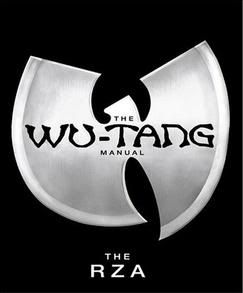
The man who started it all and produced their first dozen or so albums, The Rza (known as The Abbott of the Wu-Tang Clan), published The Wu-Tang Manual in 2005. The book has the look and feel of a mystical manual and contains a full introduction to the mythological universe of the Wu with chapters on the genesis of the nine-member group, their infatuation with chess, kung-fu movies, spirituality, organized crime, comic books, and much more. One of my favorite parts is a section of the book in which Rza explains the lyrics to some of their greatest songs.

For me, this book was one of the first bricks in the foundation of knowledge I've been building for years now. It introduced me and encouraged me to study the major wisdom books in the world like the Tao Te Ching, Bhagavad Gita but also The Bible and Holy Qur'an. From the beginning I wanted to emulate The Rza whose breadth of knowledge spans both the spiritual and scientific realms (he often talks about physics in his work) and that really led to the voracious reading/study habit I've had that has led me to the works of people like Joseph Campbell and James Joyce. I didn't learn any of this stuff in school, not even in college, but my mind is consumed by it and I've reached the point where I will not be happy in a career that doesn't involve intellectual expansion and expression. I am not exaggerating when I say that this book was the springboard that flung me into this new universe.

Rza released a second book, The Tao of Wu, last year and I even drove three hours from San Diego to Los Angeles for a book-singing but I've yet to get deeply into that book with all the Joyce studies I've become immersed in this past year and a half. Once I do get to feast on it, I will definitely share my thoughts here.

*   *   *

Rae's album was not the only piece of pure hip hop music to be released on Tuesday. The new EP from Kevlaar 7 entitled Who Got the Camera? became available on CD and, as much as I'm enjoying the Raekwon album, this is really my favorite record of the year thus far and truly one of the most powerful albums I've heard in a long time. If you'd like to see what I'm talking about, check out this analysis I wrote for one of the tracks entitled "I Have a Dream" which parallels and re-examines the world through Martin Luther King's famous speech.

Also, in the same vein, I have to mention a brand new EP from another underground emcee from New York City by the name of Zagnif Nori (who appears on the opening track for Who Got the Camera?). His new EP is a dense mixture of hard drums and smokey samples with sharp, thought-provoking lyrics. It is entitled "Insignia" and it is available to download for free at this link.

Thursday, March 3, 2011

Thirst for Knowledge Thursdays: Hope and Cheaters

"Thirst for Knowledge Thursdays" is a new weekly digest in which I will select a book (or two) off my shelf, say a few things about it, and suggest that you read it. Boom.

The first book I've selected is an important one for properly comprehending the current global climate and cutting through the bullshit our news media spreads. Killing Hope: U.S. Military and C.I.A. Interventions Since World War II is both a highly readable history book and an important guide to understanding the way our insidious intelligence agencies work. The book is written by William Blum, a former government operative who left the State Department in the late 60s because he was disillusioned by the Vietnam War.

In the book, he thoroughly outlines and tells the story of over 50 different invasions, staged coups, tortures, drug trafficking, disinformation, assassinations, mass murders, and other heinous acts orchestrated or directly perpetrated by the U.S. military and C.I.A. The facts are all backed up by over 50 pages of footnotes. What's most shocking, especially when you read the stuff from the last 30 years or so, is how often the intelligence agencies openly admit to carrying out campaigns of misinformation, planting and spreading fake stories all throughout the American news to sway people's opinions in one way or another. For instance, in the chapter on Ronald Reagan's battles with Libya in the 80s, Blum notes that Newsweek uncovered and exposed (thoroughly) the C.I.A.'s plan to remove Muamar Qaddafi in an August 1981 issue.
The plan called for a "disinformation" program designed to embarrass Qaddafi and his government ; the creation of a "counter government" to challenge his claim to national leadership; and an escalating paramilitary campaign of small-scale guerilla operations.
Immediately afterward, the U.S. began flying fighter jets over Libyan airspace to provoke retaliation. They shot down two Libyan planes and then the Reagan crew sparked a whole bullshit terrorist story using the idea that "they [the Libyans] fired first!" There were reports of Libyan plans to assassinate Reagan, Libyan terrorist cells in the United States, and all the same exact stuff we've been fed about Iraq/Osama bin Laden/Al Qaeda for years now. Reagan flexed his muscles and his Hollywood pipes and suddenly the whole country was rallied behind kicking Qaddafi's ass. Somehow, he survived, but I'll let you read the book for the rest of the story.

Of course, the situation in Libya has now recently descended into chaos. But, I advise you to read between the lines. You can read more about Mr. Blum and his excellent book here at his site which also includes a bunch of free chapters to preview.

*   *   *

On a lighter note, I finally picked up a baseball book which I've been meaning to read for a while. The Cheater's Guide to Baseball is written by Derek Zumsteg, formerly of the great crew at Baseball Prospectus, and a highly entertaining writer. The book covers baseball's rich history of cheaters, cheating methods, and other hi-jinks including sign-stealing, corked bats, spit balls, gambling, and even a chapter on heckling and fan participation.

I've only just recently acquired the book and read just a couple of chapters but it looks great (photos, diagrams, drawings) and Zumsteg's writing has always been excellent. It's on my list of books to read as baseball starts coming out of its winter slumber and I recommend it to anybody else who's in the process of preparing for the upcoming season.