I'm starting a series of posts with the intention of introducing and explaining some things that will make frequent appearances in my writings as we move forward. This helps so that I don't have to pause to define or explain something in parentheses when posting about it (certain baseball statistics, for instance). I should have probably done this a while ago to introduce Joyce before posting so much stuff about his work but, really, it's only recently that I've begun to treat this blog seriously as something that people might read as opposed to a wall on which to carve my opinions and blabberings like graffiti.
So, to start, it's about time I explain what this blog's title means. Well, it has a number of meanings behind it but first I must point out the fact that I didn't decide "How 'bout I create a blog...and I'll name it 'A Building Roam'!" It is instead taken from an idea I had last year for a novel. "Building Roam" is from Bildungsroman, a German word used for a literary genre concerned with the growth and assimilation into society of a young person. Joyce's A Portrait of the Artist as a Young Man is considered a Bildungsroman novel, so is Siddartha and also Catcher in the Rye.
In my case, my story is concerned with a character who graduates college with a business degree but is unsure of what he wants to do with his future so, instead of interviewing for business jobs to begin a career as a suit-and-tie executive, he works as an office temp. This was me in New York in 2007. I worked for four different (very different) companies for varying lengths of time and have lots of interesting stories from each one. More importantly, it was during this time that I decided to move across the country to Southern California after spending the first 22 years of my life in the same spot. After growing up in the same nest (same house, same bedroom) I decided to jump out and test my wings. So, I see "A Building Roam" as referring to my journey as a temp from one office building to another as well as my eventual cross-country 10-day migration to San Diego where I had no plans, no job lined up, no apartment, I just had that destination. When I did make it there, there were some struggles for a little while and the bird who'd hopped out of the nest fluttered its wings frantically in descent at times, but eventually learned how to fly and stay afloat and enjoy the scene from the sky, soaring up above the buildings.
I have written a full outline for the novel telling that story but each time I try to sit down and compose the book I lose all confidence in my writing and shy away for a while. Part of the intention of this blog is to gain some more comfort in writing and hopefully (eventually) put up some draft chapters.
Tuesday, March 9, 2010


Sunday, March 7, 2010
Books I'm Reading
I'm still new at this, this manner of displaying one's thoughts and contents out for the world to see, but I've often seen people on the web make note of the books they're reading and so I'd like to briefly discuss my own readings here. I've maintained a bi-annual book-reading count in a notebook journal for the last few years but, with a blog, why not put it out there for the online universe... I hope it's not as boring to people as listening to someone discuss their fantasy baseball team or the contents of their stamp collection.
Reading Right Now
Baseball Prospectus 2010 - I'm going to have a post this week all about this wonderful annual introduction to the upcoming baseball season. I received it last week and am slowly reading and leafing through it each day, savoring it while the baseball season's prelude, Spring Training, rises stretching from its hibernation in the bed of winter.
ReJoyce by Anthony Burgess - in the midst of a second reading as I prepare to re-approach the perigee of the celestial body that is Ulysses
Reading Next
Well...my plan is to begin reading Ulysses again (perhaps with a second reading of A Portrait of the Artist as a Young Man first) and, as any good reading of this encyclopedic novel entails, I will be accompanying this second reading of it with a few of what the honorable Judge John M. Woolsey called its "satellites". Mainly these:
James Joyce's Ulysses by Stuart Gilbert - I acquired this book when I was already past the most ridiculous chapter of Ulysses, "Circe," and so I didn't get full of use of it yet. The format is a chapter-by-chapter walkthrough but it's not as good as some of the more recent ones in that respect. The lengthy introduction to the book and its themes, though, is perhaps my favorite piece of Joyce-commentary (out of everything I've read so far). The composition of this book was overseen by Joyce himself and, supposedly, Joyce spoke through Gilbert at times to give the reader some clues to his puzzle book so this, the first attempt by a writer to make sense of Ulysses, is an enlightening and essential sidekick.
Allusions in Ulysses: An Annotated List by Weldon Thornton - this is one my new toys. It's an enormous (506 pgs) and overwhelmingly thorough listing of the insane amount of references and allusions from Ulysses. What kind of allusion, you ask? One of the most daunting aspects of Ulysses is the fact that it contains so many references to things like: Shakespeare, Irish history, Thomas Aquinas, Catholicism, a ridiculous amount of old songs and plays or operas, Dante, The Bible, and about a million other people, places, and things. The book explains as many references as it can and does so in a chronological order, organized by chapter. This is most essential for the parts of the book where Stephen is talking or thinking because he is a walking Wikipedia and spins out that globular ball of yarn in his brain through poetic but opaque short sentences---like aphorisms or Tweets. An example from the "Scylla and Charybdis" episode:
Reading Right Now
Baseball Prospectus 2010 - I'm going to have a post this week all about this wonderful annual introduction to the upcoming baseball season. I received it last week and am slowly reading and leafing through it each day, savoring it while the baseball season's prelude, Spring Training, rises stretching from its hibernation in the bed of winter.
ReJoyce by Anthony Burgess - in the midst of a second reading as I prepare to re-approach the perigee of the celestial body that is Ulysses
Reading Next
Well...my plan is to begin reading Ulysses again (perhaps with a second reading of A Portrait of the Artist as a Young Man first) and, as any good reading of this encyclopedic novel entails, I will be accompanying this second reading of it with a few of what the honorable Judge John M. Woolsey called its "satellites". Mainly these:
James Joyce's Ulysses by Stuart Gilbert - I acquired this book when I was already past the most ridiculous chapter of Ulysses, "Circe," and so I didn't get full of use of it yet. The format is a chapter-by-chapter walkthrough but it's not as good as some of the more recent ones in that respect. The lengthy introduction to the book and its themes, though, is perhaps my favorite piece of Joyce-commentary (out of everything I've read so far). The composition of this book was overseen by Joyce himself and, supposedly, Joyce spoke through Gilbert at times to give the reader some clues to his puzzle book so this, the first attempt by a writer to make sense of Ulysses, is an enlightening and essential sidekick.
Allusions in Ulysses: An Annotated List by Weldon Thornton - this is one my new toys. It's an enormous (506 pgs) and overwhelmingly thorough listing of the insane amount of references and allusions from Ulysses. What kind of allusion, you ask? One of the most daunting aspects of Ulysses is the fact that it contains so many references to things like: Shakespeare, Irish history, Thomas Aquinas, Catholicism, a ridiculous amount of old songs and plays or operas, Dante, The Bible, and about a million other people, places, and things. The book explains as many references as it can and does so in a chronological order, organized by chapter. This is most essential for the parts of the book where Stephen is talking or thinking because he is a walking Wikipedia and spins out that globular ball of yarn in his brain through poetic but opaque short sentences---like aphorisms or Tweets. An example from the "Scylla and Charybdis" episode:
As we, or mother Dana, weave and unweave our bodies, Stephen said, from day to day, their molecules shuttled to and fro, so does the artist weave and unweave his image.
from Thornton...Dana, who is called Mother of the Irish Gods, was the greatest of the Danaan deities. She is mentioned in A.E.'s play Dierdre, which was alluded to earlier in this episode. J. Prescott points out an allusion here to Walter Pater's The Renaissance: "It is with this movement, with the passage and dissolution of impressions, images, sensations, that analysis leaves off--that continual vanishing away, that strange, perpetual weaving and unweaving of ourselves"
Further down the Reading List
Finnegans Wake - I've already read A Skeleton Key to Finnegans Wake by Campbell/Robinson but I'm eager to begin a study of the book itself along with...
Joyce's Book of the Dark by John Bishop - I've only read the introduction and first chapter but this appears to be the coolest Joyce book ever made. It's huge, not just lengthy but wide and has pictures and diagrams and all sorts of cool stuff. I look forward to reading this more than anything else.
Wilhelm Meister's Apprenticeship and Faust by Johann Wolfgang von Goethe - I picked both of these up recently and am eager to get into them after I read Goethe's The Sorrows of Young Werther last year and loved it. (Also, the name Wolfgang is awesome.)
Thus Spoke Zarathustra by Friedrich Nietzsche - I read a few of Nietzsche's books a year or so ago and absolutely freakin' loved them. I took a break from the poet-philosopher to get more into the poet-novelist (Joyce) and hope to get into the former's most famous book this year. (I've actually got two editions of this, one a paperback Penguin classic, the other a huge hardcover with a cool cartoon of Nietzsche on the front and large font inside.) A couple other Nietzsche titles sit on the bench of my bookshelf waiting for their name to be called.
Besides those, there's a random smattering of books including some more Joyce ones, a couple Alan Watts titles, and a re-reading of Volume 4 of Joseph Campbell's Masks of God series. And, since I started this post with a baseball book, I might as well end it with one:
Cardboard Gods: An All-American Tale Told Through Baseball Cards by Josh Wilker - I've been enjoying his blog for about three years now and this Spring, finally, he will be releasing a book. His reminiscences of growing up in a strange household are channeled through old 1970s baseball cards into sentimental, poetic, hilarious, and existential essays. One of my favorite baseball writers of the last few years.
Finnegans Wake - I've already read A Skeleton Key to Finnegans Wake by Campbell/Robinson but I'm eager to begin a study of the book itself along with...
Joyce's Book of the Dark by John Bishop - I've only read the introduction and first chapter but this appears to be the coolest Joyce book ever made. It's huge, not just lengthy but wide and has pictures and diagrams and all sorts of cool stuff. I look forward to reading this more than anything else.
Wilhelm Meister's Apprenticeship and Faust by Johann Wolfgang von Goethe - I picked both of these up recently and am eager to get into them after I read Goethe's The Sorrows of Young Werther last year and loved it. (Also, the name Wolfgang is awesome.)
Thus Spoke Zarathustra by Friedrich Nietzsche - I read a few of Nietzsche's books a year or so ago and absolutely freakin' loved them. I took a break from the poet-philosopher to get more into the poet-novelist (Joyce) and hope to get into the former's most famous book this year. (I've actually got two editions of this, one a paperback Penguin classic, the other a huge hardcover with a cool cartoon of Nietzsche on the front and large font inside.) A couple other Nietzsche titles sit on the bench of my bookshelf waiting for their name to be called.
Besides those, there's a random smattering of books including some more Joyce ones, a couple Alan Watts titles, and a re-reading of Volume 4 of Joseph Campbell's Masks of God series. And, since I started this post with a baseball book, I might as well end it with one:
Cardboard Gods: An All-American Tale Told Through Baseball Cards by Josh Wilker - I've been enjoying his blog for about three years now and this Spring, finally, he will be releasing a book. His reminiscences of growing up in a strange household are channeled through old 1970s baseball cards into sentimental, poetic, hilarious, and existential essays. One of my favorite baseball writers of the last few years.
Friday, March 5, 2010
A more readable Finnegans Wake?

Finnegans Wake was originally published in 1939 with many typos and minor mistakes which should not come as a surprise since it is written entirely in a "dream language" that Joyce created and spans over 600 pages. Joyce finished composing the book on November 13, 1938 after laboring on it for nearly 17 years and then for the next month and a half, Joyce, with help from his friends Stuart Gilbert and Paul Léon and some professional proofreaders, frantically worked around the clock to proofread the book as Joyce insisted that it be printed by his birthday (February 2nd) no matter what. During this time, Joyce barely slept at all and once collapsed during a walk in Paris. In his famous Joyce biography, Richard Ellman tells another story from this "frenzy of proofreading":
Léon supplied a last drama by forgetting a section of the revised proofs in a taxi. He rushed back to stop the driver, but the taxi was gone. Bitterly ashamed, he hurried to Joyce's flat to inform him; Joyce did not reproach him, seemed rather to take it as the usual sort of bad luck. Léon telephoned to London to send more proofs, but the taxi driver, after two hours, miraculously appeared with the missing package. (Ellman, pg 714)Joyce received a printed copy of the book from his publishers, Faber & Faber, on January 30th and for his birthday party on February 2nd, he celebrated the culmination of his years of work with friends and family. Paris' best caterer baked seven cakes, each one a replica of Joyce's seven books, with icing the color of the books' bindings. At the dinner celebration, Joyce told the guests how the idea for the book came to him in 1922 when he was at Nice in France and, after dinner, Joyce and his son sang a duet and his son's wife read aloud the last pages of Finnegans Wake.
Tuesday, March 2, 2010
Book Review: "ReJoyce" by Anthony Burgess
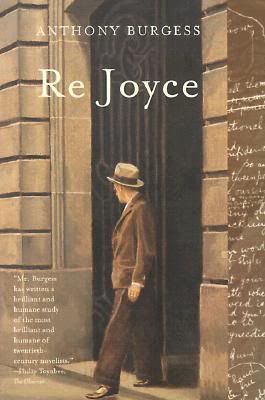
To paraphrase the opening lines of the "Scylla and Charybdis" episode of Ulysses, this is "a great writer on a great brother writer." The great English scribe, Anthony Burgess, famous for his novel A Clockwork Orange, here waxes lucidly and passionately on the works of James Joyce. This is perhaps the best and most fun-to-read book of Joyce criticism that's out there, it's highly acclaimed but I'm going to offer my own thoughts on this wonderful book which I recently completed and am now jumping back into for a second go-round.
 My copy is an older one, published in 1968, and it has a different cover than that which I show here but I couldn't find a good image of the older cover anywhere on the web. It has a cool sketch of two Joyce heads stuck together like Siamese twins (here's a tiny look at it, all I could find--EDIT: see two-headed cover courtesy of Eric Arbiter). Originally published in 1965 in Britain under the titleHere Comes Everybody: An Introduction to James Joyce for the Ordinary Reader, the American version was shortened to the much more pleasing title ReJoyce. Both titles are definitely apt, as Burgess' love and enthusiasm for Joyce's art glows on each page as he celebrates the author's entire canon from his early poetry to detailed walkthroughs of his major works, especially the two biggies, and in so doing he explains very clearly why these works are so important and what makes them so special. Burgess displays a passion in trying to make Joyce accessible and to dispel the cloud of heavy erudition that surrounds his books. In the foreword, Burgess explains the reason for the British edition's title Here Comes Everybody which is taken from Finnegans Wake, but he also wanted "to stress the universality of Joyce's creations" and enclosed in that title is Burgess' "hope that it will not be long before everybody comes to Joyce, seeing in him not torturous puzzles, dirt, and jesuitry gone mad, but great comedy, large humanity, and [the] affirmation of man's worth."
The book contains three parts: The Stones, The Labyrinth, and The Man-Made Mountain. In the first part, Burgess examines Joyce's early career, some of his early poems, and walks us briefly but concisely through each story of Dubliners but the main focus of The Stones is the 'flight' of Stephen Dedalus in A Portrait of the Artist as a Young Man. The symbolic name for the main character in Joyce's autobiographical Bildungsroman novel combines the great artificer of Greek mythology, Daedalus, with Saint Stephen, the first Christian martyr. Saint Stephen was stoned to death but, metaphorically speaking, Joyce (whom Stephen represents) took those stones and eventually constructed a Daedalian labyrinth in Ulysses and so, in part two, Burgess offers us an easy-to-read, thorough and interesting walkthrough of the longest day in literature. The part of the book (pgs 137-141) where Burgess explains the "Sirens" episode of Ulysses is probably the best explication of this difficult chapter I've yet across, here's a sample where he sheds light on the musical techniques Joyce used:
So, Joyce has obviously gone to great lengths in this chapter to include a bunch of musical elements in his prose---with all of the techniques Burgess points out there's also the fact that the entire chapter is in the form of musical fugue---but there's a reason for all of this:We distangle [Bloom] from a mass of musical tricks--a tremolo, for instance: "Her wavyavyeavyheavyeavyevyevy hair un comb:'d"; a staccato triplet: "I. Want. You."; hollow fifths: "Blmstdp"--in which the vowels are missing ("Bloom stood up") on the analogy of suppressed thirds in common chords. We have recapitulations, ornamented cadences, appoggiaturas, but above everything we have an exploitation of the musical possibilities of sheer sound..."
Does the virtuoso display obscure this latest phase of the story? No, since the essence of the whole book is Bloom and his qualifications for the spiritual fatherhood of a poet, and we must meet Bloom's inner world at all its levels. Every fresh stimulus brings to the surface a new aspect of the man, and music---in a city passionately devoted to it---is a stimulus of considerable potency.
Burgess' walking us through the entirety of Ulysses feels like a relaxed, pleasant and informative conversation during an early evening after-dinner stroll. He is obviously passionate about the subject, but also engaging in his quest to make it all seem appealing and help us see the greatness in this famously difficult book (it wasn't voted Best Novel of the 20th Century for nothing):
The difficulties of Ulysses...are not so many tricks and puzzles and deliberate obscurities to be hacked at like jungle lianas: they represent those elements which surround the immediate simplicities of human society; they stand for history, myth, and the cosmos. Thus we have not merely to accept them but to regard them as integral, just as the stars overhead are integral to the life of the man who, micturating in the open air, happens to look up at them.Micturating is a fancy word for peeing and he's making reference to the scene in the "Ithaca" episode where Stephen and Bloom piss in Bloom's backyard underneath "the heaventree of stars hung with humid nightblue fruit."
The third and final section of the book, The Man-Made Mountain, is a walkthrough of Finnegans Wake. There are few things, if any, that I find more interesting and stimulating than reading about Finnegans Wake because it quickly becomes apparent that it is the greatest human achievement in words ever. It is generally regarded as the most difficult book to read but Columbia professor William York Tindall has called it "the funniest book of all time and the dirtiest book of all time." Burgess' look at the wonderful dream text is, again, a clear and concise one. He never goes to absurd scholarly lengths to break down the unbelievable amount of references in Wake sentences and words but he often will unravel the beauty of a sentence here and there. His main approach is to try to explain to us what is "going on" (in quotes because, since the entire book is a dream, and thus not in line with the laws of time and space, it's hard to speak in such terms) in each chapter of the book so as to help us read it and savor the words without having to worry so much about unveiling who is doing what.
Overall, this is a wonderful book which I'll probably read again more than once and I highly recommend it to anyone even remotely interested in Joyce. I've read a number of Joyce books and criticisms the past year or so and this is unlike all of them in that, while not omitting any of the scholarly Joyce stuff, Burgess' book is easy to read and accessible. It also is not littered with footnotes and page references (he doesn't notate the page number on any quotes)---it is just simply a great writer waxing eloquently about perhaps the greatest writer. It is not sheer hero-worship, though. As I've said, Burgess sought to explain the beauty of Joyce and why he should be read. By regular people too, not just professors and polymaths, after all "Joyce's aim was the ennoblement of the common man." And what becomes most rewarding, as any reader of Joyce will tell you, is how his art seeps into your views of everyday life and, in so doing, adds a transfiguring depth to it:
Joyce, without blasphemy, saw his function as priestlike---the solemnisation of drab days and the sanctification of the ordinary.
Friday, February 26, 2010
Well, that was easy...
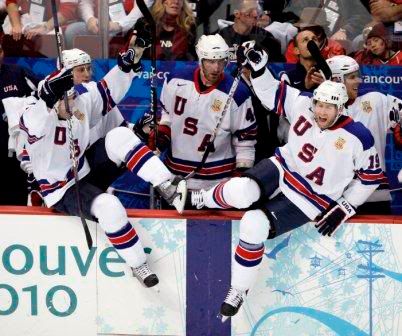
Team USA's opponent in the gold medal game will be determined tonight at 6:30 PST when Canada and Slovakia face off. I correctly predicted that Slovakia would upset defending gold-medalist Sweden and now they face an amped-up and avenging Canadian team that pounded Russia in its last game. In my first post about these Olympics, I made it clear that I really have faith in this Slovak team even though they've been overlooked from the very beginning. They have alot of skill on offense with Marian Gaborik, Marian Hossa, Pavol Demitra, Michael Handzus, and even the ageless Ziggy Palffy; their defense is solid and led by the enormous Zdeno Chara; and the goaltending of Jaroslav Halak has been solid throughout the tournament.

I almost don't want to pick a winner for this one because I'm really going to be rooting for Slovakia and I think they definitely have a chance in this game, one in which they are huge underdogs (the Vegas line has Canada winning by 2.5 goals), but Canada is just too scary right now. With Roberto Luongo in net, I don't know if anyone can beat them but we'll see what happens in the gold medal game.
Wednesday, February 24, 2010
Hockey Heaven
Well, two out of three ain't bad...
In my predictions for hockey's "Super Sunday," I chose Russia to beat team Czech because of "the Ovechkin Factor" and boy was I right:
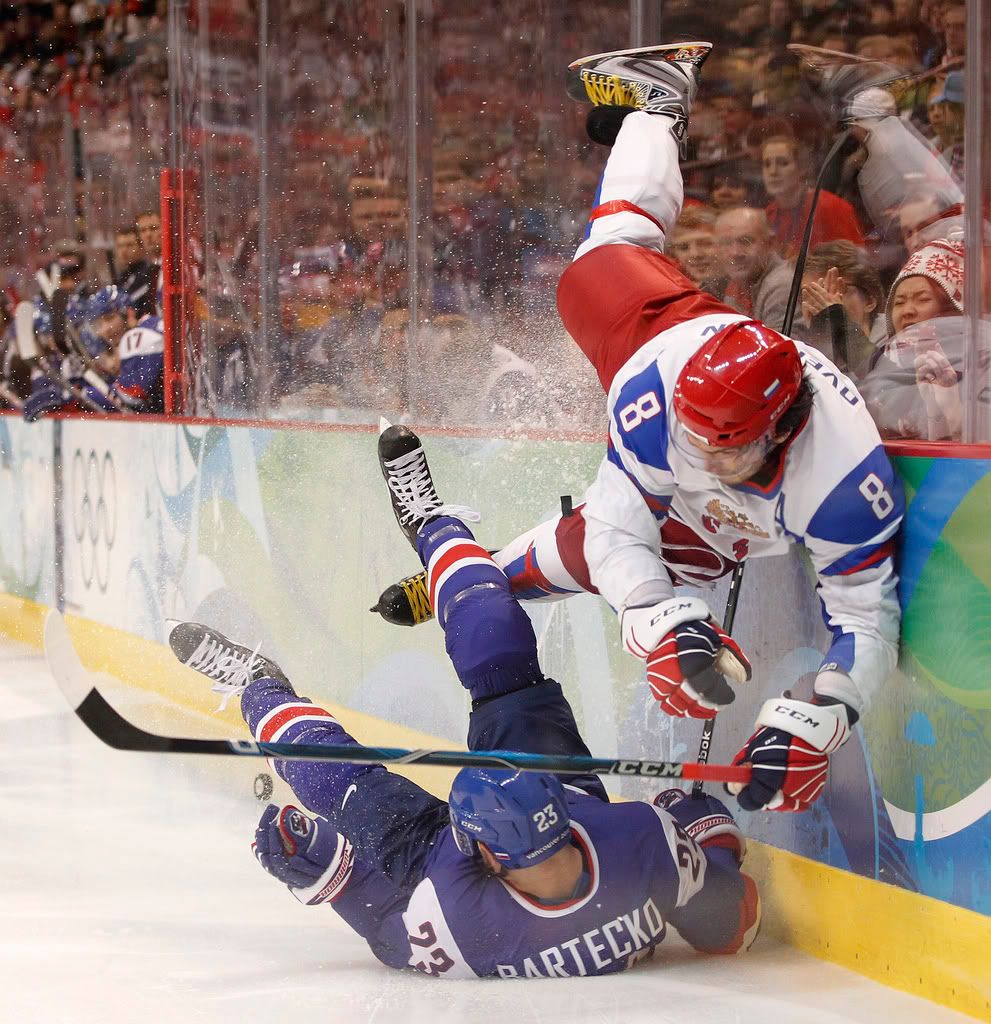
 The score was 2-1 in favor of the Russians when Jaromir Jagr, who's had a pretty exciting return to hockey in the United States so far, skated up the middle of the ice with the puck. He spotted a lurking Alexander Ovechkin and decided to turn back in the other direction and regroup, i.e. get the fuck away from Ovechkin. Instead, the scud-missile-on-skates prepared momentum, waiting for Jagr to try and cross into the Russian zone again and then absolutely annihilated him which set the puck loose and led directly to a Russian goal and a 3-1 score which put the game away.
In my predictions for hockey's "Super Sunday," I chose Russia to beat team Czech because of "the Ovechkin Factor" and boy was I right:

Saturday, February 20, 2010
Hockey Gods of Mount Olympics
Clash of the Titans Sunday
The men's Olympic hockey tournament has been great so far in its first three games but...none of the top 6 projected teams have played against each other yet. Tomorrow they all come together in a day of 3 headline match-ups. Let's look at 'em.
Russia vs Czech Republic (12 PM Pacific Time)
It's not the headliner on Sunday's slate of great games but this is the one I'm most excited about.
Tuesday, February 16, 2010
Book Review: "The Years of Bloom"
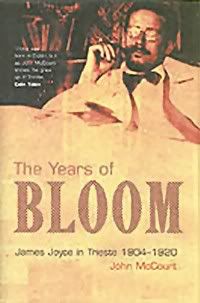
Overall it was a stimulating and engaging read and I was able to get through it pretty quickly (two weeks) without ever being bored by it except for a few passages listing all the operas that Joyce was attending. The book tells the story of James Joyce's time spent in Italy beginning with his leaving Dublin in 1904 at the age of twenty-two with 20-year-old girlfriend and future wife Nora Barnacle, four months after they'd met and it ends with the onset of World War I and the Joyces having to leave Trieste, at that time part of the Austro-Hungarian Empire, as the city's multi-cultured populace plunges into chaos. In between, he...
Monday, January 11, 2010
NHL 2009-10 Midseason Report Part 2

Unfortunately this comes a week late as it's been a busy, event-filled week in my life. But a look at what lies ahead for the season's second half is still appropriate as only a couple of games have been played past the midway point.
We've already looked at the Eastern Conference, now let's dig into the much stronger West.
The standings are as of today, Sunday January 10th.
Western Conference
The Powerhouses:
1. Chicago Blackhawks
(31-11-4) 66 pts
They were predicted by everybody to be a great team and, whaddaya know, they're a great team. Best in the NHL, in fact, with the league's best offense, secondbest defense, and best goal differential. The only possible weakness we were acknowledging before the season, their goaltending, hasn't been a problem at all. Both Cristobal Huet and Antti Niemi have been great.
Outlook: They only look to be picking up steam as the season progresses. They're primed for a deep playoff run.
Sunday, January 3, 2010
NHL 2009-10 Midseason Report Part 1

As the calendar flips to 2010, the NHL season has reached its midway point and thus I think we've got enough games played to where we can actually start to look at who the real contenders are and what are some teams' chances for the season.
I'm going to go through each conference to take a look at how things might shake up in the season's second half. I'll present the Eastern Conference today and tomorrow go through the West.
(Conference standings are as of tonight, January 3rd, 2010. Numbers shown are Wins-Losses-Overtime Losses and Points in the standings)
Eastern Conference
The Serious Contenders:
1. New Jersey Devils
(29-10-1) 59 pts
This team amazes me. They're like the Spurs of hockey, just constantly one of the best teams in the league every season for well over a decade now and they never make any huge acquisitions or changes (besides letting good players go: Scott Gomez, Brian Gionta, Brian Rafalski, Scott Niedermayer, John Madden, Petr Sykora, the list is endless). And it is just that which fascinates me so much about this team: they shed seemingly vital players almost every season but just keep on filling in the holes adequately enough and their disciplined system of defensive play keeps them competitive no matter what.
Sunday, December 20, 2009
Joyce influence in "Benjamin Button"

Almost exactly 2 months ago, after reading so much about it, I finally began the enormous task of reading "Ulysses." Fast-forward to now and it's gone very well, yesterday I finished the "Eumaeus" episode which leaves only the final two chapters to go. With the help of a few guides, I have been able to understand most of what I've been reading and I also took notes on each chapter which I will use in the future at some point to put together a chapter-by-chapter breakdown here on this very blog.
But, for now, I'd like to look at something else interesting that I've realized from the book.
Subscribe to:
Posts (Atom)