Sunday, March 20, 2011

Prosopagnosia

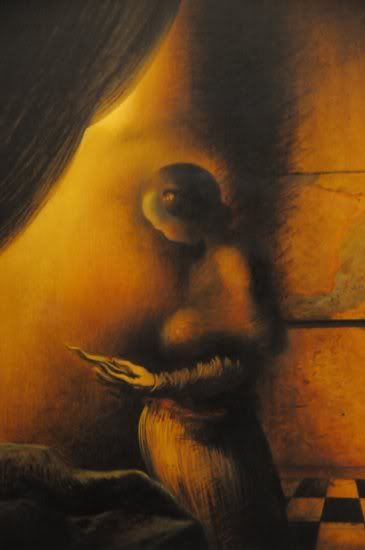
Prosopagnosia is "face-blindness"---a disorder in which a person has full mental capacity but cannot recognize faces no matter how many times one has seen them. Scientists believe it is due to a malfunctioning of the fusiform gyrus, a part of the temporal lobe in the front of the brain that handles how we see and understand color, words, numbers, abstractions, and---yup---faces.

Prosopagnosia has a huge wikipedia page where you can read all about this strange disorder.

Thursday, March 17, 2011

Thirst for Knowledge Thursdays: That Face is Your Face

You will notice that I've added a little Amazon widget to the sidebar on the right. I've been wanting to do that for a while but never actually explored it until the other day. It's actually very easy to do. And instead of making it a collection of my favorite books, I've got it displaying the books I'm currently reading. As for my favorites, we'll continue to take a look at some of those each Thursday.

When I first mentioned the idea of a weekly post sharing some good books, I mentioned that I'll be picking books off my "Jacob's Ladder" bookshelf and, indeed, I do have it set up like a ladder. The easier or more earthly books (sports, mainly) are on the bottom and things get heavier as we move upwards (from basic religion/science/history up to deeper physics/spiritual/philosophy stuff) culminating in the top shelf which houses a whole collection of Joseph Campbell books as well as some of Carl Jung's best stuff, Nietzsche, and Goethe. Today we're up at the top shelf. And the book I've chosen is probably the only book by Campbell that I've read more than twice. It's his first book (well, the first book he wrote on his own) and it remains his most famous work: The Hero with a Thousand Faces. While it is basically an introduction to the material that he would expand on all throughout his career, it is one of his most accessible books and thus, perhaps, the most rewarding. It continues to be a major influence on people, especially artists and, most famously, it was the major inspiration for George Lucas' Star Wars films.

The book is a deeply enlightening analysis of the archetypal stages of the mythological hero journey which, as Campbell shows, is essentially the story of the basic stages of human growth and individuation in society. Weaving in ancient myths and tales from nearly every corner of the globe, Campbell takes us through each stage of the hero's journey and shows us how the story is the same all throughout the world, though always with a different local inflection. The story is essentially this: growing up in a society of inherited ideals, an individual feels compelled to jump out into the world of adventure, of unfamiliar territory; this individual crosses the community's threshold and then goes through numerous trials, often life-threatening, before receiving help from supernatural or serendipitously appearing aids who help the individual continue along toward a goal; he encounters the mother goddess who helps him on his way to acquiring the ultimate boon of wisdom; the hero returns to the society bearing the bright gifts of knowledge and wisdom to uplift others from their sorrows. Discussing this theme as it appears in the Bhagavad Gita, Campbell explains:
What, now, is the result of the miraculous passage and return?
The battlefield is symbolic of the field of life, where every creature lives on the death of another. A realization of the inevitable guilt of life may so sicken the heart that, like Hamlet or like Arjuna, one may refuse to go on with it. On the other hand, like most of the rest of us, one may invent a false, finally unjustified, image of oneself as an exceptional phenomenon in the world, not guilty as others are, but justified in one's inevitable sinning because one represents the good. Such self-righteousness leads to a misunderstanding, not only of oneself but of the nature of both man and the cosmos. The goal of the myth is to dispel the need for such life ignorance by effecting a reconciliation of the individual consciousness with the universal will. And this is effected through a realization of the true relationship of the passing phenomena of time to the imperishable life that lives and dies in all.
After explaining each stage for us, using elements from a ridiculous amount of different myths along the way (Buddha, Jesus, Eskimo stories, Native American myths, African tribal rituals, Greek myths, everything), Campbell then explores the source of it all, the unconscious mind from which these rich stories spring forth, and what it all means psychologically and cosmically. He discusses the "universal doctrine" found in the cosmologies of every culture throughout human history that "teaches that all the visible structures of the world---all things and beings---are the effects of a ubiquitous power out of which they rise, which supports and fills them during the period of their manifestation, and back into which they must ultimately dissolve. This is the power known to science as energy, to the Melanesians as mana, to the Sioux Indians as wakonda, the Hindus as shakti, and the Christians as the power of God...And its manifestation in the cosmos is the structure and flux of the universe itself."

But to apprehend the very source of this energy, one must transcend the human organs of apprehension because the forms and categories of our rational minds are, themselves, manifestations of this power and thus preventing one from being able "not only to see, but even to conceive, beyond the colorful, fluid, infinitely various and bewildering phenomenal spectacle." And so the function of myth is to help the mind achieve that "jump" beyond the phenomenal. As Campbell says, "Myth is but the penultimate; the ultimate is openness...into which the mind must plunge alone and be dissolved." The elements of myth are meant to attract the mind towards what is beyond these elements, the infinite eternal void out of which our categories of opposites and duality spring. "Therefore, God and the gods are only convenient means---themselves of the nature of the world of names and forms, though eloquent of, and ultimately conducive to, the ineffable. They are mere symbols to move and awaken the mind, and to call it past themselves."

This was the first book by Campbell that I ever read and, though I think there are others that are actually better, it is the book I come back to the most. Especially in times like right now where I'm traveling rather aimlessly on an unfamiliar road that I hope leads to a creative future. This book was my bible when I initially left the nest at age 22 and traveled across the US to San Diego with no practical plans. Three years later, I'm still on the journey and maybe only slightly less confused. This is still one of the first books I turn to for answers.

Tuesday, March 15, 2011

Know Something of His Work

Most people who have heard of Marshall McLuhan remember him only from this appearance in the Woody Allen film Annie Hall:


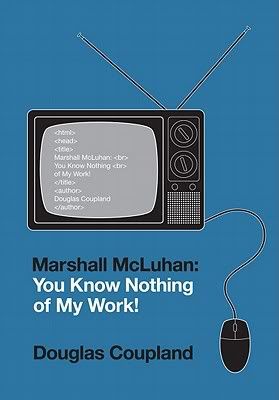
"You know nothing of my work," an aged McLuhan says. That's where the title for Douglas Coupland's new biography, Marshall McLuhan: You Know Nothing of My Work!, comes from. I finished it the other day and it's a great read, as a matter of fact, I can't remember the last time I got through an entire book as fast as this one. It's a nice introduction to McLuhan's work and theories but it was such a good book mainly because it is a concisely written and engaging story of the man's life. The author, a Canadian himself, does a great job painting the scenes of McLuhan's upbringing in the vast empty prairies of early-20th Century Manitoba. These Canadian prairie lands come to be sort of symbolic for the vast imaginary open spaces that, as McLuhan keenly sensed, were about to be rushed over by a flood of media and electronics that would shorten the spaces between mankind until we all existed in one universally connected little "global village."

Another aspect of the story I enjoyed was the prominence of "elocution"---the art of effective public speaking using control of voice and gesture---in McLuhan's upbringing. Young Marshall's mother used to go on long tours all around the United States teaching elocution classes and she trained Marshall to memorize long passages in books and be able to recite them powerfully. This was an important part of McLuhan's growth and success as he was an absolute master of debate and, later on, a captivating though confusingly opaque teacher and speaker.

As a college student, McLuhan became infatuated with the works of James Joyce, T.S. Eliot, Ezra Pound and other modern writers while at the same time building up an unbelievable wealth of knowledge on history and literature, in general. The man clearly had a massive perspective on humanity's position in time and, while he was personally not happy or comfortable with the results of the rapid changes he perceived, he certainly never preached to anyone about how they should live or what they should do. He simply analyzed the shit out of everything and explained it all in such a spectacular manner that, as I'm coming to realize, he is truly a wizard whose work can be a guide to maintaining sanity in this media maelstrom we live in nowadays. (And, sure enough, Wired magazine considered him their patron saint.)

It is nothing short of stunning to read how far ahead of his time McLuhan was and to read some of the excerpts in which he completely describes what would become the internet...back in the 60s. At a time when TV's ubiquity was only just beginning, he knew where it was all headed (he even explicitly talks about future elaborate commercials in which the product being sold is barely mentioned or focused on at all---thus the "medium" is truly "the message") and his discussions on the so-called "discarnate man" are perfect for where we're at today; we can travel or appear, like a spirit, essentially anyplace on the globe whenever we want. It's freaky. Yet it's normal for us and we don't even consider how amazing it is.

What I also found to be so fascinating in the character of Mr. McLuhan was that he was a devout Catholic for most of his life and, in many ways, a kind of grumpy old curmudgeon and yet he was a hero to the hippie culture of the 60s and his books, theories, and manner of discussing these things were so thoroughly radical.

Besides the story of the man and his work, the book itself was interesting in and of itself---it's unlike any book, especially any biography, I've ever read. It is essentially written in the form of an informative internet-surfing session. The book tends to vary in styles and there are interruptions for things like the Amazon.com page for some of McLuhan's books complete with customer reviews (both good and bad) plus Google Maps directions, YouTube links and many other reminders of how rapidly the world has changed and McLuhan's foretellings have manifested. A funny example is the opening page of the book which has Marshall McLuhan's name according to a bunch of common internet name generators like a Porn Star name, Pimp name, Ho name, Pirate name, wrestler name, Goth name ("Fragrant Desiccated Corpse"), and more.

The author really wrote a terrific story in an entertaining and clear manner, even throwing in a few footnotes with funny or interesting personal anecdotes---refreshing for me after the Bill Simmons footnote shit-fest I recently slogged through. I don't want to ruin the ending but it's such a surprisingly perfect weaving of modern computer-age mush, poignant reflections, and personal experience. My brother John would often tell me how the aforementioned Simmons book is "a perfect bathroom book", mainly because of its encyclopedic length allowing for random readings. When it comes to reading a book cover to cover, Coupland's biography is a perfect bathroom book---short, concise sections written in an entertaining and informative manner and its hardcover stature is relatively tiny, conducive to holding it with one hand and reading endlessly. Easy-to-digest thought-for-food.

Potent Quotables: Shells

Taken from Stuart Gilbert's famous study of Ulysses:

Esoterics use the name 'shells' to designate bodies discarded by the soul, tenements emptied of life. The 'facts' of history, its dates, battles, marches and countermarches, alarums and excursions, are shells, hollow shells into which the historian vainly seeks to pour the life of his own quick imagination. Such life as they may seem to gain is fictive; their own has passed on and cannot be recalled. The melee of history, 'joust of life,' is ever pushing forward to new fronts, leaving on the abandoned field a debris of discarded vehicles, empty shells.
-pg 115

Monday, March 14, 2011

Nina


Album Review: Children of a Lesser God by the Wisemen


The newest installment from Bronze Nazareth's Detroit-based Wisemen crew is a deep, mostly meditative though occasionally belligerent and boisterous LP that represents an advancement from their debut, the rugged underground classic, Wisemen Approaching. I think hip hop heads are sleeping on this new project majorly. It became clear a while ago that the Wisemen consistently make music that rewards dozens of listens. You can’t throw this record in once, twice, three times and be able to fully catch its essence (aside from a few instant heavy-hitters like "Lucy"), especially when there’s as much material as we have here. 19 tracks (including some instrumental interludes) with at least 6 different emcees dropping verses. And there’s really not a BAD, or totally skippable song on the whole LP. My least favorite is probably “Do It Again” but even that’s a pretty dope track as these guys seem to have a specialty for making grimy love/relationship songs. It’s also hard to pick a BEST track because there are at least four that I find to be amazing. This is how an album should be. Even the goddamn skits are good!

When the first Wisemen album was slated to be released back in 2007, I didn’t expect much, was kinda thinking Bronze Nazareth (who had achieved success with his debut solo album The Great Migration) is just trying to put his inferior crew on like Raekwon with Ice Water or Ghostface and Theodore Unit, but then the quality of every song on that first album (Wisemen Approaching) just blew me away. Every one of these dudes can spit and there are two beat geniuses on the boards. Children of a Lesser God builds towers over the previous material, though. They’re really innovating and elevating the style on this one while still holding to that core of pure raw hip hop. It’s as if they’re taking it back and moving things forward at the same time.

Saturday, March 12, 2011

More Thoughts on The B.S. Book of Basketball

"Vast, I allow: but vile. Cloacae: sewers."
- Ulysses, pg. 131

I am not the type of person to trash someone's work. I've never given a book one or two stars on Amazon because, quite honestly, if a book sucks then I won't read it. I've always loved Bill Simmons' basketball writing. As I said in my post reviewing the first half of his book, I've always been eager to read his latest NBA columns because the thoroughly expressed passion and knowledge serves to spring up my interest in the game. In short, for many years Bill Simmons' writing always precipitated my basketball interest.

And yet, given the opportunity to write a full-fledged epic treatise on the game, he gave a sloppy effort and stuffed in so much self-praise, dirty jokes, and rambling bullshit that the book was often insufferable. Never in my life have I actually thrown a book in a fit of disgust until this one. And, after slogging through every last bit of it, the final lines made me want to rip the book in half. There's a part when he's talking about Kobe Bryant, and he uses an analogy that I think accurately describes how I felt about the book:
[It] was like having a friend purchase a beautiful $10 million mansion...then paint it a weird color, refuse to hire a housekeeper, decorate it with goofy modern furniture and basically ruin the house. Buddy, what the fuck are you doing? Don't you realize what you have here? (pg 578)
The book is certainly not all bad. I mostly enjoyed the first half (though the silly footnotes and jokes were irritating) and there is some great stuff in the enormous Pyramid section covering his list of the top 96 players of all time. That section takes up the bulk of the book (about 400 pages) and there are some bad stretches that made me question whether he just threw some paragraphs together and submitted a first draft, but I can say that I thoroughly enjoyed the writing for Bob Cousy, Elgin Baylor, and especially Dr. J. His thorough breakdown of Hakeem Olajuwon's uniqueness was also very good.

But most of the time his writing style sinks down to that of a frat boy or some other numb-minded "bro." That might be why he's so popular but it's just brutal to read. In my first review, I complained about his incessant dick jokes. Once I made it around page 600 I realized the man is thoroughly obsessed with penises and can't keep his mind off them for more than a page or two (a Freudian would have a field day with this, I thought). He also frequently feels the need to homophobically insist that he's not gay. Yet, the book also wreaks of misogyny; as one of the New York Magazine reviewers put it: "In my notes on TBOB, I actually stopped bothering to copy down the most egregious comments and figured I'd just note when Simmons mentioned a woman for any reason other than evaluating her appeal as something to put a penis in."

In the abstract, that stuff doesn't bother me so much. I'm obsessed with Joyce's books and during his life he was lambasted and his books burned because they were so "obscene" plus I listen to some of the grimiest hip hop music ever made. The main problem for me: this is a book about basketball! It's titled "THE Book of Basketball" and has the word BASKETBALL in huge letters along the spine. Yet, it's filled with the author's idiotic Vegas adventures, shitty pop culture references, and a ridiculous amount of the dirty stuff, while providing often sloppy basketball analysis. He constantly decries the use of stats to evaluate a player's true value and yet---just like the ignorant baseball writers who diss sabermetrics and then make arguments with RBIs and batting average---he always refers to the basic stats (points, rebounds, assists) and often jumbles them together in convoluted ways that support his argument. His arguments, of course, are always presented in an overly proud, assertive manner (basically, "what I say is right, fuck you if you don't like it") as he frequently alludes to a player as top-5, top-10 or whatever and never explains what these rankings are determined by.

Early in the book when he's using a bunch of Bill Russell quotes to proclaim the power of basketball's nebulous "Secret," he follows the Celtic legend's words with this comment: "I didn't see the word 'stats' or 'numbers' in there. It's all about winning." There are a few times he says stuff like that and so I laughed when reading the last chapter where he presents us with Kobe's entire playoff stat line to dismiss the possibility of Bryant "getting it" and becoming a team player when the Lakers won the 2009 championship.

If all of that weren't enough to deter me from enjoying the book, there's the sad fact that Simmons has embraced his popularity so much that he frequently feels the need to tell us how great he is or share lame celebrity anecdotes. Because, after all, he's a celebrity living in Los Angeles. An internet writer who gained his fame because of his "regular opinionated sports fan" character, he's now been bloated into a D-list celebrity sycophant. Name-dropping, shouting out famous friends, and the book's laughably conceited conclusion (driving up the Pacific coast in a convertible) serve to get in the way of hoops talk and confront the reader with the image of a corny mid-40s white guy in a sports jacket, standing at a bar scoping out the joint. That image, combined with Simmons' frequent allusions to his favorite show Miami Vice, make the author a perfect fit for Ben Stiller's character in that old ridiculous SNL short "The H is O".

I wanted to keep this brief but I'm going to Simmons-esque length already. I'll concede that the book is probably better if taken in small bites or as a reference guide. Reading it page-by-page, front-to-back was not pleasant and there were many times where I'd flip back to the praising reviews quoted at the front of the book and wonder if they were really talking about this book. There is so much more I can say about it but I'll leave it at that because I've spilled too much hate already plus there are other writers saying the same things more articulately than I can. In the end, I'm just so goddamn thankful for FreeDarko.

A Good Morning Remix

Featuring the estimable MF DOOM and Rza.


(Rza's verse is captured a bit off-beat but he used to rap like that on purpose so it sounds normal. Also, the original song wherefrom this verse came is a classic.)

Friday, March 11, 2011

Baseball Starts to Bloom

Major League Baseball has crawled out of its winter hibernation and its participants have begun stretching, yawning and wiping the crust out their eyes. Spring Training baseball has begun in Florida and Arizona, new players are meeting their teammates and donning new threads, pitchers are loosening up their arms and getting injured already, hitters are getting back in the swing of things and, of course, the always anticipated annual rite of spring has begun: the publishing of new baseball books.

I picked up the annual Baseball Prospectus book a couple weeks ago and I'll have plenty to say about it soon. Also, a writer who began with the BP conglomerate, Jonah Keri, has released his first book on his own and its getting great reviews already. The book is titled The Extra 2%: How Wall Street Strategies Took a Major League Baseball Team from Worst to First detailing the extraordinary turnaround of the Tampa Bay Rays from pathetic embarrassment to pennant-winning AL East powerhouse regularly competing with the league's most powerful and resource-rich organizations. I've only read the opening pages thus far but the writing is great; Keri has a reputation for being a wonderful writer, and the book is a bit like the Moneyball story which means I'll probably become a Rays fan after reading it. Admittedly, for me the prominence of Wall Street tactics and ex-Goldman Sachs honchos within the story is a bit discomforting because of my violent feelings toward that sector of society these days but it is a baseball story above all and Keri has denied that the Rays people had any past involvement in the shady tactics that murdered the economy. Besides that, Jonah is a cool guy, I've had lunch with him once before.

About 5 or 6 years ago when I was getting college credit as an intern with Baseball Prospectus (thanks to my pal Jay Jaffe), my brother John and I attended a book-signing and discussion upon the release of the big annual book and we got to go out for lunch with the crew of writers afterward. It was a highly interesting, baseball-chatter filled afternoon, and it just so happened that John and I sat at the end of the table next to both Jonah Keri and Nate Silver. Jonah was an extremely nice, humble guy; a Canadian with a deep and sometimes humorous affection for the Expos (which John and I could sympathize with since we'd recently drove to Montreal for a weekend to take in a couple games), he was also highly knowledgeable about college basketball and that often snuck into the discussion since it was March. We also talked about the new hardcover book BP had recently written, Baseball Between the Numbers, which Jonah edited.

Nate was also a very cool dude. The whiz kid who had developed BP's statistical projection system PECOTA, he is probably the smartest individual I've ever met. He would later go on to leave BP for a pretty famous career as a statistician analyzing political polls. (He accurately predicted the results for 49 of the 50 states in the last presidential election and was even named one of Time Magazine's 100 Most Influential People in 2009---with Bill James himself writing the article.) I remember Nate having the physical quirks and awkwardness of a genius; he would sit in a strange twist with his legs crossed and arms leaning forward. For such a gifted mind, he was a humble and soft-spoken individual. A few years later, big bro John and I went to another signing and Nate, who I hadn't spoken to since that lunch, remembered me. In retrospect, it should come as no surprise because his digital computerbrain probably remembered what hat I wore that day (Padres, actually) and what I had for lunch.

You can read more about Jonah's new book here and here, and if you're interested in what Nate Silver's up to these days he's got a blog on the New York Times site. Mostly about politics, sadly. He doesn't touch on baseball too much anymore though he does write about basketball (college and pro) every now and then.

Thursday, March 10, 2011

Thirst for Knowledge Thursdays: Wu Tablets

With the release of Raekwon's brand new album Shaolin vs. Wu-Tang this past Tuesday and the Wu essence glowing brightly in the public eye once again (nearly twenty years after their debut), now would be a good time to become familiar with the history of the Wu-Tang Clan and its deep mythological elements.

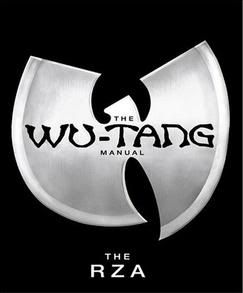
The man who started it all and produced their first dozen or so albums, The Rza (known as The Abbott of the Wu-Tang Clan), published The Wu-Tang Manual in 2005. The book has the look and feel of a mystical manual and contains a full introduction to the mythological universe of the Wu with chapters on the genesis of the nine-member group, their infatuation with chess, kung-fu movies, spirituality, organized crime, comic books, and much more. One of my favorite parts is a section of the book in which Rza explains the lyrics to some of their greatest songs.

For me, this book was one of the first bricks in the foundation of knowledge I've been building for years now. It introduced me and encouraged me to study the major wisdom books in the world like the Tao Te Ching, Bhagavad Gita but also The Bible and Holy Qur'an. From the beginning I wanted to emulate The Rza whose breadth of knowledge spans both the spiritual and scientific realms (he often talks about physics in his work) and that really led to the voracious reading/study habit I've had that has led me to the works of people like Joseph Campbell and James Joyce. I didn't learn any of this stuff in school, not even in college, but my mind is consumed by it and I've reached the point where I will not be happy in a career that doesn't involve intellectual expansion and expression. I am not exaggerating when I say that this book was the springboard that flung me into this new universe.

Rza released a second book, The Tao of Wu, last year and I even drove three hours from San Diego to Los Angeles for a book-singing but I've yet to get deeply into that book with all the Joyce studies I've become immersed in this past year and a half. Once I do get to feast on it, I will definitely share my thoughts here.

*   *   *

Rae's album was not the only piece of pure hip hop music to be released on Tuesday. The new EP from Kevlaar 7 entitled Who Got the Camera? became available on CD and, as much as I'm enjoying the Raekwon album, this is really my favorite record of the year thus far and truly one of the most powerful albums I've heard in a long time. If you'd like to see what I'm talking about, check out this analysis I wrote for one of the tracks entitled "I Have a Dream" which parallels and re-examines the world through Martin Luther King's famous speech.

Also, in the same vein, I have to mention a brand new EP from another underground emcee from New York City by the name of Zagnif Nori (who appears on the opening track for Who Got the Camera?). His new EP is a dense mixture of hard drums and smokey samples with sharp, thought-provoking lyrics. It is entitled "Insignia" and it is available to download for free at this link.

Tuesday, March 8, 2011

Potent Quotables: Dali Dinner Reflections

In the late 1920s, a young Salvador Dali left Spain with his lady Gala and moved to Paris to enter into the famous art scene there. At this point, Dali was unrefined, shy, and thrust into an unfamiliar bourgeois atmosphere. His reflections on this period contain funny anecdotes (written in a perfectly weird style) like this one.  
"One evening I was having dinner at the Vicomte de Noailles'. Their house intimidated me, and I was extremely flattered to see my painting The Lugubrious Game hung between a Cranach and a Watteau. At this dinner there were artists and society people, and I immediately realized that I was the chief object of attraction. I believe that the Noialles were deeply touched by my timidity. Each time the wine-butler came and whispered the name and year of the wine into my ear with an air of great secretiveness, I thought it was something very serious that he had come discreetly to tell me---Gala run over by a taxi, or a furious surrealist who was coming to beat me up---and I would turn livid, leap up and prepare to leave the table. Then, in a louder voice so as to reassure me, and looking with the utmost dignified intentness at the bottle lying prone in the little basket, the butler would repeat "Romanée 1923." At one gulp I would drink down this wine that had just so terrified me and thanks to which I recovered my hope of overcoming my timidity and of being able to talk.

I have always admired---and I did so particularly at this time---the person who, without having anything really sensational or important to say, manages throughout a whole dinner of twenty people to steer the conversation in whatever direction he chooses, to make himself heard in the midst of a general silence at the right moments without having to stop eating---in fact, eating more than the next fellow---and still has time for an occasional slyly calculated pause during which he gracefully and self-confidently stops the flow of conversation just long enough to brush aside the danger of anyone's taking advantage of his absorption to kindle fresh hearths of conversation, or---in the extreme case in which this should occur---is able to extinguish them at the desired moment without seeming to make the slightest effort, and at the same time give the recalcitrant ones the impression, when he interrupts their incipient conversation against their will, that it is they who are interrupting by asking him in a voice that verges on the impolite to repeat his last remarks so that they can follow the course of his argument in which they have not the slightest interest."

from The Secret Life of Salvador Dali pg. 258